technologybriefs
10:32in productionCh. 1 · A solution for one lab/ 10:32 · ceiling 15 min
Web & cloud · Systems

World Wide Web

It wasn’t built for the public—it was built to stop CERN’s documents from vanishing.

The World Wide Web solved CERN’s internal document chaos by replacing rigid hierarchies and keyword tagging with decentralised, cross-computer hyperlinks. It shipped as a working stack—browser, server, HTTP, HTML, URLs—by December 1990. It assumed voluntary adoption, required no central authority, and offered no search or persistence. Its 1993 royalty-free release enabled scale—but not control.

Chapters & takeaways4
  1. 0:51
    A solution for one lab

    It was an internal tool for CERN—not a public platform—and its acceptance hinged on one manager calling it 'vague, but exciting'.

  2. 2:32
    No hierarchy. No tags. Just links.

    It rejected trees and keywords, reused ENQUIRE, borrowed Nelson’s hypertext, and demanded cross-computer links from day one.

  3. 4:04
    A working stack by December 1990

    It connected hypertext to TCP and DNS, handled graphics and video, let links trigger programs, and shipped with a browser-editor and server.

  4. 5:56
    From CERN network to Usenet

    The first website went live on 20 December 1990; the public call for collaboration came on 6 August 1991.

Worth your time?

Yes. Study the whole thing.

4.5/ 5
What works
  • cross-computer linking
  • multi-user simultaneous access
  • mutable data references
  • multimedia support from design
What does not
  • solve search
  • guarantee link persistence
  • enforce access control
  • provide native indexing
Study it if
  • system architects
  • document managers
  • interoperability engineers
Skip it if
  • end users seeking discovery
  • organisations needing audit trails
  • developers expecting built-in security
The written brief2 min read

What it is and the problem it solves

The World Wide Web is a global, decentralised information system for sharing content over the Internet. It solves document storage, update, discovery, and distribution problems in large, dynamic organisations like CERN. It was not designed for mass public use, but for collaborative science.

How it works

It connects hypertext to TCP and DNS. It uses HTTP for client–server communication, URLs for global addressing, and HTML for document structure. Links are unconstrained, cross-computer, and can point to mutable data or trigger programs. It runs on independent computers, supports simultaneous multi-user access, and was built to handle graphics, speech, and video—not just text.

What works

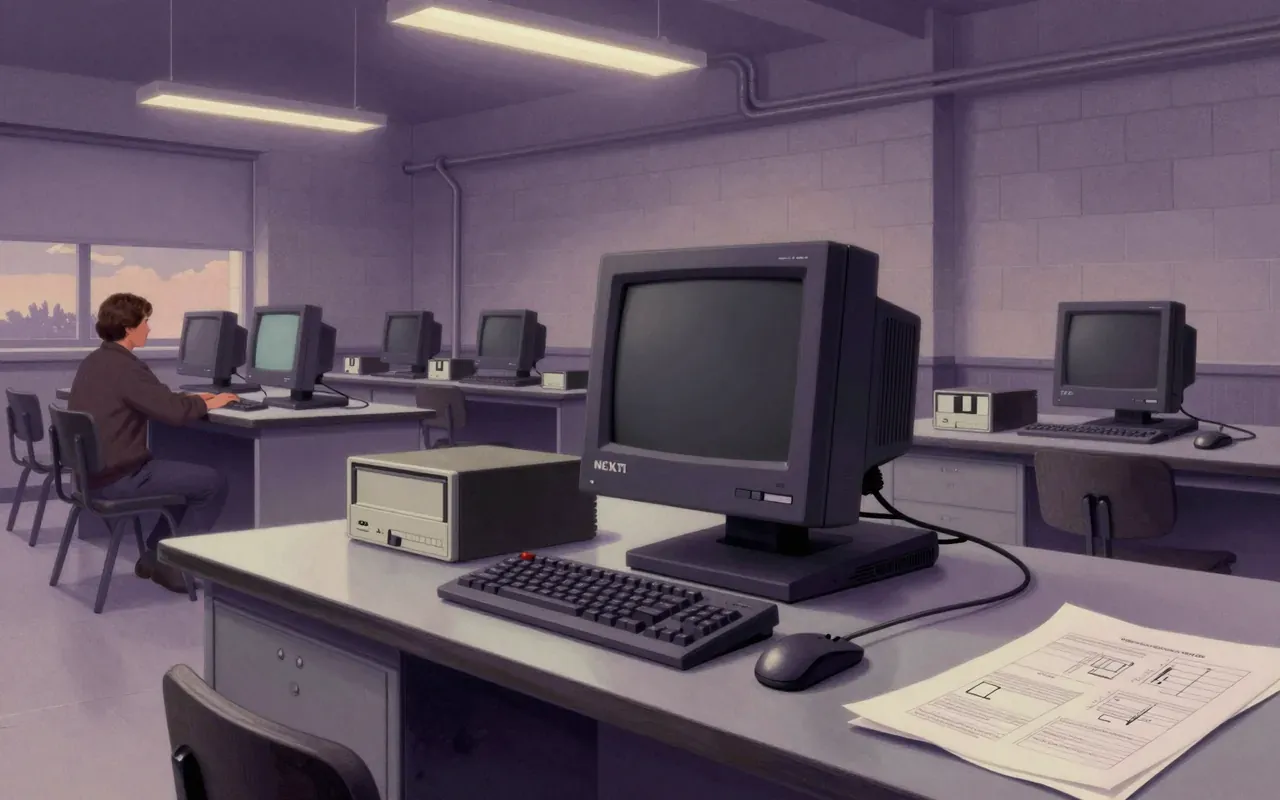
The first implementation worked end-to-end by December 1990: a browser-editor (WorldWideWeb), a server (CERN httpd), HTTP, URLs, and HTML. It supported cross-computer hyperlinks, simultaneous multi-user access, and multimedia. It ran on NeXTSTEP. It published the first website on 20 December 1990. It connected to the Internet via TCP and DNS as intended.

What does not

It did not solve discoverability at scale. It offered no native search, indexing, or ranking. It assumed users would manually follow links or navigate known addresses—no mechanism for finding unknown resources. It provided no access control, authentication, or persistence guarantees. Links broke when files moved or servers went offline.

What it changes

It changed how organisations share documents across administrative boundaries. It replaced centralised, hierarchical, or keyword-tagged systems with a decentralised, link-based model. It shifted responsibility for linking from system designers to authors. It enabled direct machine-to-machine data referencing—but only if both ends implemented the protocols.

Is it worth your time

Yes—if you work with information systems, interoperability, or decentralised publishing. It solved a concrete CERN document management problem by rejecting hierarchies and keyword tagging. Its royalty-free release in 1993 made it operable at scale. But its success depended on adoption choices outside Berners-Lee’s control: browsers, servers, and gateways had to be built and shared voluntarily.

Same field · Web & cloud4 of 10
8:50
Amazon Web Services2006AWS launched S3 in March 2006 as its first generally available Infrastructure-as-a-Service offering. It evolved from internal Amazon platform standardisation efforts beginning in the early 2000s. Its first developer-facing web services shipped in July 2002. Simple Queue Service (SQS) launched in beta in November 2004 and became generally available in July 2006. EC2 followed in August 2006. AWS was the first cloud provider to build infrastructure specifically for U.S. government security and compliance requirements, launching GovCloud in 2011.
11:06
Google Chrome2008Chrome is a fast, isolated, Windows-first browser built for developer velocity—not web interoperability. Its 2008 launch reset performance expectations but entrenched vendor control over core web infrastructure. Its technical strengths are real and measurable. Its compromises are deliberate and documented.
10:09
Firefox2002Firefox is a free, open-source web browser developed by the Mozilla Foundation and its subsidiary, the Mozilla Corporation. It uses the Gecko rendering engine to display web pages, which implements current and anticipated web standards. The software is available for Windows, macOS, and Linux systems, as well as a mobile version for Android (see Firefox for Android) and iOS, with unofficial ports for other platforms such as Oracle Solaris and OpenIndiana.
9:54
GitHub2007GitHub is a proprietary platform that wraps Git with web-native collaboration tools. It solved real coordination problems for developers — but entrenched centralisation, not openness.
Up next in Technology

X-ray tube

· 9:52

The X-ray tube did not make radiography possible — it made radiography *practically usable*.

9:52