technologybriefs
11:14in productionCh. 1 · The Bottleneck/ 11:14 · ceiling 15 min
AI · Models

ImageNet

ImageNet did not teach machines to see — it taught researchers how to measure seeing, one annotated URL at a time.

ImageNet is a foundational dataset infrastructure — not a model, not a tool, not a service. It succeeded by making scale measurable, not magical.

Chapters & takeaways4
  1. 1:06
    The Bottleneck

    ImageNet was built to fix a bottleneck: no large, annotated datasets existed for training object recognition models.

  2. 3:06
    What's Inside

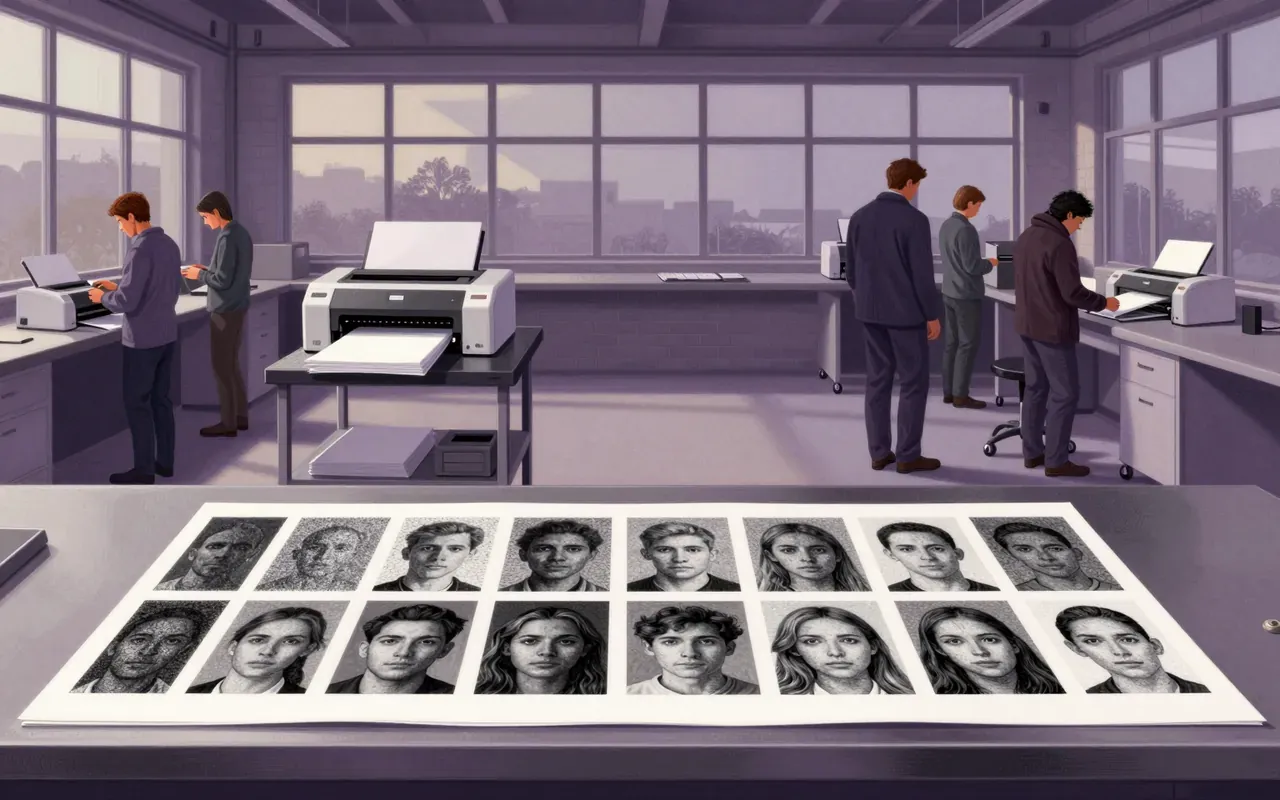
    It contains over 14 million hand-annotated images across 22,000 WordNet-based categories — but only the URLs and labels, not the images themselves.

  3. 5:03
    The Benchmark

    ILSVRC — its annual 1000-class contest — turned ImageNet into the engine of deep learning’s rise, not the dataset itself.

  4. 6:46
    The Missing Images

    Its reliance on third-party image URLs means licensing, availability, and quality are outside ImageNet’s control — a structural limitation, not an oversight.

Worth your time?

Yes. Study the whole thing.

4.5/ 5
What works
  • enabling large-scale supervised training
  • establishing ILSVRC as a replicable benchmark
  • proving crowdsourced annotation at scale
What does not
  • provide images
  • guarantee licensing
  • support fine-grained detection beyond 1000 classes
Study it if
  • researchers building object recognition models
  • teams designing benchmarks
  • practitioners curating training data
Skip it if
  • developers needing production-ready image assets
  • product teams shipping real-time vision APIs
  • policy makers assessing AI safety
The written brief1 min read

What it is and the problem it solves

ImageNet solves the bottleneck of insufficient large, annotated datasets for training machine learning models in computer vision. It is a visual database built from WordNet nouns, designed explicitly for object recognition research.

How it works

ImageNet is a hand-annotated database of over 14 million images, linked to WordNet nouns, with bounding boxes for at least one million. It uses Amazon Mechanical Turk for annotation. The actual images are third-party URLs; ImageNet owns only the annotations.

What works

The 1000-class ILSVRC subset works as a stable, reproducible benchmark. Its scale and hand-annotation enabled measurable progress: classification error rates dropped from ~28% to under 3% between 2010 and 2017. Crowdsourcing via Mechanical Turk proved viable for massive annotation.

What does not

ImageNet does not provide images — only annotated URLs. It does not guarantee image quality, licensing, or consistency across categories. It does not support fine-grained detection beyond its 1000-class ILSVRC subset.

What it changes

It changed computer vision by making large-scale supervised training possible. It shifted research focus from feature engineering to model architecture. It established ILSVRC as the de facto benchmark — and made deep learning’s empirical gains visible and contestable.

Is it worth your time

Yes — if you work on object recognition, dataset curation, or benchmarking. No — if you need ready-to-use images, real-time inference data, or domain-specific labels. It is infrastructure, not a product.
Same field · AI4 of 9
Up next in Technology

Intuitive Surgical

1995 · 10:28

Robotic surgery didn’t start with autonomy—it started with a console, a licence, and a long wait for FDA approval.

10:28