
Orange (software)
Visual programming doesn’t replace coding — it defers the hard parts until they’re unavoidable.
Statistics at a scale that stopped behaving like statistics.

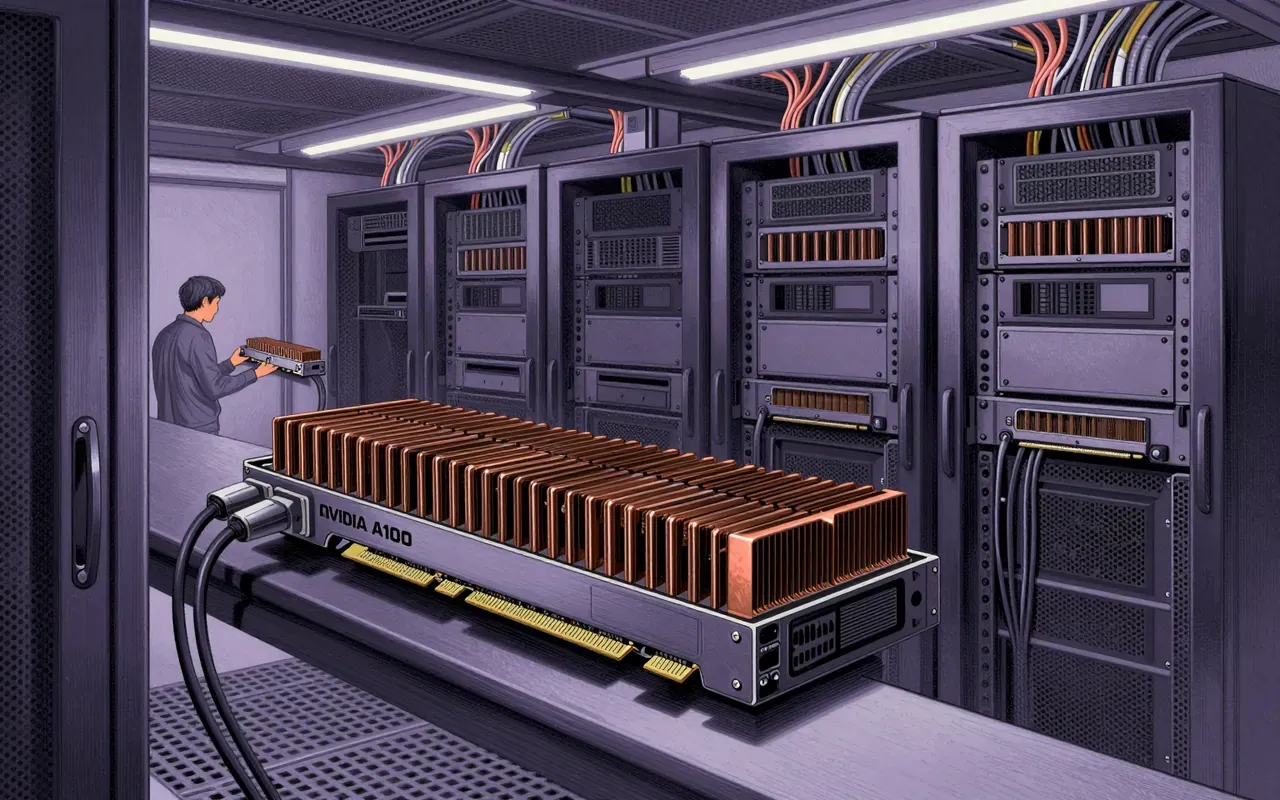
PyTorch is a Python-first deep learning library built by Meta in 2016 as Torch's successor. It enables rapid model prototyping via dynamic computation graphs (Autograd), tensor abstractions, and CUDA-accelerated training. As of 2025, it remains one of the most popular deep learning libraries—alongside TensorFlow and Keras—but its design prioritises researcher agility over production robustness, scalability, or deployment tooling.
TensorFlow is a machine learning API developed by Google. It is used mainly for training and inference of neural networks. It is free and open-source software released under the Apache License 2.0. It was developed by the Google Brain team for Google's internal use in research and production. The initial version was released under the Apache License 2.0 in 2015. Google released an updated version, TensorFlow 2.0, in September 2019. TensorFlow can be used in a wide variety of programming languages, including Python, JavaScript, C++, and Java. It is one of the most popular deep learning frameworks, alongside others such as PyTorch.
ImageNet is a foundational dataset infrastructure — not a model, not a tool, not a service. It succeeded by making scale measurable, not magical.