
technologybriefs
9:54in productionCh. 1 · What 5G actually is/ 9:54 · ceiling 15 min
Systems · Hardware

5G

5G delivers real architectural upgrades—but only where operators invest in standalone cores, mid-band spectrum, and dense backhaul. Everywhere else, it’s 4G with a new logo.

5G is a defined cellular standard—not a monolithic upgrade. Its real-world impact depends entirely on deployment mode, spectrum choice, and backhaul investment. It enables new use cases only where standalone architecture and mid-band spectrum converge. Elsewhere, it functions as a marketing label atop LTE infrastructure.

Chapters & takeaways4
  1. 0:56
    What 5G actually is

    5G is not a single technology—it’s the 3GPP Release 15 system built on New Radio, succeeding 4G.

  2. 2:53
    How 5G connects devices

    5G works like earlier cellular systems—cells, base stations, backhaul—but adds new air interface and core options.

  3. 4:47
    Why 5G speed isn’t universal

    Performance varies drastically by band: low-band travels far but offers little speed; high-band delivers speed but not penetration.

  4. 6:08
    Where 5G first worked—and why

    South Korea’s 2019 rollout proved large-scale deployment is possible—but not that it scales equally everywhere.

Worth your time?

Yes. Study the whole thing.

3.5/ 5
What works
  • non-standalone deployment over existing LTE cores
  • mid-band spectrum for balanced coverage/capacity
  • large-scale rollout under coordinated national policy (e.g., South Korea, 2019)
What does not
  • deliver consistent low latency across bands
  • eliminate backhaul dependency
  • guarantee better performance in congested networks
  • achieve universal coverage parity with 4G
Study it if
  • mobile network operators investing in standalone cores
  • regulators allocating mid-band spectrum
  • edge application developers targeting URLLC
Skip it if
  • enterprises expecting plug-and-play latency improvements
  • rural providers without fibre backhaul
  • consumers assuming '5G' means faster video streaming everywhere
The written brief1 min read

What it is and the problem it solves

5G is the fifth-generation cellular network technology succeeding 4G. It was developed to meet the ITU’s IMT-2020 framework. It solves the problem of scaling mobile networks for higher device density, lower latency, and greater bandwidth than 4G supports — but only in specific configurations and deployments.

How it works

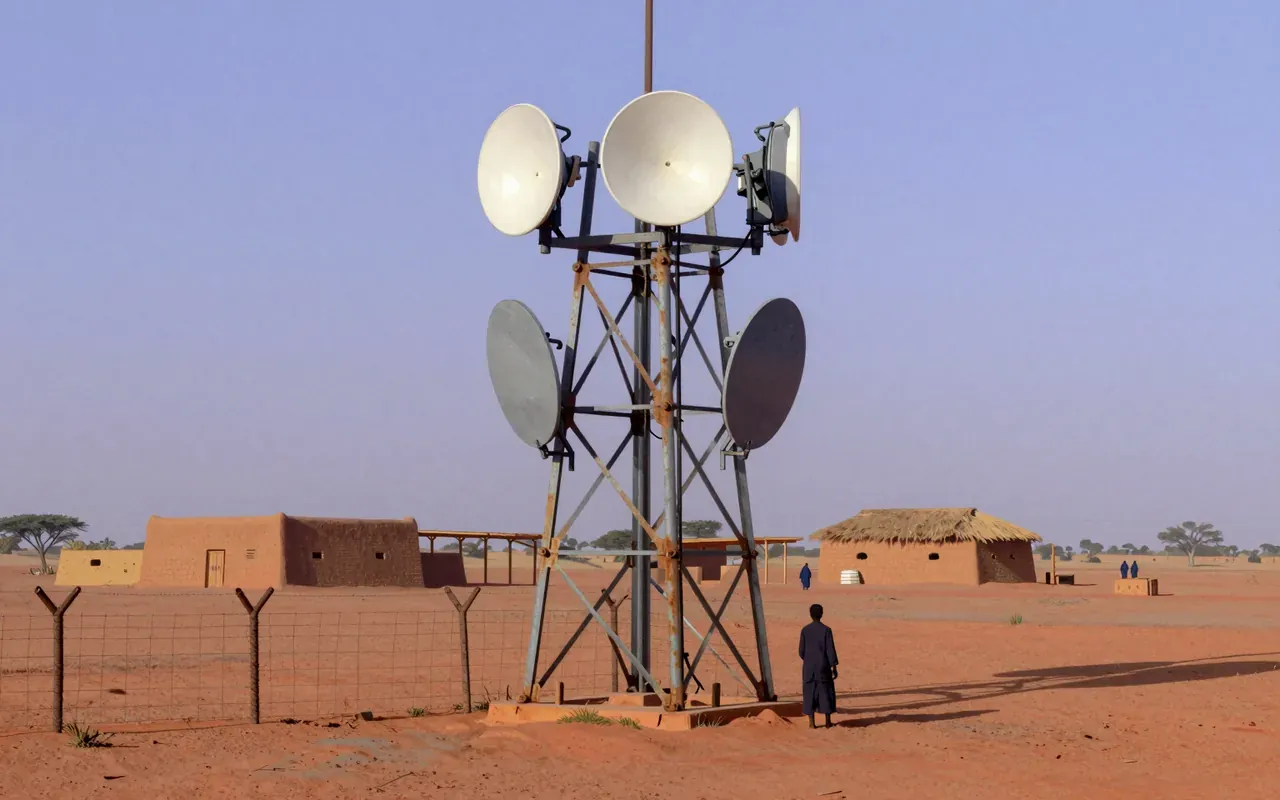
5G divides service areas into cells served by fixed cell sites. Devices connect by radio to base stations. Base stations link to core and external networks via backhaul. It uses low-, mid-, and high-band radio spectrum. Performance depends on frequency, network design, congestion, and device capabilities.

What works

Non-standalone 5G works where LTE infrastructure exists and spectrum is available. Mid-band deployments balance coverage and capacity effectively. South Korea’s 2019 national rollout demonstrated rapid large-scale commercial deployment under favourable regulatory and geographic conditions.

What does not

5G does not deliver uniformly low latency or high throughput across all bands or deployments. It does not eliminate backhaul bottlenecks. It does not guarantee improved performance in congested or poorly designed networks. Standalone mode remains uncommon outside early-adopter markets.

What it changes

5G changes the architecture of mobile access by enabling network slicing, ultra-reliable low-latency communication (URLLC), and massive machine-type communication (mMTC) — but only where standalone cores and appropriate spectrum are deployed. It shifts spectrum allocation pressure toward mid- and high-band, increasing infrastructure density requirements.

Is it worth your time

Yes—if you operate or build on mobile infrastructure, spectrum policy, or latency-sensitive edge applications. No—if you expect universal speed gains, coverage parity with 4G, or automatic transformation of existing services.

Same field · Systems4 of 25
8:50
Amazon Web Services2006AWS launched S3 in March 2006 as its first generally available Infrastructure-as-a-Service offering. It evolved from internal Amazon platform standardisation efforts beginning in the early 2000s. Its first developer-facing web services shipped in July 2002. Simple Queue Service (SQS) launched in beta in November 2004 and became generally available in July 2006. EC2 followed in August 2006. AWS was the first cloud provider to build infrastructure specifically for U.S. government security and compliance requirements, launching GovCloud in 2011.
8:32
Bitcoin2009Bitcoin is the first decentralized cryptocurrency. It solves double-spending without a trusted intermediary. Its mechanism relies on proof-of-work mining, public blockchain replication, and cryptographic key control. It delivers decentralisation, Sybil resistance, and Byzantine fault tolerance—but only if users protect private keys. It does not solve scalability, energy use, or usability. It changes what digital money can be—but not what it must be.
11:02
Bjarne StroustrupC++ is a language defined by trade-offs: abstraction without runtime cost, flexibility without enforced safety, evolution without breaking change. Its endurance reflects engineering necessity—not consensus.
9:46
David DeutschDeutsch’s work is foundational, not operational. His formalisms enable quantum computing as a field — but they do not run on today’s hardware. His later constructor theory is ambitious but untested. Worth studying. Not worth shipping.
Up next in Technology

Alan Kay

· 9:43

Alan Kay didn’t build the future—he built the grammar for describing it.

9:43