technologybriefs
10:03in productionCh. 1 · Speed is structural/ 10:03 · ceiling 15 min
Energy · Systems

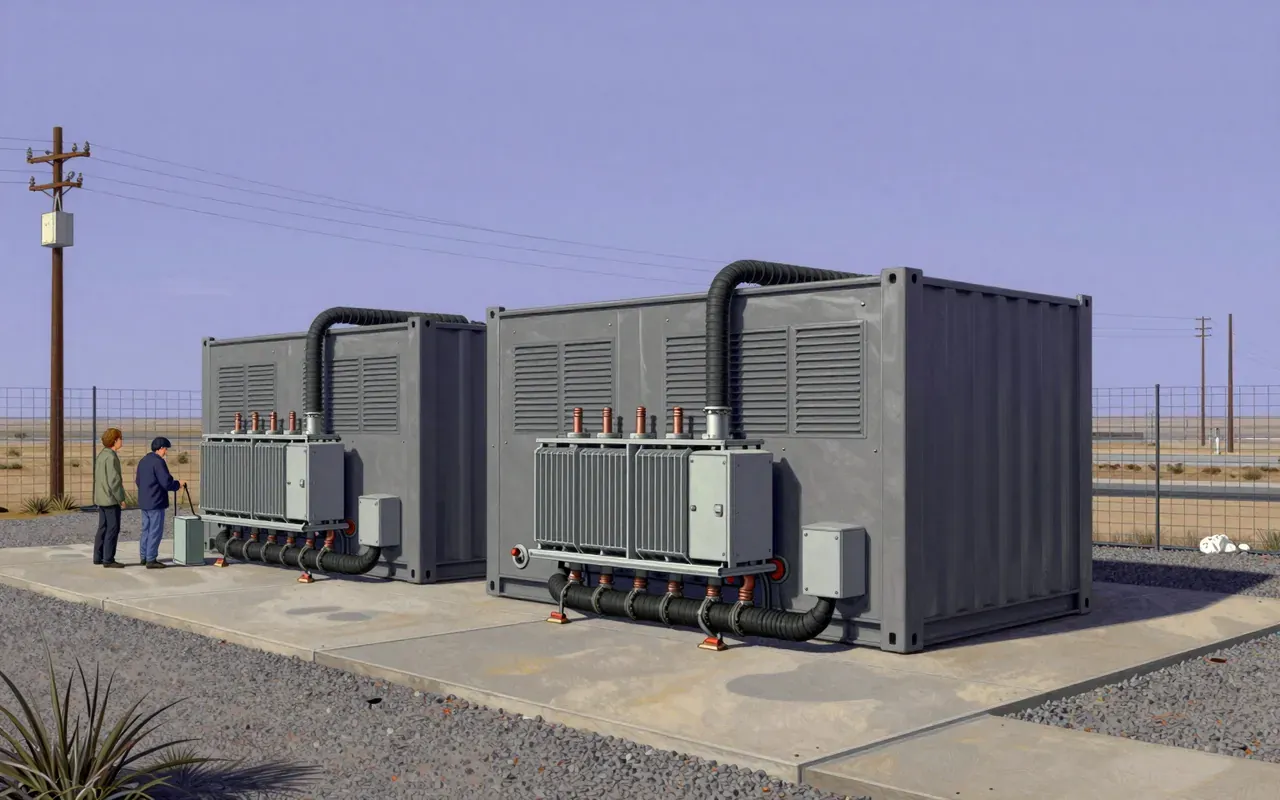
Battery energy storage system

Battery storage isn’t a bridge to renewables — it’s the first real alternative to spinning reserve.

Battery energy storage systems (BESS) are grid-scale battery arrays that deliver dispatchable power in under one second. They solve fast-response grid needs — frequency regulation, black-start support, and contingency reserve — but not long-duration firming. Lithium-ion dominates due to EV-driven cost and performance gains. In 2025, 40% of all BESS capacity was added — 104 GW/257 GWh — confirming their role as the new standard for sub-two-hour flexibility. Their limit is energy duration, not power speed.

Chapters & takeaways4
  1. 0:57
    Speed is structural

    BESS respond in milliseconds — faster than any mechanical generator — because they have no moving parts.

  2. 2:24
    Duration is design, not destiny

    Most BESS deliver full power for just 1–4 hours, and their falling cost reflects lithium-ion’s EV-driven learning curve — not new physics.

  3. 4:13
    The 2025 inflection

    2025 saw 40% of all BESS capacity installed — 104 GW/257 GWh — proving deployment scales when cost and speed align.

  4. 5:50
    Cost beats combustion — conditionally

    BESS beat open-cycle gas turbines on cost for up to two hours — but only where grid rules value speed and avoid charging for idle time.

Worth your time?

Yes. Study the whole thing.

4/ 5
What works
  • Near-instantaneous response (10 ms start, <1 s to full power)
  • Cost-competitive with gas peakers for ≤2 hours (since 2019)
  • Scalable deployment — 104 GW/257 GWh added in 2025 alone
What does not
  • Provide long-duration storage at scale
  • Eliminate safety concerns without chemistry shifts
  • Replace thermal inertia or synchronous condensers without additional controls
Study it if
  • Grid operators managing second-to-minute fluctuations
  • Renewable developers needing co-located firming
  • Regulators designing capacity markets around speed
Skip it if
  • Utilities seeking multi-day storage
  • Policy makers assuming BESS alone enable 100% renewable grids
  • Engineers expecting plug-and-play inertia replacement
The written brief1 min read

What it is and the problem it solves

A grid-scale battery system that stores electrical energy for rapid dispatch. It solves the mismatch between variable renewable generation and inflexible demand by providing near-instantaneous frequency regulation, inertia emulation, and contingency reserve.

How it works

Battery energy storage systems (BESS) store electricity in grouped batteries and discharge it on demand. They have no mechanical parts, so they start in as little as 10 ms and ramp to full power in under one second. Most are designed for 1–4 hour discharge durations.

What works

Lithium-ion dominates utility-scale BESS since 2010, driven by EV industry gains. Cost has fallen sharply: LCOS halved every 4.1 years from 2014–2024. BESS are now the fastest-responding dispatchable grid power source — faster than any mechanical generator.

What does not

BESS do not provide long-duration energy storage at scale. As of 2025, global capacity was 267 GW/610 GWh — surpassing pumped hydro in power (GW) but remaining far smaller in energy (GWh). Safety concerns persist with cobalt-based lithium-ion; LFP and sodium-ion are safer alternatives but remain niche.

What it changes

BESS shift grid response from seconds-minutes to milliseconds. They displace gas-fired peakers for sub-two-hour balancing, accelerate renewable integration, and reconfigure how capacity markets value speed over duration. In 2025 alone, 40% of all cumulative BESS capacity was installed — 104 GW/257 GWh.

Is it worth your time

Yes — if you work on grid stability, short-duration flexibility, or cost-sensitive peaking capacity. BESS now undercut open-cycle gas turbines for up to two hours’ duration (as of 2019), and LCOS fell from $150/MWh in 2020 to $117/MWh in 2023. But they do not solve long-duration storage needs without emerging chemistries.
Same field · Energy4 of 28
8:36
Nuclear powerNuclear power is electricity from nuclear reactions. Fission of uranium and plutonium delivers ~9% of global electricity in 2023. Decay powers Voyager 2’s RTG. Fusion has operated since 1958 but remains net-energy-negative. Obninsk supplied the grid in 1954. EBR-I generated electricity in 1951.
9:14
Sodium-ion batterySodium-ion batteries are a cost- and safety-optimised alternative to lithium-ion, built for grid storage and light mobility—not high-performance EVs or consumer electronics. Their mechanism leverages abundant materials and simplified construction. They deliver real-world cycle life, fast charging, and scalable manufacturing—but not higher energy density. CATL’s 2024–2025 rollout confirms commercial viability, not just technical feasibility.
8:43
Solar powerSolar power is electricity from sunlight—via photovoltaics or concentrated thermal systems. It works. It scales. It emits no CO₂ during operation. But it does not run at night. It does not replace grid stability services. And it does not eliminate the need for land, materials, or backup.
11:39
Solid-state batterySolid-state batteries replace liquid electrolytes with solids to cut fire risk, boost energy density, widen temperature range, and enable faster charging. LGPS surpassed liquid conductivity in 2011. A μSi||SSE||NCM811 cell retained 80% capacity over 500 cycles. Panasonic charged one from 10–80% in 3 minutes. JAXA ran them on the ISS. Thermal runaway heat dropped to 20–30% of conventional batteries. But as of January 2026, no scalable commercial deployment exists.
Up next in Technology

Domestic robot

· 8:34

Personality was a feature before autonomy was reliable.

8:34