technologybriefs
9:25in productionCh. 1 · What 'SMR' actually stands for/ 9:25 · ceiling 15 min
Energy · Hardware

Small modular reactor

SMRs don’t fix nuclear’s economics—they repackage its constraints.

SMRs are defined by size (<300 MWe), modularity (factory-built, transportable), and flexibility (multi-unit, non-electric applications). They do not represent a new nuclear technology class in physics or fuel cycle—but a new delivery model. As of March 2026, most are light-water reactors, many include passive safety, and none are confirmed to be cheaper, faster to license, or commercially operational beyond prototype stage.

Chapters & takeaways4
  1. 1:00
    What 'SMR' actually stands for

    SMR means size, capacity, and modularity—not a new physics or fuel cycle.

  2. 2:16
    How it gets built and moved

    Factory fabrication and transportability enable scalable, site-flexible deployment.

  3. 3:51
    Not all SMRs make electricity

    Most are light-water reactors—but the category includes molten salt, gas-cooled, and thermal/fast-neutron designs, some for heat or water, not electricity.

  4. 5:08
    Safety and scale boundaries

    Passive safety is common—but reactors below 10 MWe are microreactors, not SMRs.

Worth your time?

Yes. Study the whole thing.

3.5/ 5
What works
  • modular fabrication
  • passive safety integration
  • flexible siting
  • application diversification (heat, desalination)
What does not
  • lower capital cost
  • faster licensing
  • proven operational reliability
  • economic competitiveness
Study it if
  • energy infrastructure planners
  • industrial decarbonisation teams
  • thermal process engineers
Skip it if
  • renewables procurement officers
  • grid-scale battery investors
  • policy analysts expecting near-term deployment
The written brief1 min read

What it is and the problem it solves

SMRs solve the problem of nuclear’s high upfront cost and inflexible scale. They aim to make nuclear power more deployable by shrinking unit size, standardising components, and enabling incremental capacity addition.

How it works

SMRs are nuclear fission reactors under 300 MWe. They use modular design: factory-built, transportable units that can be deployed singly or in flexible multi-unit configurations. Some deliver electricity (10–300 MWe per module); others supply desalination or process heat (measured in MWt). Many incorporate passive safety features.

What works

Modular fabrication works: many designs are built in factories and shipped as prefabricated modules. Passive safety features are widely incorporated. The classification is operationally meaningful: <10 MWe is a microreactor; 10–300 MWe is an SMR; above 300 MWe is conventional. Light-water reactors dominate as of March 2026—but Gen IV variants are included in the category.

What does not

The material does not establish lower capital cost, faster licensing, or proven operational reliability. It does not confirm reduced construction time, fuel cycle advantages, or waste profile improvements. It does not state adoption rates, commercial deployment status, or economic competitiveness against alternatives.

What it changes

SMRs change how nuclear plants are built and sited: from bespoke civil engineering projects to serial factory production; from fixed large-footprint sites to locations with limited grid or land capacity; from single-purpose electricity generation to co-located desalination or industrial heat.

Is it worth your time

Yes—if you work on energy infrastructure, decarbonisation policy, or industrial thermal systems—because SMRs shift deployment logistics and siting constraints. No—if you expect near-term cost parity with renewables or rapid regulatory approval, because none of the material confirms either.

Same field · Energy4 of 23
10:20
Chevrolet BoltGeneral MotorsThe Chevrolet Bolt EV redefined the mass-market electric vehicle by delivering over 200 miles of range at a $30,000 post-incentive price—verified in production by October 2016. Its development relied on LG for battery and drivetrain, GM for final assembly in Lake Orion, and Israeli engineers for the user interface. Prototype testing covered five key domains. But the sources say nothing about real-world durability, software evolution, charging speed, or cost of ownership.
10:21
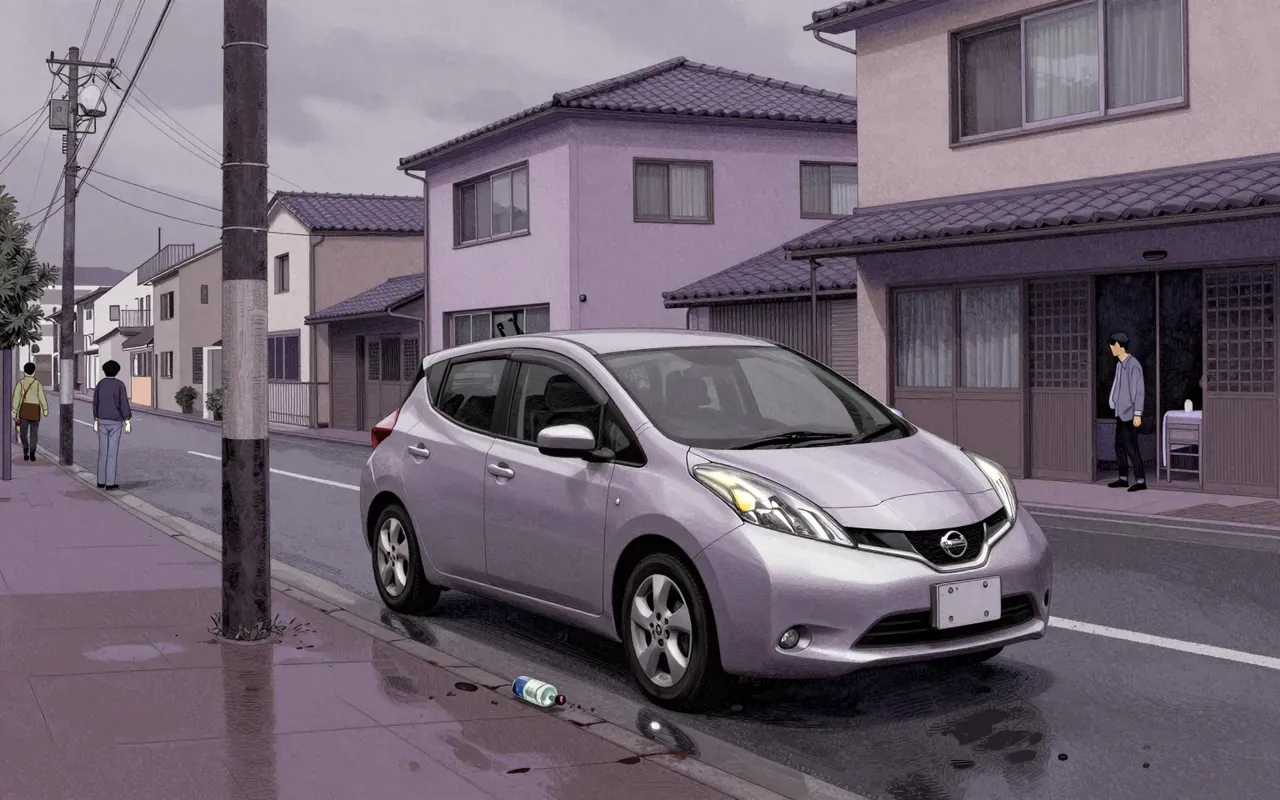
Nissan LeafNissanThe Nissan Leaf is a battery electric car produced by Nissan since 2010. It was unveiled on 1 August 2009 as the world's first mass-market electric and zero-emission vehicle. Production began on 22 October 2010 at the Oppama facility in Yokosuka, Kanagawa. The first generation used a 192-cell laminated lithium-ion battery pack co-developed with NEC, positioned under the floor between the wheels for optimized handling and space. Its motor delivered 80 kW (110 hp) and enabled ~160 km (100 miles) of range on a full charge. It was offered exclusively as a 5-door hatchback until 2025, when it became a crossover SUV model. By December 2020, cumulative global deliveries reached 500,000 units.
9:06
Regenerative brakingRegenerative braking is a core subsystem—not a feature—in electrified transport. It works by repurposing the drive motor as a generator during deceleration, feeding recovered energy back to storage. It improves efficiency and reduces mechanical brake wear. But it cannot stop a vehicle alone, demands tight integration with friction braking, and only functions where high-voltage power electronics and energy storage are already present. Its value lies in incremental energy recovery—not autonomy from conventional braking.
9:34
Solar cell1839The 1839 solar cell is a foundational observation, not a working technology. It demonstrated light-to-electricity conversion but lacked the architecture to extract usable current. Its value is historical and conceptual — not functional.
Up next in Technology

Smalltalk

Alan Kay and team · 1972 · 10:18

Smalltalk didn’t invent object orientation—it weaponised reflection and made the IDE inseparable from the language.

10:18