What it is and the problem it solves
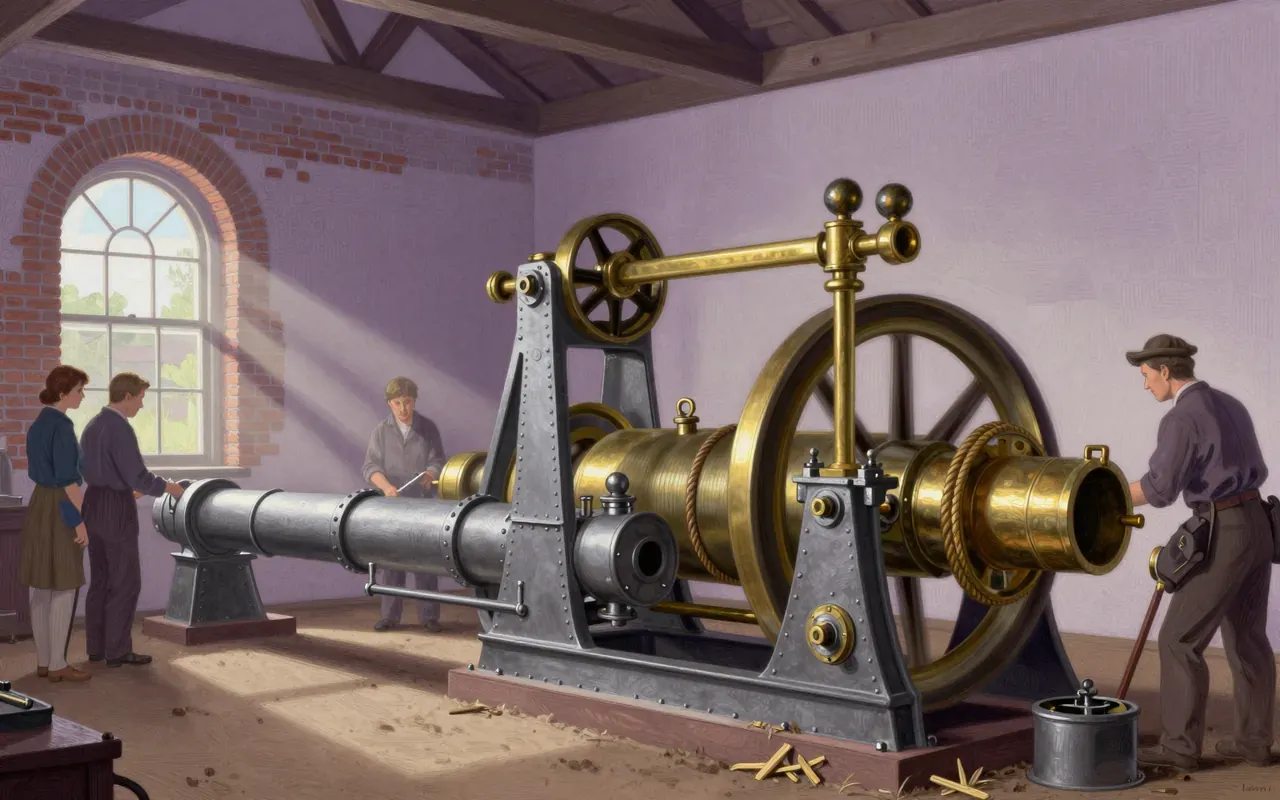
It is a stationary steam engine with independently timed admission and exhaust valves. It solves inefficient fuel use and unreliable speed control in fixed-cutoff engines used where water power was unavailable.
How it works
It uses separate rotary valves for steam admission and exhaust, controlled by a wrist-plate driven from a single eccentric. A governor adjusts the timing of trip valves to vary steam cutoff during each stroke while keeping the throttle wide open.
What works
Independent valve timing avoids thermal cycling in passages. Variable cutoff lets steam expand after valve closure, powering most of the stroke. Wide-open throttle with governor-controlled cutoff approximates the Carnot cycle better than throttled engines.
What does not
It does not eliminate condensation losses, nor does it solve cylinder cooling or friction at scale. It does not improve power-to-weight ratio or enable mobility—it is strictly a stationary industrial prime mover.
What it changes
It changes where factories can be built: away from rivers. It changes fuel economics for mill owners—30% less coal per unit of work. It changes the benchmark for thermal efficiency among stationary steam engines until the 20th century.
Is it worth your time
Yes—if you work on thermal systems, historical energy infrastructure, or mechanical control design. Its valve gear logic remains legible in modern variable-cutoff principles, but it offers no direct operational relevance to digital or electrical systems.