technologybriefs
10:27in productionCh. 1 · The Desert Trigger/ 10:27 · ceiling 15 min
Robotics · AI

DARPA Grand Challenge

The first driverless car race didn’t produce a working robot — it produced a better way to break them.

The DARPA Grand Challenge was a staged, high-consequence field test — not a product launch or research grant. It forced autonomy out of simulation and into sand, asphalt, and stop signs. Its value lies in what it revealed: that perception fails first, coordination lags behind planning, and real-world timing breaks brittle architectures. It changed how engineers validate claims — by measuring metres travelled, not metrics reported.

Chapters & takeaways4
  1. 0:58
    The Desert Trigger

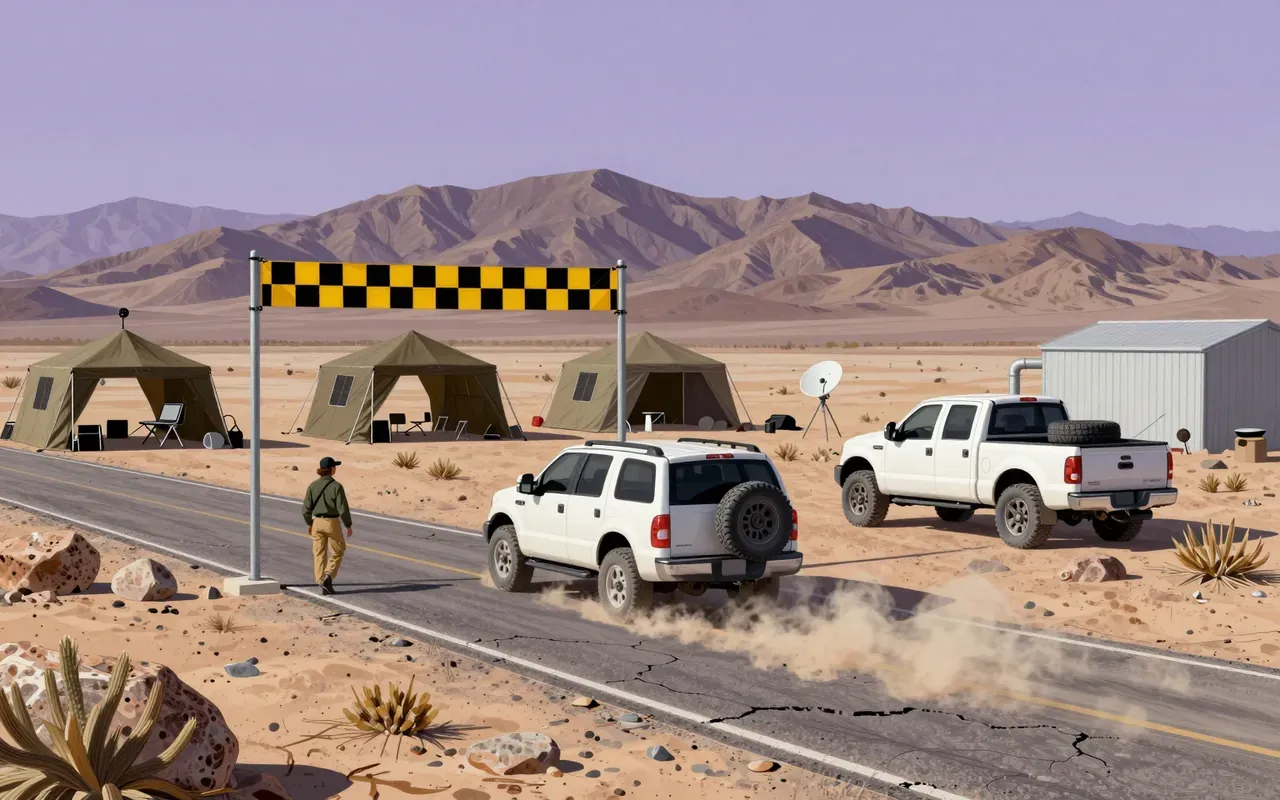
    It was the world’s first long-distance driverless car race — designed to force breakthroughs in full autonomy, not incremental automation.

  2. 2:44
    From Zero to 212 km

    Failure in 2004 was total — but in 2005, five vehicles finished 212 km, proving long-range off-road autonomy was physically possible.

  3. 4:01
    Rules, Not Just Roads

    The 2007 Urban Challenge demanded real-time traffic law compliance and peer negotiation — not just obstacle avoidance.

  4. 5:50
    The Field Test Imperative

    It replaced academic abstraction with concrete, high-stakes failure — making perception, planning, and coordination inseparable.

Worth your time?

Yes. Study the whole thing.

4.5/ 5
What works
  • proving long-distance off-road autonomy is physically possible
  • establishing urban interaction as a benchmark
  • creating shared, public failure data for perception stacks
What does not
  • deliver production-ready autonomy
  • include human drivers or remote operators in scoring
  • test in rain, snow, or low-light conditions
Study it if
  • robotics engineers
  • AI safety researchers
  • autonomous systems validators
Skip it if
  • fleet operators
  • consumer EV buyers
  • policy makers drafting AV legislation
The written brief1 min read

What it is and the problem it solves

A prize-based competition launched by DARPA to solve the military problem of building fully autonomous ground vehicles capable of completing long off-road courses without human intervention.

How it works

It ran a series of timed, real-world courses for autonomous ground vehicles — first in desert terrain (2004–2005), then in urban environments with traffic laws and multi-vehicle interaction (2007), later expanding to subterranean and degraded domains.

What works

It proved autonomous navigation over long distances was possible: in 2005, five vehicles completed 212 km; all but one of the 23 finalists surpassed the 11.78 km best from 2004. The 2007 Urban Challenge demonstrated rule-compliant, multi-robot interaction in cluttered settings — including precedence at four-way stops.

What does not

It did not deliver deployable autonomy. In 2004, no vehicle finished the route. Even in 2005, only five of 23 finalists completed the 212 km course — and all required extensive pre-mapped terrain, no live traffic, and no dynamic human actors.

What it changes

It shifted autonomy development from lab-bound simulation and highway-only prototypes to field-tested, mission-driven engineering — forcing integration of GPS, LIDAR, vision, planning, and coordination under time pressure.

Is it worth your time

Yes — if you work on autonomy systems, perception stacks, or robotics validation. It exposed hard limits of sensor fusion and real-time decision-making in unstructured environments before industry had scalable test frameworks.
Same field · Robotics4 of 6
Up next in Technology

Automated external defibrillator

Claude Beck · 9:53

Automation didn’t start with AI—it started with a machine that could decide, alone, whether to jolt a stranger’s heart.

9:53