What it is and the problem it solves
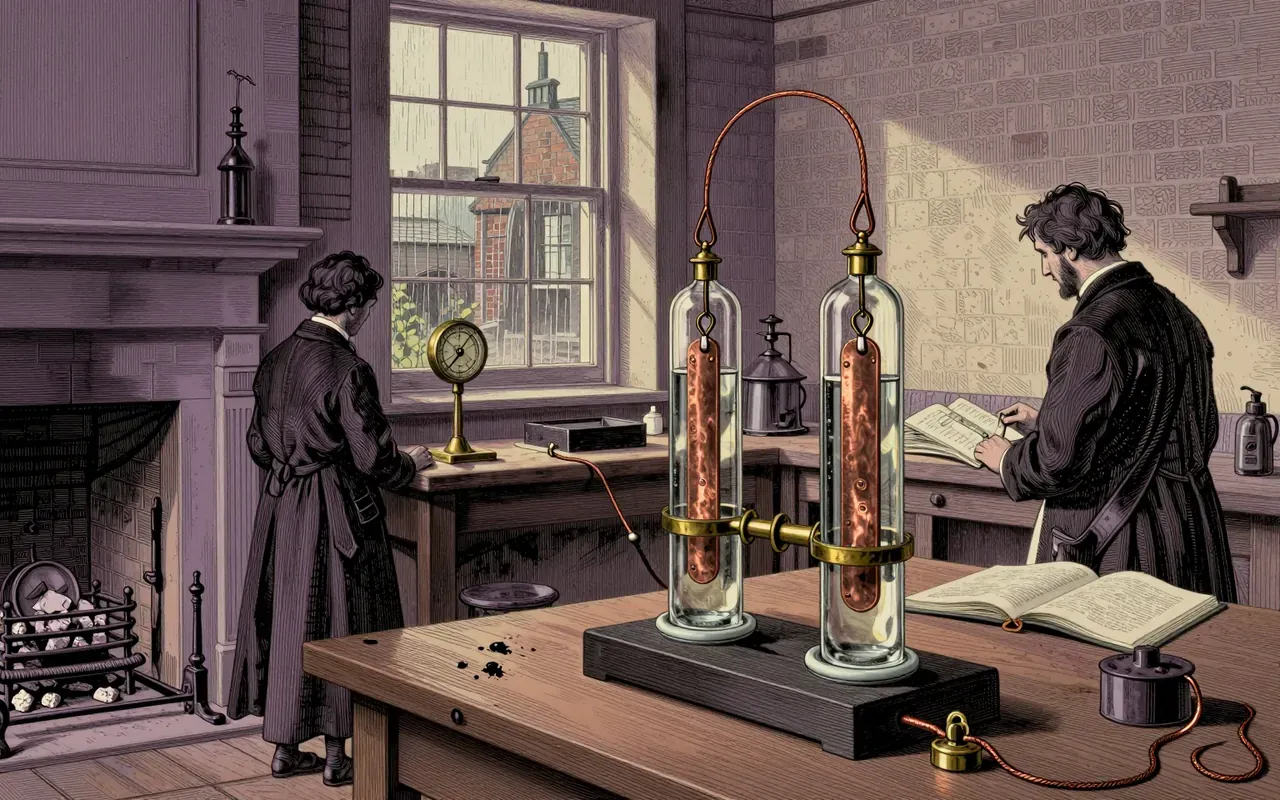
It is a gas voltaic battery — an electrochemical device that converts hydrogen and oxygen into electricity and water. It solves no practical energy problem but establishes the principle of reversible water electrolysis.
How it works
Grove’s fuel cell combined hydrogen and oxygen across separate electrodes — sheet iron and copper — immersed in a sulphate of copper and dilute acid solution, separated by porcelain plates. It generated electricity through electrochemical reaction, not combustion.
What works
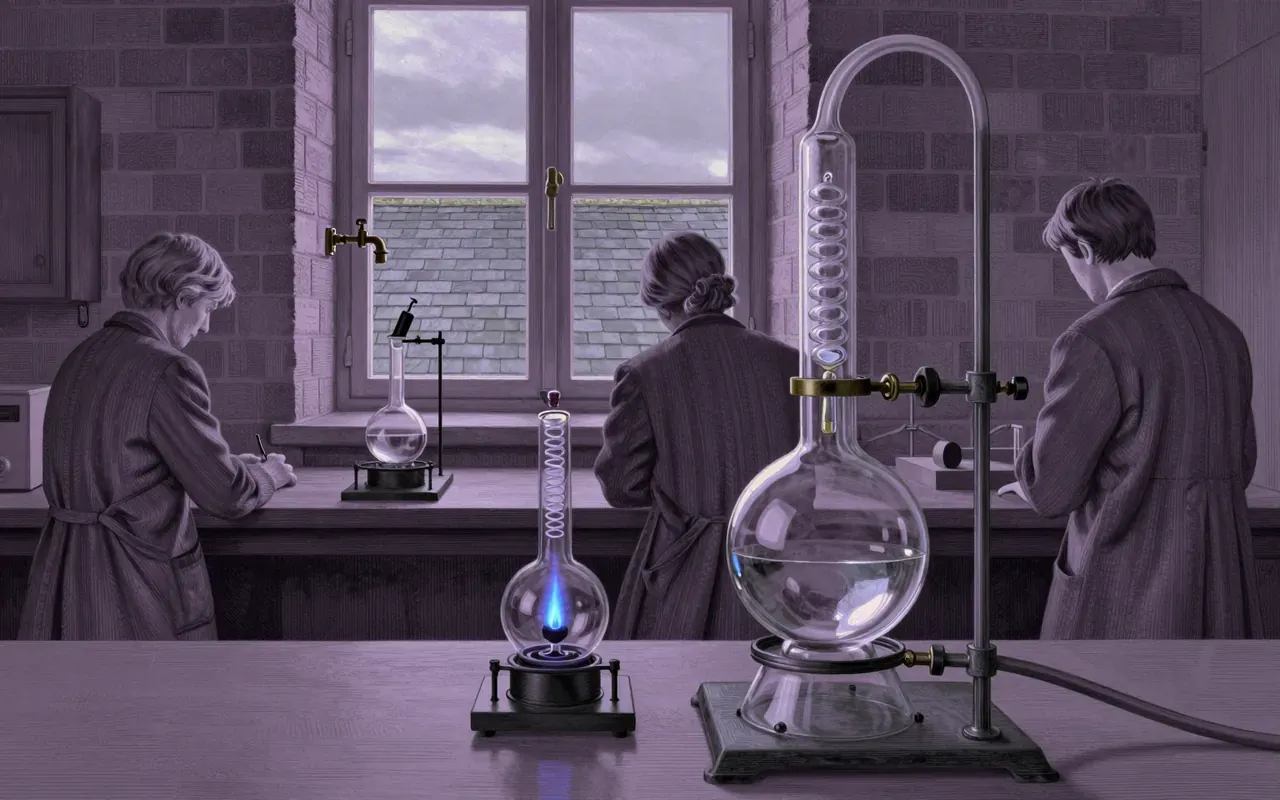
The core mechanism works: hydrogen oxidation at one electrode and oxygen reduction at the other produce measurable current. It successfully demonstrates thermal dissociation of steam into hydrogen and oxygen — and their recombination — for the first time.
What does not
It does not sustain continuous operation. It does not scale. It does not isolate pure hydrogen efficiently. It does not avoid electrode corrosion or electrolyte depletion. It does not deliver usable power beyond laboratory demonstration.
What it changes
It changes how scientists think about energy conversion: it proves electricity can be generated reversibly from water dissociation, establishing the first experimental link between chemical, electrical, and thermal forces.
Is it worth your time
No — it is not worth your time as a working energy system. It produced negligible current, required constant manual replenishment of gases and electrolyte, and had no path to scalability or efficiency in 1842.