technologybriefs
9:23in productionCh. 1 · Inside the circuit/ 9:23 · ceiling 15 min
Energy

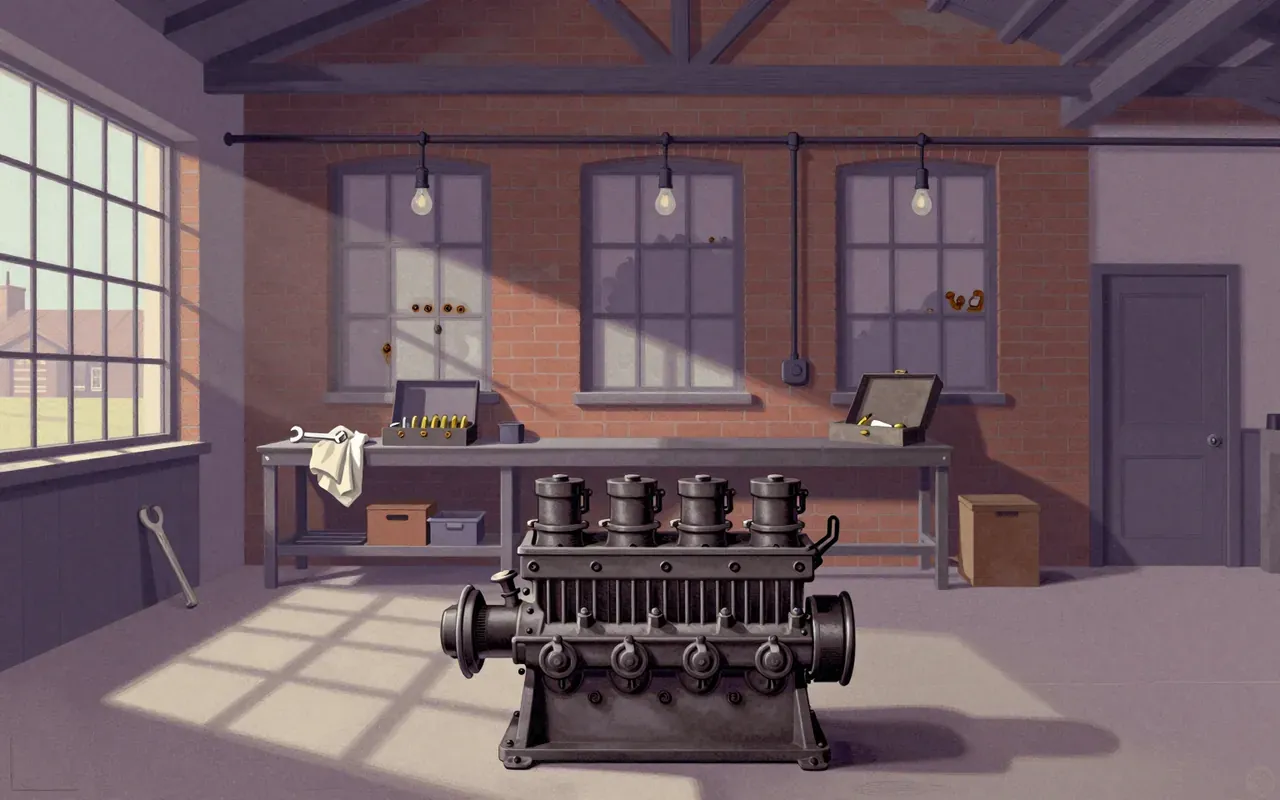
Internal combustion engine

1924

A triumph of brute-force thermodynamics — powerful, wasteful, and already past its peak by 1924.

The internal combustion engine is not a 1924 invention. It is a mature, thermodynamically constrained system whose core mechanism — internal combustion driving pistons — was codified by Otto in 1876. Its value lies in portability and power density, not novelty or efficiency.

Chapters & takeaways4
  1. 0:49
    Inside the circuit

    Combustion happens inside the working fluid circuit — not in a separate boiler — making force generation direct and compact.

  2. 2:21
    Direct mechanical action

    Force moves pistons, blades, rotors or nozzles — turning chemical energy into motion without intermediate steps.

  3. 3:58
    Mature, not new

    Commercial viability was proven by the mid-1800s; the Otto engine of 1876 set the modern template — not invented in 1924.

  4. 5:39
    Precedents stretch back to 1794

    Liquid fuel and dust explosions were tried decades earlier — the 1924 engine is an iteration, not an origin.

Worth your time?

Yes. Study the whole thing.

4.5/ 5
What works
  • delivers portable kinetic energy
  • enables vehicle-scale propulsion
  • operates with refinery-grade liquid fuels
  • supports repairable, field-serviceable mechanics
What does not
  • achieve full energy conversion
  • eliminate thermal waste
  • scale without fuel infrastructure
  • require no maintenance
Study it if
  • mechanical engineers
  • infrastructure planners
  • historians of industrial systems
Skip it if
  • AI researchers
  • software developers
  • quantum computing specialists
The written brief1 min read

What it is and the problem it solves

It is a heat engine that burns fuel internally to generate motion. It solves the problem of portable, high-power-density mechanical energy — where steam engines were too bulky and batteries too weak.

How it works

Fuel combusts with air inside a sealed combustion chamber integrated into the working fluid circuit. The resulting high-temperature, high-pressure gases expand and apply direct force to moving components — pistons, turbine blades, rotors or nozzles. That force moves the component over distance, converting chemical energy into kinetic energy.

What works

The Otto cycle’s four-stroke compression-ignition principle works reliably at scale. Piston-based ICEs deliver predictable torque, repairable mechanics, and compatibility with distillate fuels refined from petroleum. Commercial success since the mid-19th century proves its functional robustness.

What does not

It does not eliminate waste heat. It does not achieve full chemical-to-mechanical energy conversion. It does not run without regular maintenance, fuel refinement, or exhaust management. It does not scale cleanly: efficiency gains plateaued long before 1924.

What it changes

It replaces stationary steam plants and animal traction with compact, on-demand power sources. It enables decentralised propulsion — in vehicles, boats, generators — but locks infrastructure into liquid fuel logistics and thermal emissions.

Is it worth your time

Yes — if you are evaluating foundational power systems for mobility or mechanical work. It is not novel in 1924; it is mature, widely deployed, and operationally defined by its thermodynamic limits and mechanical wear, not promise.
Same field · Energy4 of 14
11:12
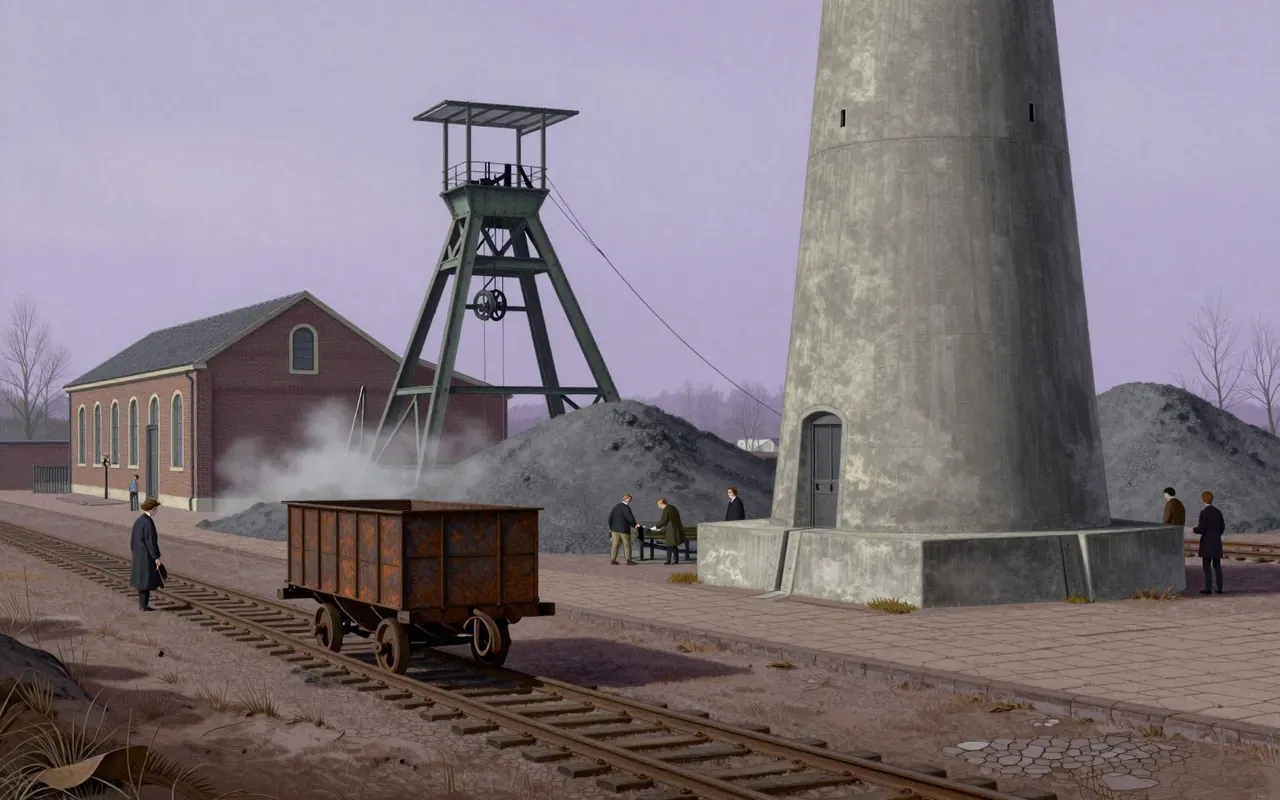
Cooling towerCooling towers solve a hard thermodynamic problem: rejecting large-scale waste heat where water or airflow is available. Their hyperboloid form—patented in 1916, built in 1917—was an engineering refinement, not a revolution. They work reliably, but demand water, space, and maintenance. They enable thermal power—but do not make it clean or efficient.
10:33
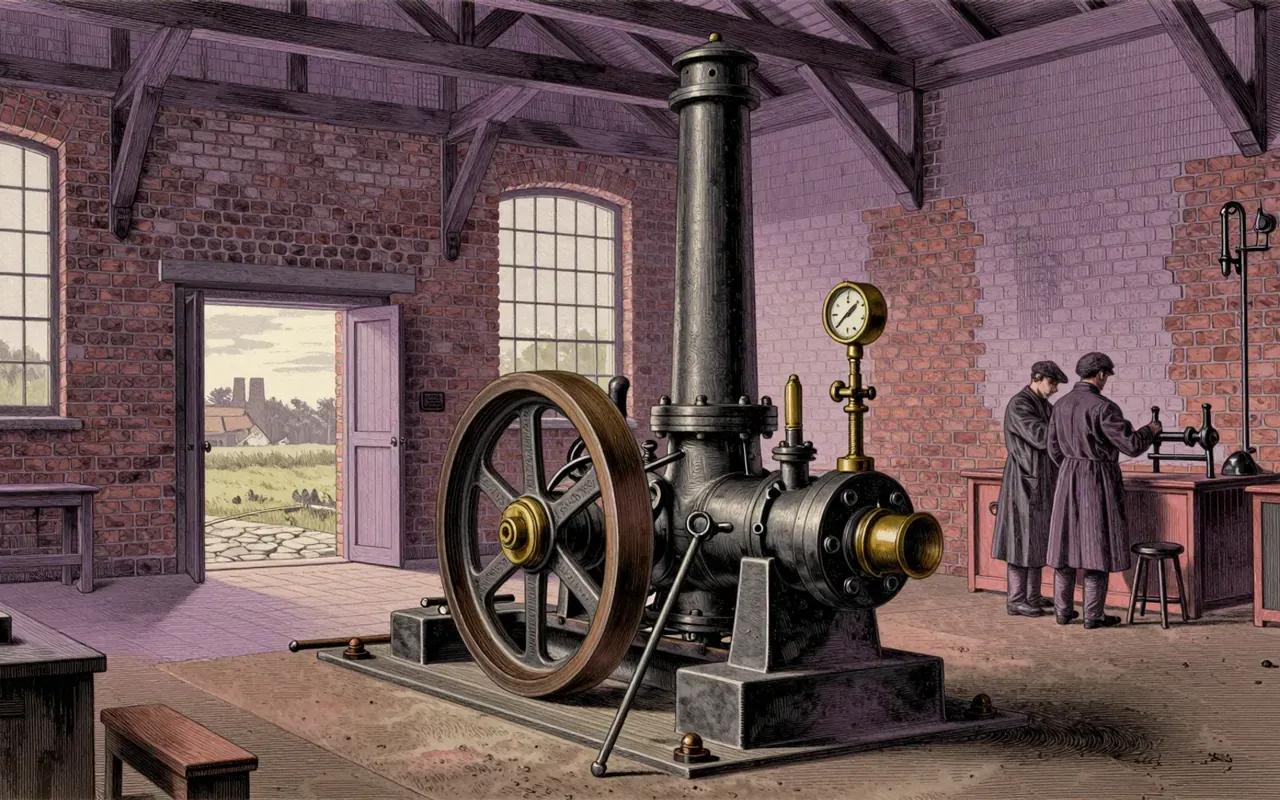
Corliss steam engineGeorge Henry CorlissThe Corliss steam engine is a mechanically elegant solution to stationary steam inefficiency—no more, no less.
10:18
Diesel engineRudolf Diesel · 1893The diesel engine is a compression-ignition internal combustion engine that replaces spark-based ignition with heat from air compression. It solves the low efficiency of steam engines by achieving 26.2% effective efficiency by 1897 — 75% above steam’s 10% theoretical limit. Its core mechanism works: air compression alone ignites fuel. But its original isothermal-cycle theory failed — abandoned after criticism revealed it demanded physically impossible compression ratios. Diesel corrected to a constant-pressure cycle by June 1893, filed two patents, published a treatise, and proved the concept with petrol ignition on 10 August 1893. The first successful engine, Motor 250/400, was tested in 1897. It changes energy conversion by establishing compression ignition as a scalable, high-efficiency alternative — but only after discarding its founding premise. Worth your time if you work on thermodynamics, engine design, or historical technology development.
9:45
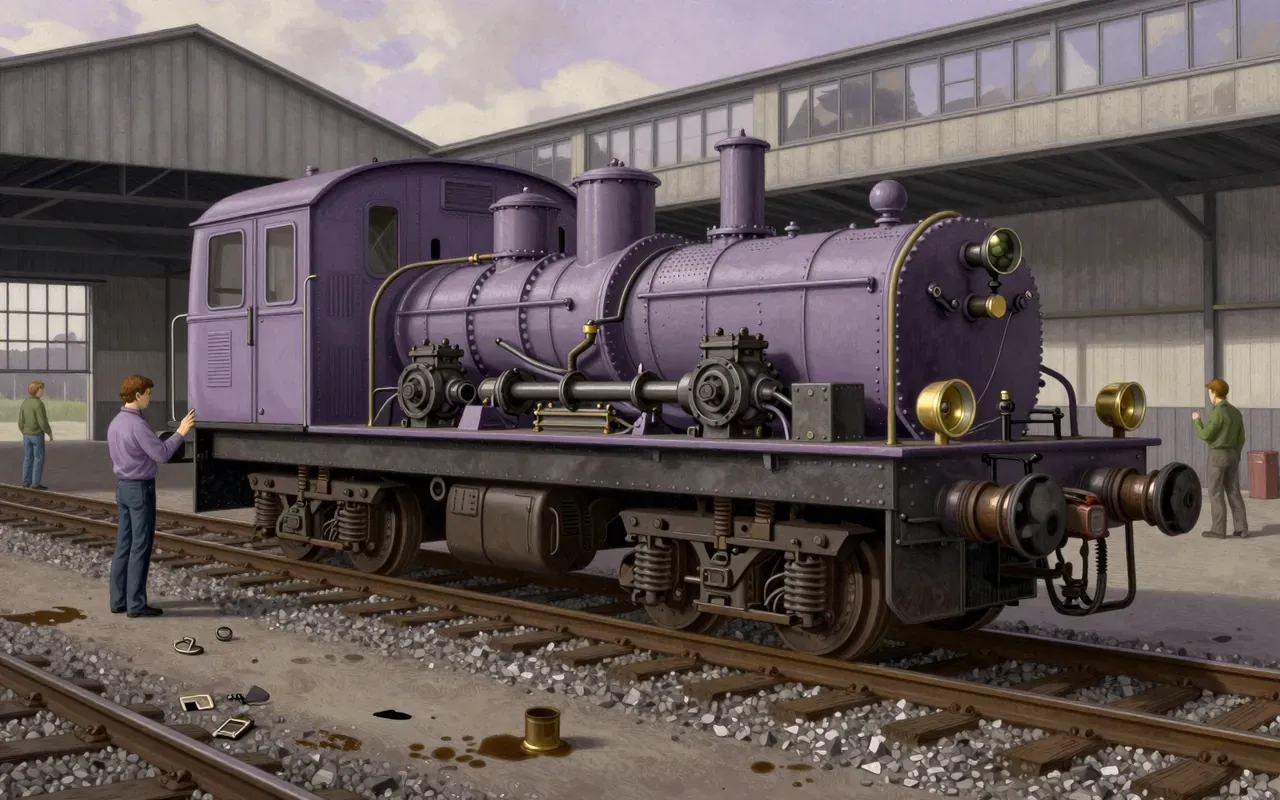
Diesel locomotiveThe diesel locomotive is a hardware solution built around a power source that refused to behave like one. It succeeded only after transmission systems decoupled the diesel engine’s rigid operating limits from wheel demand—and only after the engine itself became light and powerful enough to mount. Its early failures weren’t technical missteps but timing errors: the mechanism arrived before the machine could carry it.
Up next in Technology

International Space Station

1998 · 10:09

The ISS proves sustained multinational orbital habitation is possible — not that it is practical, affordable, or extensible.

10:09