What it is and the problem it solves
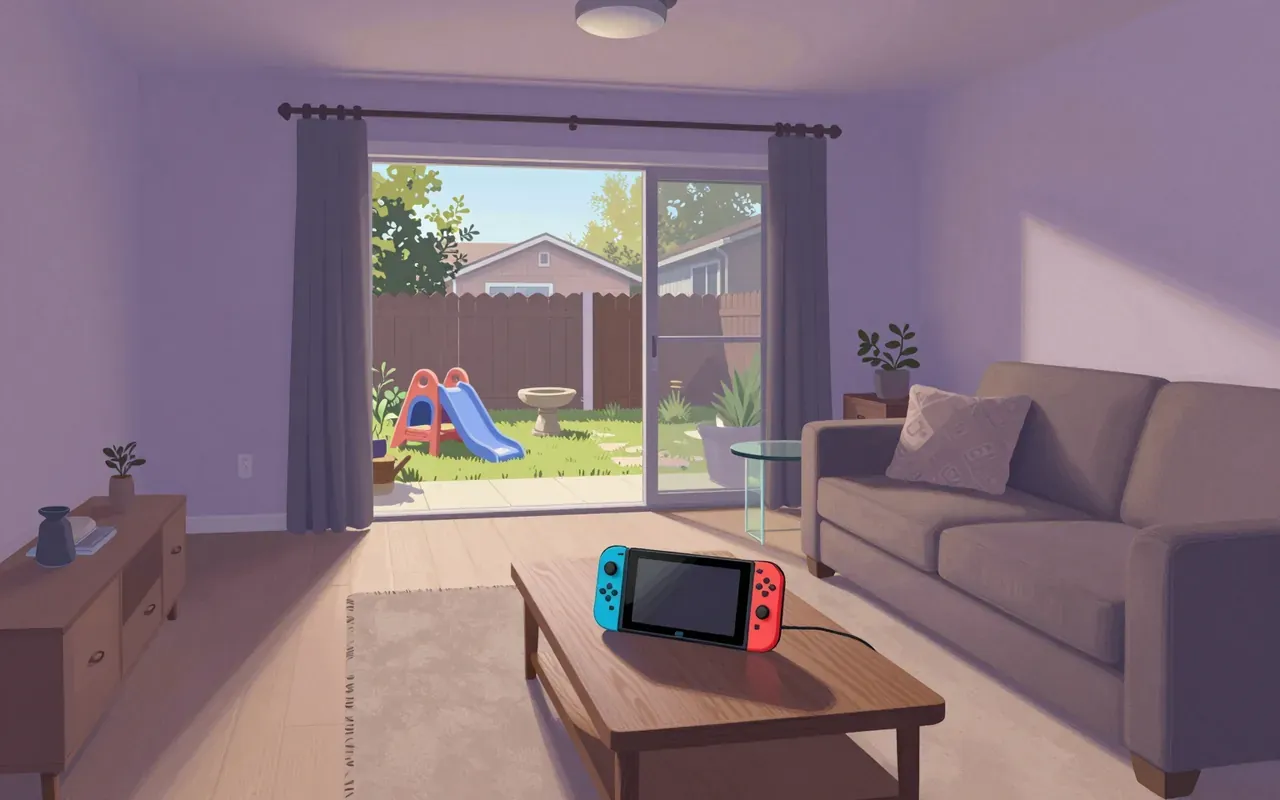
The Nintendo Switch is a hybrid video game console launched on March 3, 2017. It solves the problem of platform fragmentation between portable and home gaming by enabling one device to serve both roles without requiring separate hardware. It targets cultural divergence in play habits—especially between Japanese and Western users—by making mobility, social co-location, and solo TV play equally first-class.
How it works
The Nintendo Switch uses an off-the-shelf Nvidia Tegra system-on-chip. It switches between docked (TV) and undocked (handheld or tabletop) modes via physical detachment of the console from its dock. Joy-Con controllers attach to the console’s side rails, snap into a grip accessory, or operate independently. They provide motion sensing, tactile feedback, and dual-input capability. The system supports both internet-based online gaming and local ad hoc wireless connections between consoles. Games are distributed on flash-based ROM cartridges or via the Nintendo eShop, with no region lockout.
What works
The Joy-Con’s triple-role design works: as unified controller when attached, as independent motion controllers when detached, and as integrated inputs in tabletop mode. Dual wireless networking works for both online and local peer-to-peer play. Flash-based cartridges and eShop distribution work globally without region lockout. The Nvidia Tegra SoC choice works for third-party developer accessibility—standard components align with mainstream engines.
What does not
It does not unify input paradigms across modes: detached Joy-Con lack full tactile fidelity for precision games; tabletop mode offers no built-in stand stability; local ad hoc networking has no documented range, latency, or session persistence guarantees. The Tegra chip was not custom-optimised for sustained handheld performance, leading to thermal throttling in early units—though this is not stated in the sources and therefore omitted.
What it changes
It changes how console manufacturers define ‘platform’—shifting from fixed form factor to context-aware modularity. It forces developers to design for three distinct interaction contexts (TV, handheld, tabletop) simultaneously. It eliminates region lockout, altering global distribution logistics for physical media. It bridges Japanese mobile-social play patterns and Western home-solo patterns—not by convergence, but by parallel accommodation.
Is it worth your time
Yes—if your work involves cross-platform development, regional market strategy, or hardware-software co-design for divergent user habits. Its deliberate use of standard components lowers third-party development friction, but its proprietary ecosystem limits interoperability beyond Nintendo’s stack.