9:13in productionCh. 1 · 1891: Light bulbs, not software/ 9:13 · ceiling 15 min
Tech history
Philips
1891
Philips didn’t invent the future — it licensed the present, then pivoted before the market caught up.
Philips is a Dutch multinational health technology company and former major consumer electronics manufacturer. It was founded in Eindhoven in 1891 by Gerard Philips and his father Frederik Philips to manufacture incandescent light bulbs. In October 1997, it decided to relocate its corporate headquarters from Eindhoven to Amsterdam, with relocation beginning the following year. Philips introduced the compact cassette format — becoming a widely adopted standard for tape recording — and later collaborated with Sony to develop the compact disc standard. Its first Compact Cassette recorder was introduced in August 1963 at the Funkausstellung exhibition in Berlin, and the format subsequently became an international standard for recorded and recordable audio. Philips and Sony jointly developed the compact disc format during the late 1970s and early 1980s, with the first commercial CD products appearing in 1982 and 1983.
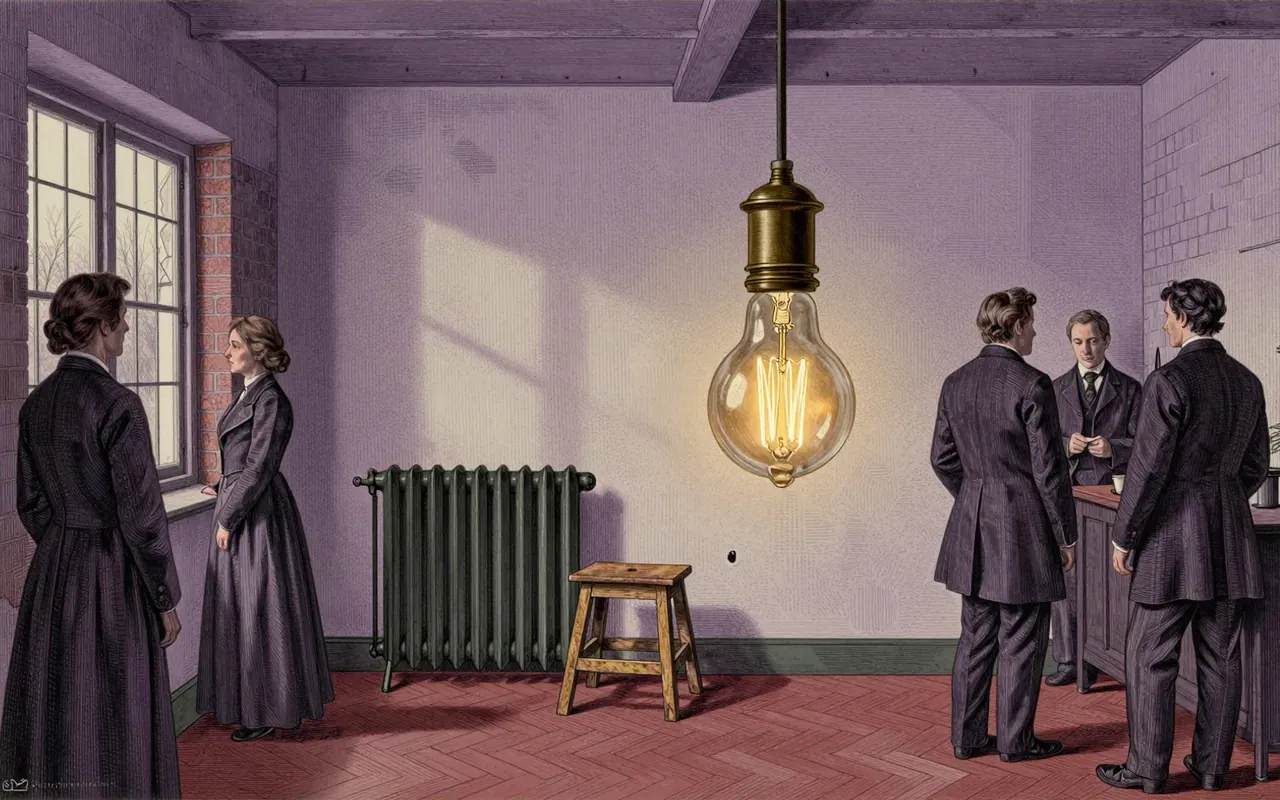
Philips began as a light bulb factory in Eindhoven — not a tech conglomerate, but a precision manufacturing operation rooted in 19th-century industrial practice.
2:02
1963: A box that rewrote audio
The Compact Cassette launched at Berlin’s Funkausstellung in 1963 — a proprietary format that became an open standard through licensing, not monopoly.
3:46
1978–1983: Two companies, one disc
Philips and Sony co-developed the CD in the late 1970s — a rare case of rival firms aligning on physical layer specs before competing on players and discs.
5:14
1997: The move that ended an era
Philips exited consumer electronics leadership by relocating its headquarters from Eindhoven to Amsterdam in 1998 — a structural signal of strategic retreat.
Worth your time?
Yes. Study the whole thing.
4/ 5
What works
The Compact Cassette became an international standard for recorded and recordable audio.
The CD format, jointly developed with Sony, achieved commercial launch in 1982 and 1983.
Philips secured the Dutch Royal designation in 1916.
What does not
Philips did not develop the CD alone.
Philips did not remain a major consumer electronics manufacturer.
Philips did not retain its headquarters in Eindhoven after 1998.
Study it if
standards strategists
hardware transition planners
health tech repositioning teams
Skip it if
AI product managers
cloud infrastructure engineers
startup founders seeking first-mover advantage
The written brief1 min read
What it is and the problem it solves
Philips is a Dutch multinational health technology company and former major consumer electronics manufacturer. It solved the problem of scalable, portable, and licensable audio recording and playback infrastructure.
How it works
Philips built incandescent light bulbs in Eindhoven from 1891. It later designed the compact cassette format and co-developed the compact disc standard with Sony.
What works
The compact cassette became an international standard for recorded and recordable audio. The CD format, jointly developed with Sony, achieved commercial launch in 1982 and 1983. Philips secured the Dutch Royal designation in 1916.
What does not
Philips did not retain its headquarters in Eindhoven after 1998. It did not develop the CD alone. It did not remain a major consumer electronics manufacturer.
What it changes
Philips changed how audio was recorded, distributed, and played by establishing two physical media standards — cassette and CD — both of which displaced prior formats through industrial collaboration and licensing.
Is it worth your time
Yes — if you work on standards, hardware transitions, or corporate reinvention in health tech. No — if you need current product specs or AI strategy. Philips’ legacy is in mechanisms that scaled globally, not in sustained consumer dominance.