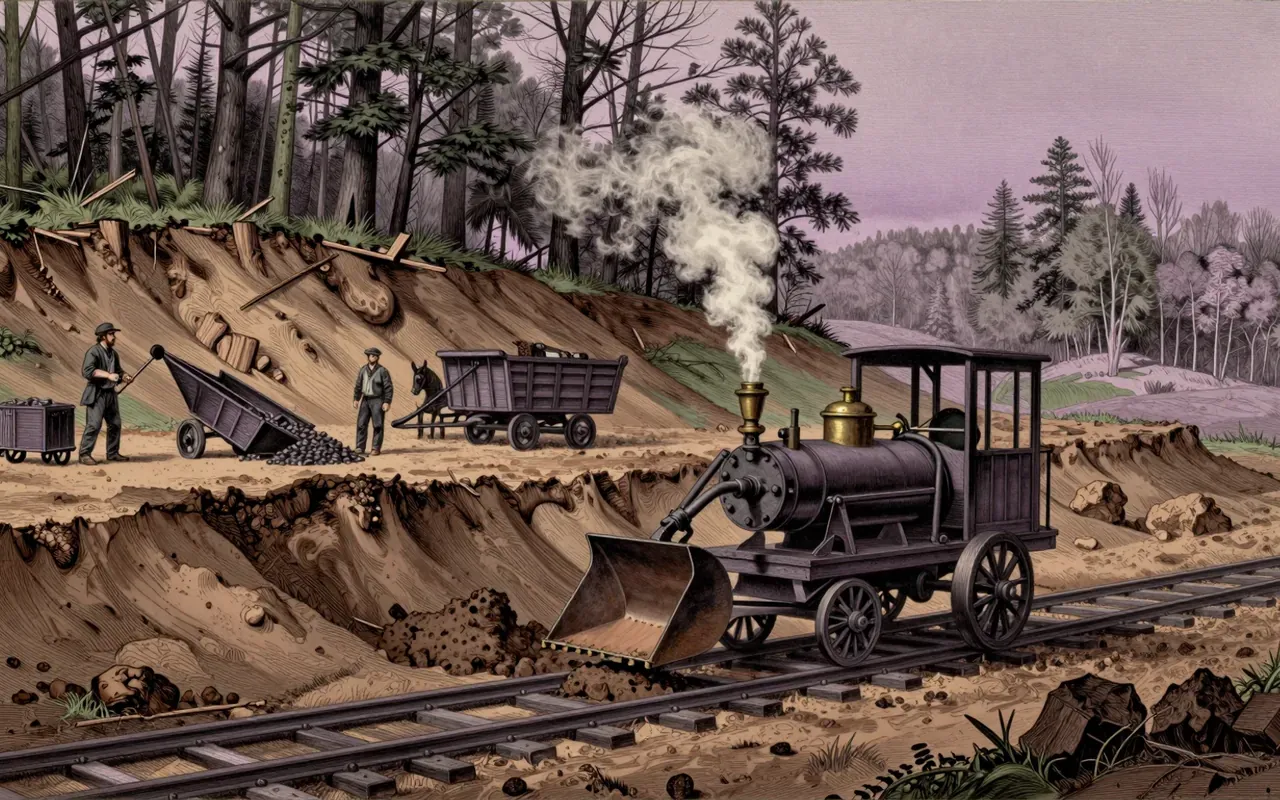
The steam engine is an external combustion heat engine that uses steam pressure to drive a reciprocating piston, converting linear motion into rotation via crank and connecting rod. Its earliest verified use was in mine drainage: a 1606 patent for a steam-powered pump; Savery’s commercially used steam pump (no piston); and Newcomen’s 1712 engine delivering continuous power. It works—but inefficiently, requiring constant condensation and manual intervention. It changed mining, but not energy theory. It is worth studying as the first successful decoupling of combustion from motion, not as the origin of industrial efficiency.
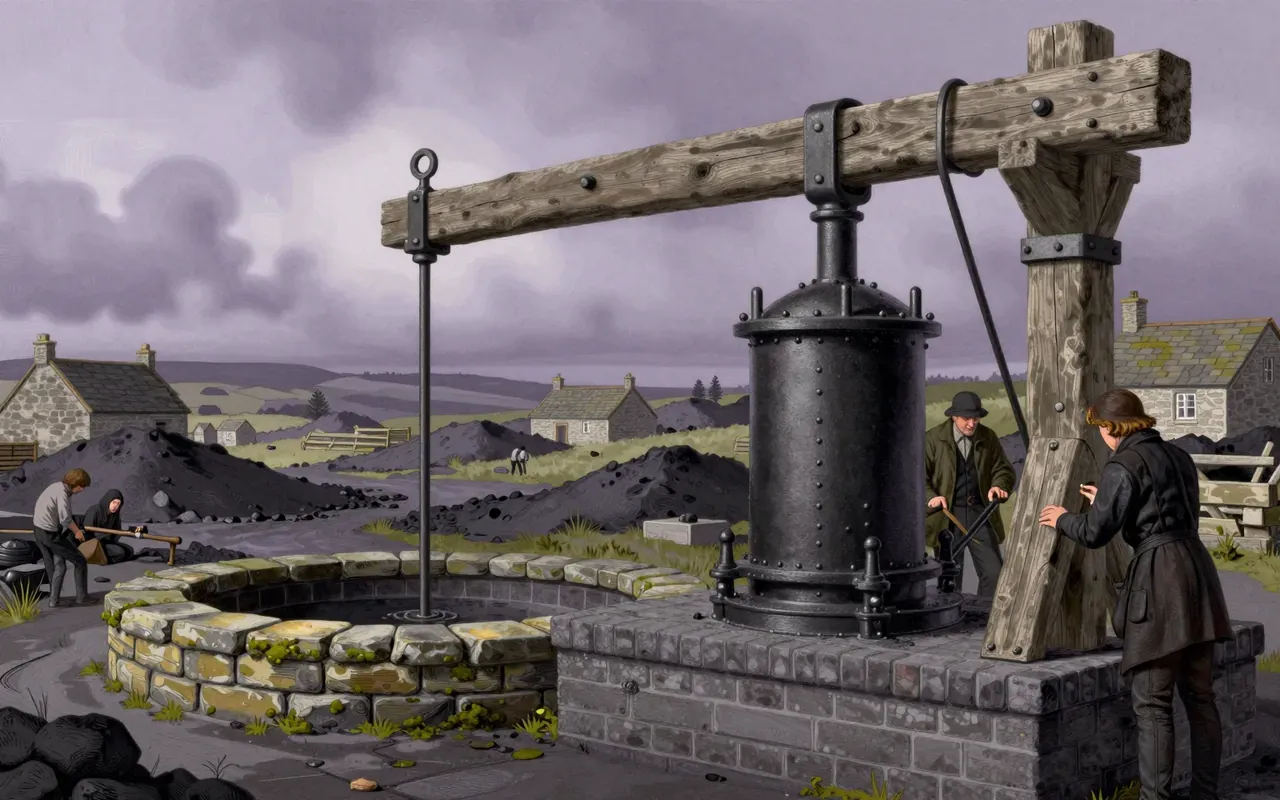
The first steam-powered device was a mine-draining pump patented in 1606.
2:06
Direct pressure, no mechanics
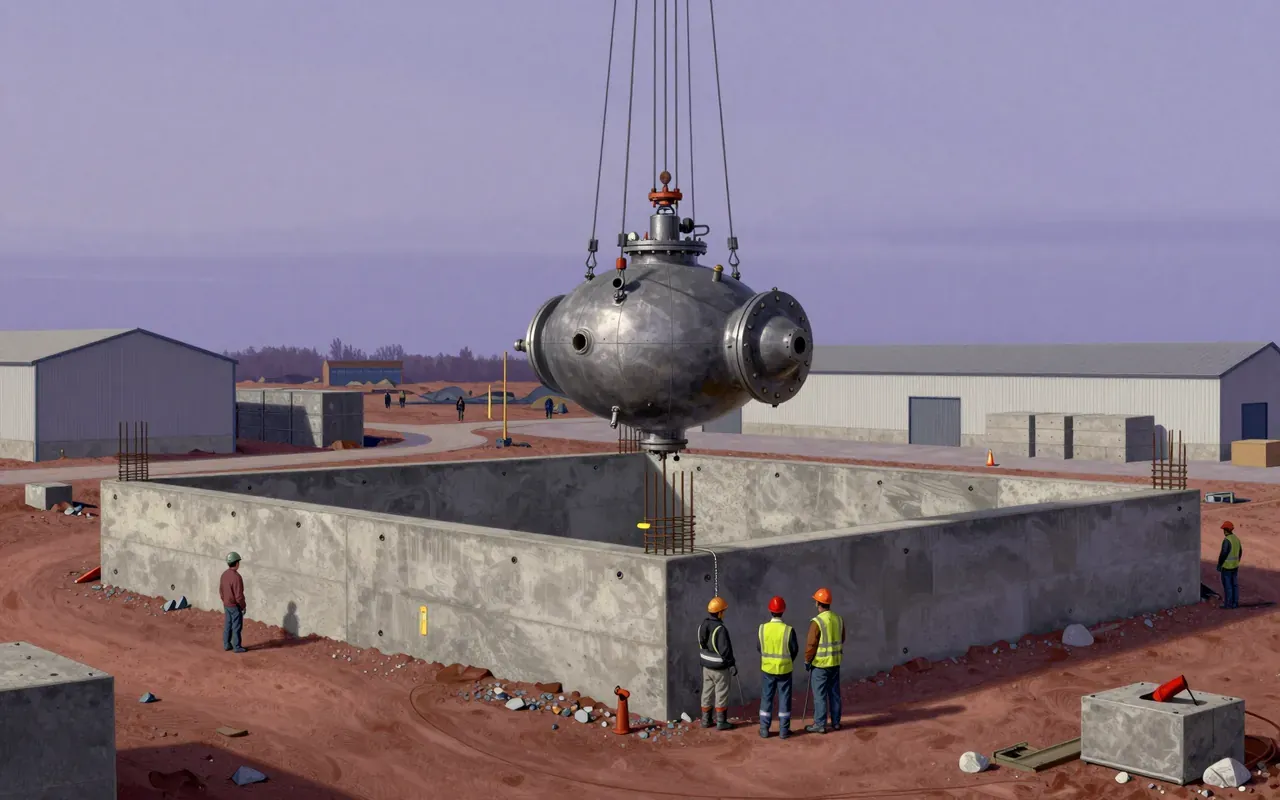
Savery’s pump used steam pressure directly on water—no piston, no rotation.
3:17
1712: First continuous power
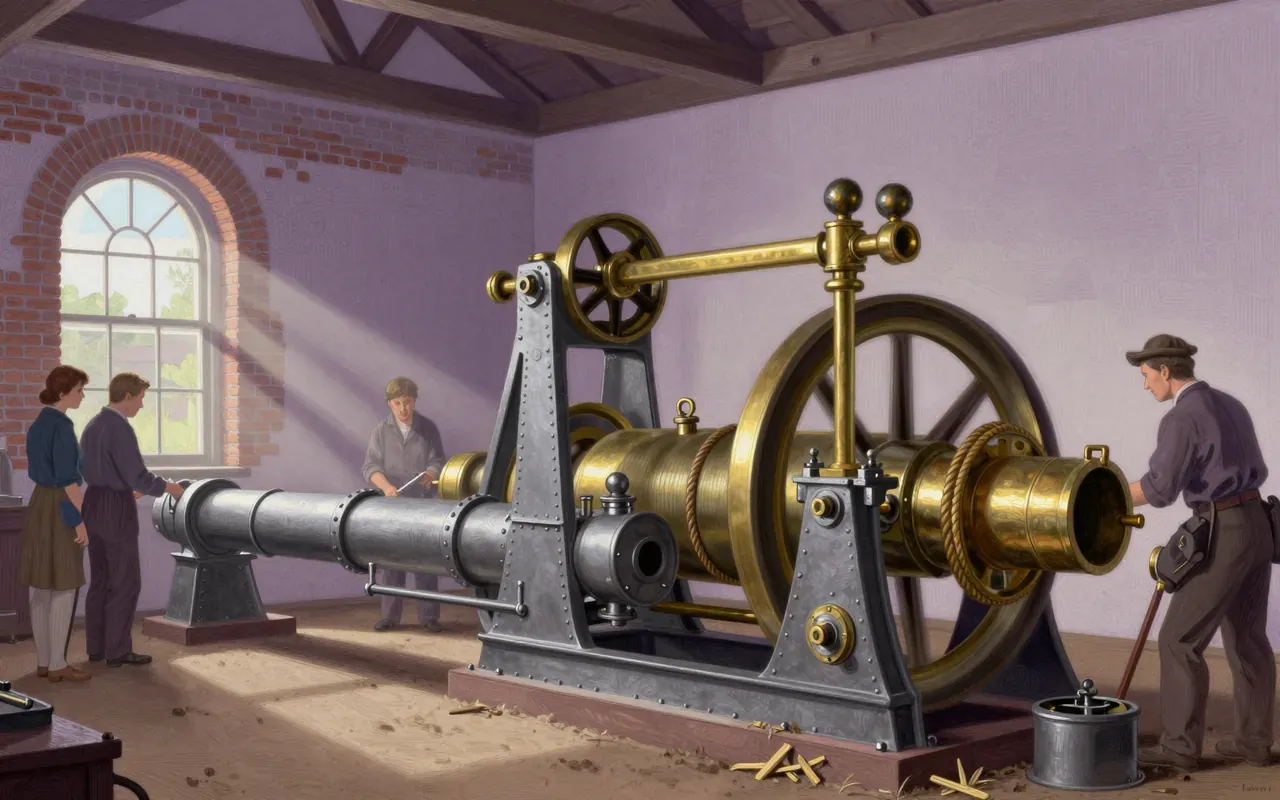
Newcomen’s 1712 engine delivered continuous power to machines using atmospheric pressure and condensation.
4:45
How it moves
It is external combustion: fire heats water remotely, steam drives a piston, and a crank converts motion.
5:48
Rankine, not revolution
Its ideal thermodynamic model is the Rankine cycle—not Carnot, not Otto.
Worth your time?
Yes. Study the whole thing.
3.5/ 5
What works
transmitting continuous mechanical power
separating combustion products from working fluid
driving rotary machinery via crank mechanism
enabling deep-mine drainage
What does not
generate high thermal efficiency
eliminate manual valve timing
operate without large condenser infrastructure
use internal combustion
Study it if
historians of energy systems
engineers studying external combustion cycles
students of mechanical power transmission
Skip it if
practitioners seeking modern prime movers
developers of compact thermal systems
anyone assuming it was efficient or automated
The written brief1 min read
What it is and the problem it solves
A heat engine that uses steam as its working fluid to perform mechanical work. It solves the problem of removing water from deep mines.
How it works
It burns fuel outside the engine to boil water. Steam pressure pushes a piston inside a cylinder. A connecting rod and crank convert that linear motion into rotation.
What works
The piston-and-cylinder mechanism delivers repeatable linear force. The crank-and-connecting-rod transforms that into usable rotation. External combustion keeps combustion byproducts out of the working fluid.
What does not
It does not generate power efficiently. It does not run on internal combustion. It does not eliminate the need for manual valve operation or condenser cooling infrastructure.
What it changes
It changes mine drainage from muscle- and animal-powered labour to continuous mechanical work. It establishes steam as a controllable intermediary between fire and motion.
Is it worth your time
Yes—if you are studying how external combustion separates heat source from working fluid, or how early mechanical power transmission relied on atmospheric pressure differentials and steam condensation.