9:45in productionCh. 1 · 1954: Silicon, Not 1930/ 9:45 · ceiling 15 min
Tech history · Semiconductors
Texas Instruments
1930
Calling 'Texas Instruments (1930)' an invention confuses corporate founding with technological creation — and erases 24 years of actual engineering.
Texas Instruments was founded in 1930, but none of its landmark electronic inventions date from that year. Its contributions — silicon transistors, ICs, calculators, microcontrollers, DLP chips — all emerged between 1954 and 1987. Attributing them to 1930 misrepresents technological chronology and obscures the real labour of invention.
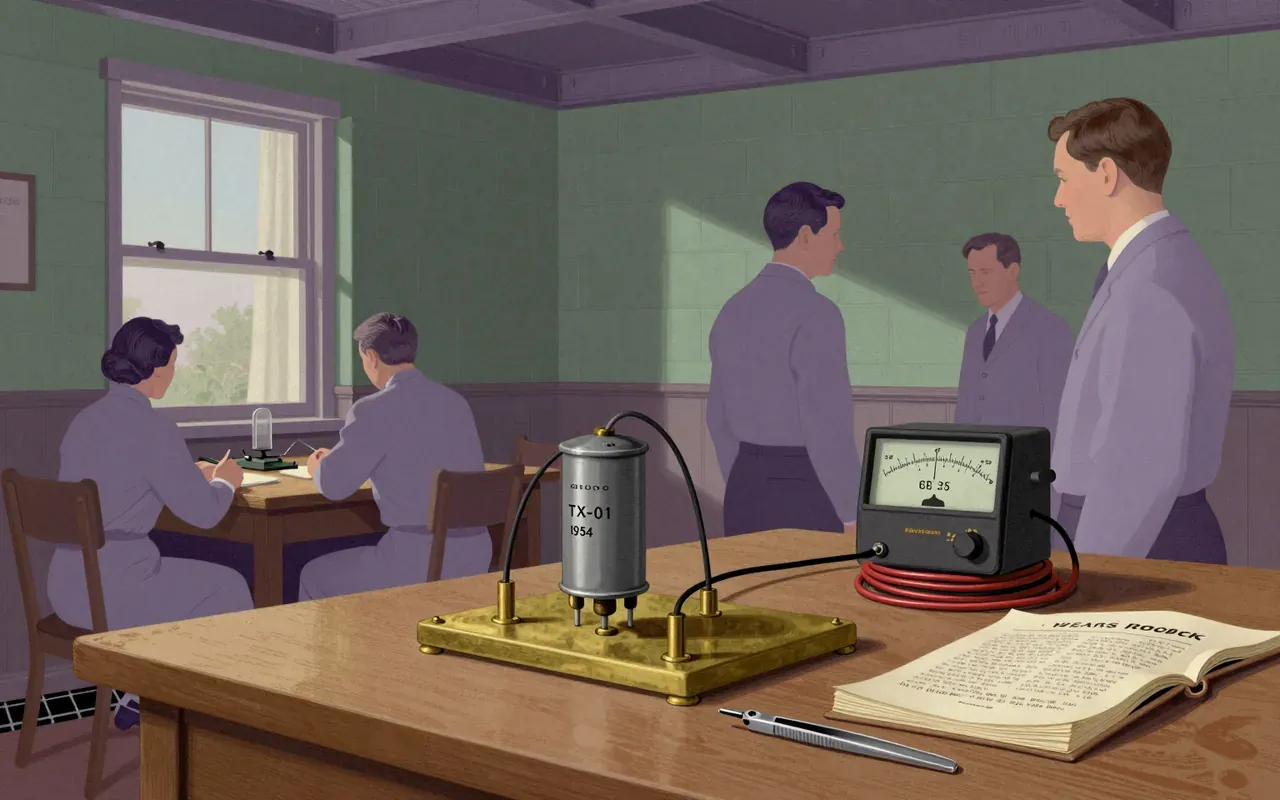
TI’s first major electronics milestone was the commercial silicon transistor — built and tested on April 14, 1954.
2:07
1958: The First IC
Jack Kilby built the first working integrated circuit at TI on September 12, 1958 — not in 1930.
4:21
1967–1970: Miniaturisation Takes Hold
The handheld calculator and single-chip microcontroller both emerged in the late 1960s and 1970, long after TI’s 1930 origins.
6:11
1978–1987: From Chips to Light and Speech
TI’s DLP chip (1987) and speech synthesizer (1978) show its shift into digital display and voice — decades past 1930.
Worth your time?
No. The brief is enough.
1/ 5
What works
as a corporate origin story
as context for later semiconductor work
What does not
solve a 1930-era electronics problem
represent a technological innovation from 1930
justify calling 'Texas Instruments (1930)' an invention
Study it if
engineers
historians
product managers
Skip it if
investors seeking early-stage tech signals
students studying semiconductor origins
policy makers assessing innovation timelines
The written brief1 min read
What it is and the problem it solves
Texas Instruments is a company, founded in 1930 as Geophysical Service Inc. It solves no technical problem in 1930 — it provides geophysical data for oil exploration.
How it works
Texas Instruments did not invent a single device in 1930. It was founded that year as Geophysical Service Inc., a geophysical exploration company. Its semiconductor and electronics work began much later — starting in the 1950s — after it acquired the company and rebranded in 1951.
What works
The company’s original business model worked: it surveyed subsurface geology using seismic reflection methods. But this has no documented link to any of the later electronic inventions credited to TI.
What does not
Nothing invented by Texas Instruments dates to 1930. All verified innovations — silicon transistor (1954), integrated circuit (1958), handheld calculator (1967), microcontroller (1970), DLP chip (1987), speech synthesizer (1978) — postdate 1930 by at least 24 years.
What it changes
Nothing changes in 1930. TI’s 1930 founding had no direct bearing on semiconductor development, computing, or consumer electronics. Its early work involved seismic surveying for oil, not electronics.
Is it worth your time
No. Texas Instruments is not an invention, and no technology listed in the sources originated in 1930. The claim ‘Texas Instruments (1930)’ misattributes its later semiconductor innovations to its founding year.