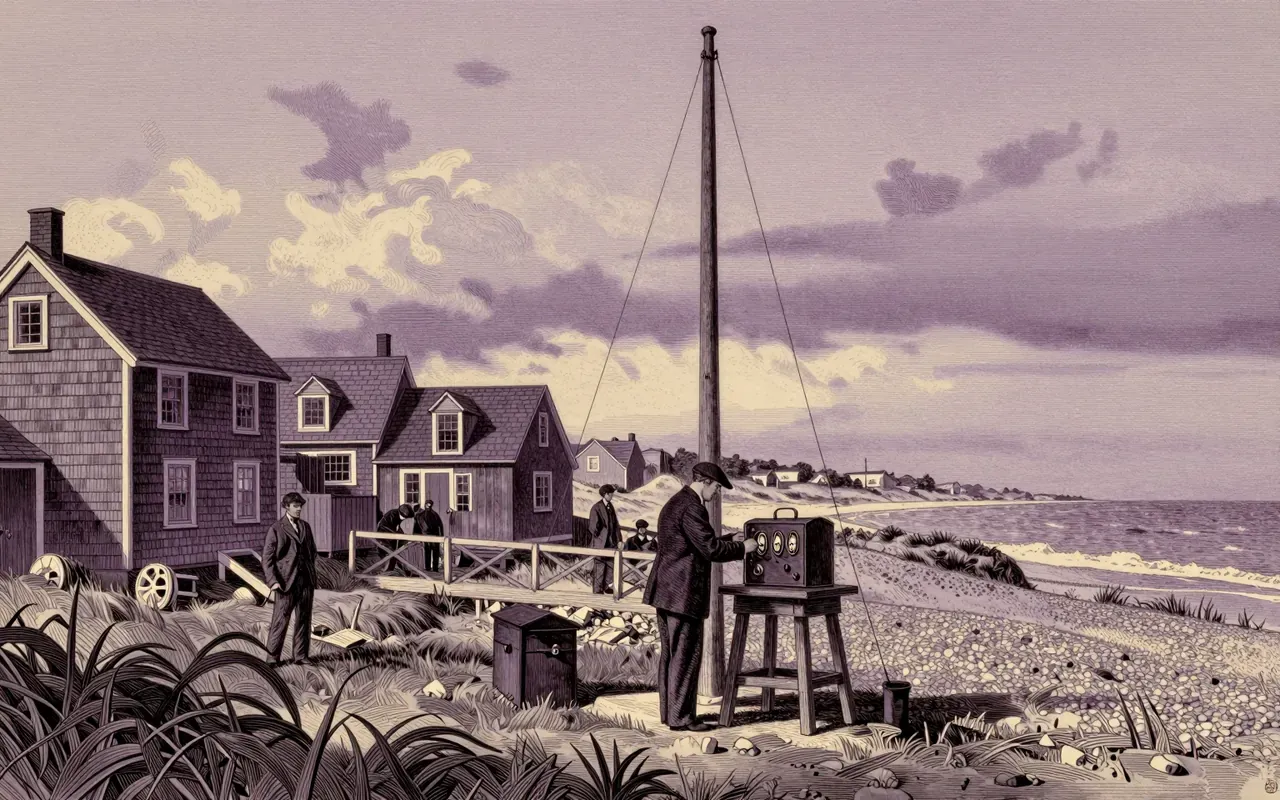
Braun’s CRT was not a television prototype—it was a high-voltage oscilloscope with a rotating mirror strapped to it.
The Braun tube is a historically decisive but technically limited instrument: it proves electron beams can be displayed, but only at extreme voltage and with mechanical compromise. Its legacy lies in conception—not execution.
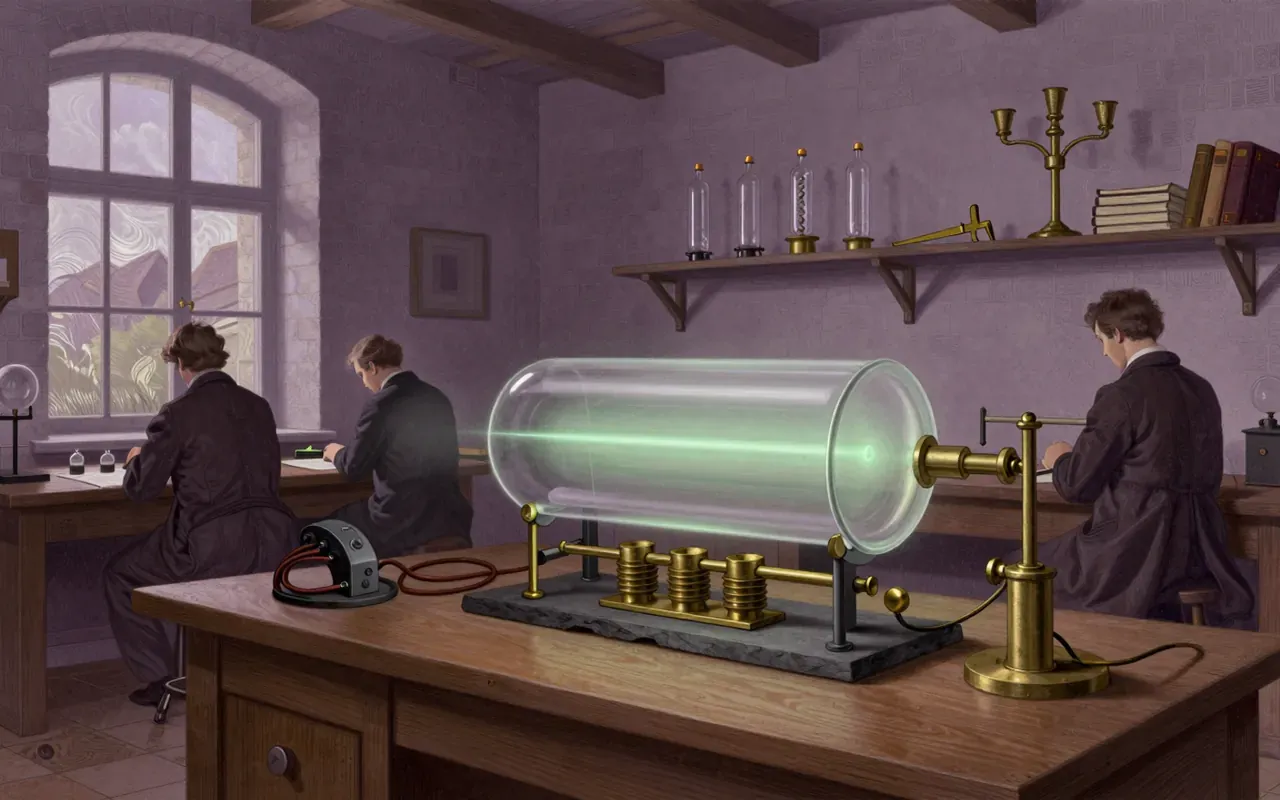
Braun invented the first CRT—the Braun tube—in 1897, publishing its use as an oscilloscope.
2:34
A Display, Not a Detector
It was the first device designed to display electrical phenomena—not just detect them.
4:06
One Axis Magnetic, One Axis Mechanical
It required 100,000 V and a rotating mirror because magnetic deflection only worked on one axis.
5:59
The Foundation of TV
Its two-dimensional deflection capability—later refined—enabled television development.
Worth your time?
Yes. Study the whole thing.
3.5/ 5
What works
proves cathode rays can be visually displayed
introduces phosphor-coated screen as standard
establishes CRT as a measurement tool before entertainment
What does not
enables real-time video
supports stable two-axis magnetic deflection
operates below 100,000 V
Study it if
display engineers
vacuum electronics historians
instrumentation designers
Skip it if
modern display developers
consumer electronics product managers
software interface designers
The written brief1 min read
What it is and the problem it solves
A cold-cathode diode derived from the Crookes tube. It solves the problem of visualising electrical signals by converting electron beams into visible light on phosphor.
How it works
It uses a cold cathode and moderate vacuum to accelerate electrons at 100,000 V onto a phosphor-coated screen. Magnetic deflection controls one axis; a rotating mirror handles the other. By 1899, oscillations enabled magnetic Y-axis deflection.
What works
The phosphor-coated screen converts electron impact into visible light. Magnetic deflection reliably steers the beam along one axis. The 1897 design proves that cathode rays can be controlled and displayed intentionally.
What does not
It does not support real-time two-dimensional scanning without external mechanical aids. It cannot sustain stable brightness or resolution at usable voltages. The rotating mirror limits frame rate and introduces mechanical fragility.
What it changes
It establishes the CRT as a display device—not just a detector—and enables two-dimensional electron beam deflection in high-vacuum successors. It becomes the foundation of 20th-century television.
Is it worth your time
Yes—if you work on display physics, vacuum electronics, or the history of instrumentation. It is foundational but not directly applicable to modern display engineering.