technologybriefs
11:02in productionCh. 1 · A seaside experiment/ 11:02 · ceiling 15 min
Tech history · Hardware

Volk's Electric Railway

The oldest operational electric railway is not the first, nor the most important — it is the only one that never stopped running.

Volk's Electric Railway is operationally continuous but technically marginal. It demonstrates longevity, not leadership. Its engineering adaptations were local fixes — not transferable standards. Siemens set the template. Volk kept a line alive.

Chapters & takeaways4
  1. 1:09
    A seaside experiment

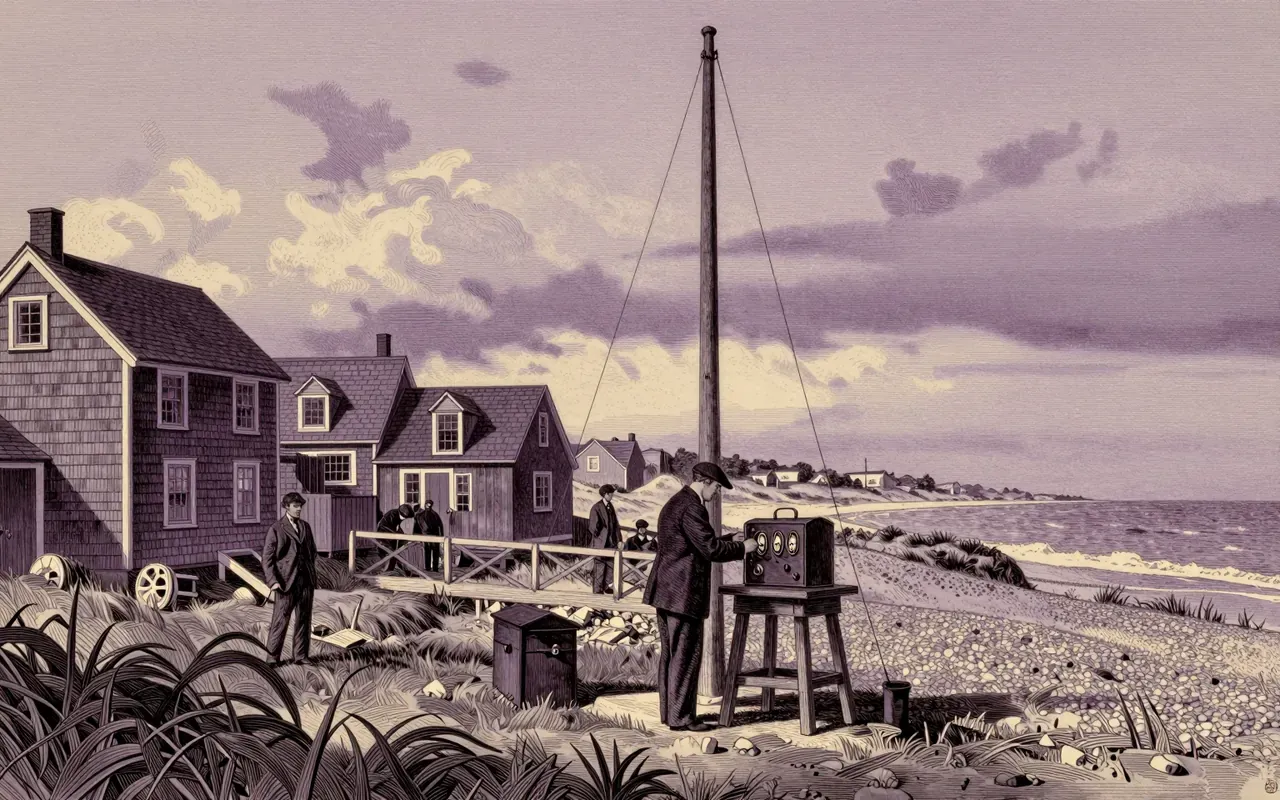
    It opened in August 1883 as a quarter-mile novelty — not a transit system.

  2. 2:41
    How current stayed on track

    Power delivery evolved from risky rail conduction to a dedicated third rail.

  3. 4:04
    What survives is not what started

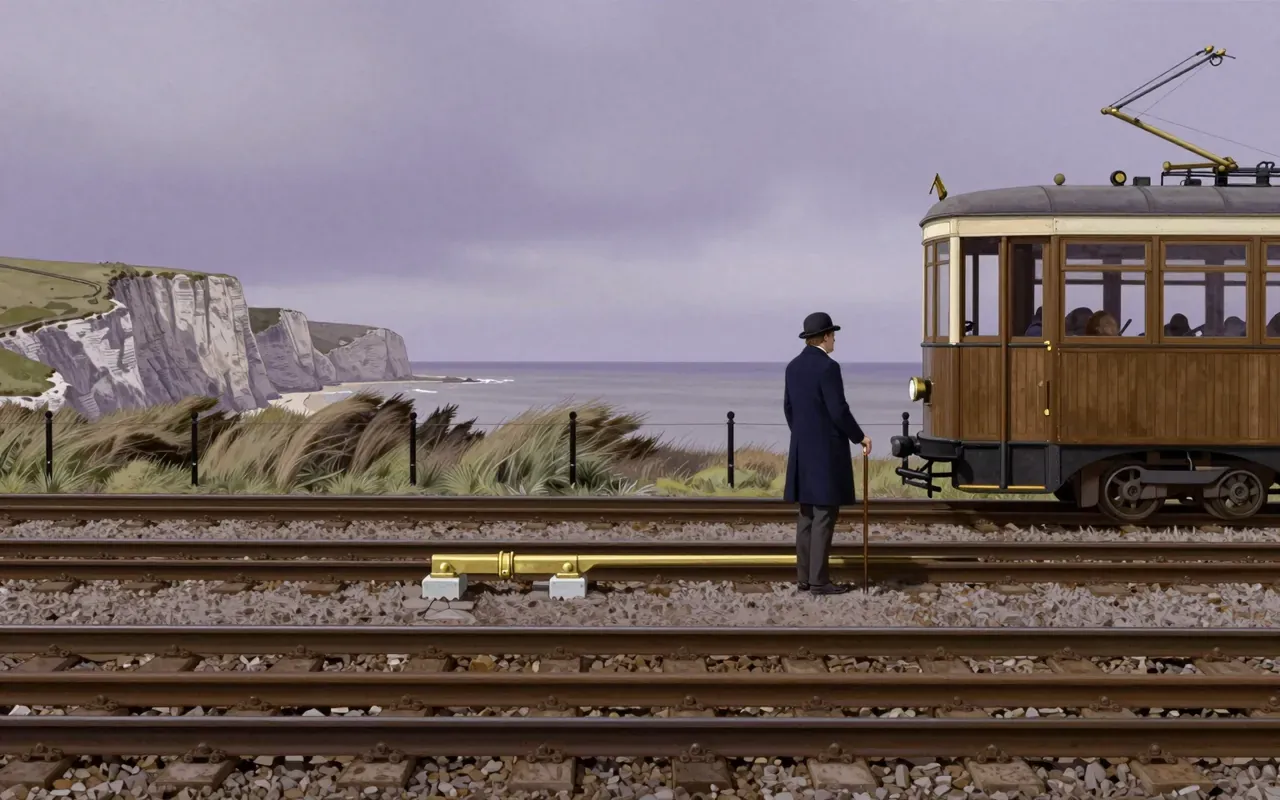
    Today’s configuration — 110 V DC, third rail, one mile — bears little resemblance to the 1883 original.

  4. 5:34
    The real firsts happened elsewhere

    Siemens delivered the foundational systems — train, tram, trolleybus — before Volk’s line opened.

Worth your time?

No. The brief is enough.

2.5/ 5
What works
  • maintains continuous operation since 1883
  • demonstrates incremental adaptation of power delivery
  • preserves physical evidence of early rail electrification
What does not
  • represent the first electric railway
  • establish a scalable electrification standard
  • solve a systemic transport problem
Study it if
  • historians of British seaside infrastructure
  • curators of narrow-gauge railways
  • students of low-voltage DC traction
Skip it if
  • urban transit planners
  • electrification engineers
  • policy makers assessing legacy systems
The written brief1 min read

What it is and the problem it solves

It is a one-mile, 825 mm gauge heritage railway on Brighton’s seafront. It solves no contemporary transport problem. It was built as a novelty attraction, not a public transit solution.

How it works

It delivers power through rails or a third rail. The first section used 50 V DC across the two running rails. An off-set third rail was added in 1886 to reduce leakage. Today it uses 110 V DC via a third rail on an 825 mm gauge line.

What works

The core mechanism — low-voltage DC delivery via rail — works reliably enough to remain operational. Its 1886 third-rail retrofit reduced leakage. Its narrow gauge and coastal alignment allowed incremental extension from ¼ mile to one mile.

What does not

It does not represent the first electric railway. Siemens built the world’s first electric passenger train in 1879. Siemens & Halske launched the first electric tram service in May 1881. Volk’s line was neither the first nor the most influential technical model.

What it changes

It changes how we date operational continuity — not innovation. It proves that a small-scale, locally adapted electric railway could survive over 140 years. But it did not alter voltage standards, rolling stock design, or power distribution methods beyond its own right-of-way.

Is it worth your time

No — unless you are researching early electric traction systems, narrow-gauge heritage operations, or Brighton’s seafront infrastructure. It is not a prototype for modern rail electrification; Siemens’ Groß-Lichterfelde system preceded it and established the scalable model.
Same field · Tech history4 of 139
Up next in Technology

Elliptic-curve cryptography

Victor S. Miller and Neal Koblitz · 10:46

ECC shrinks keys without shrinking security — but only if you pick the curve right, and only if the math holds.

10:46