technologybriefs
9:40in productionCh. 1 · The First Working Room-Scale System/ 9:40 · ceiling 15 min
Hardware · Products

HTC Vive

2016

Room-scale VR wasn’t invented by the Vive—but it was proven, priced, and shipped by it.

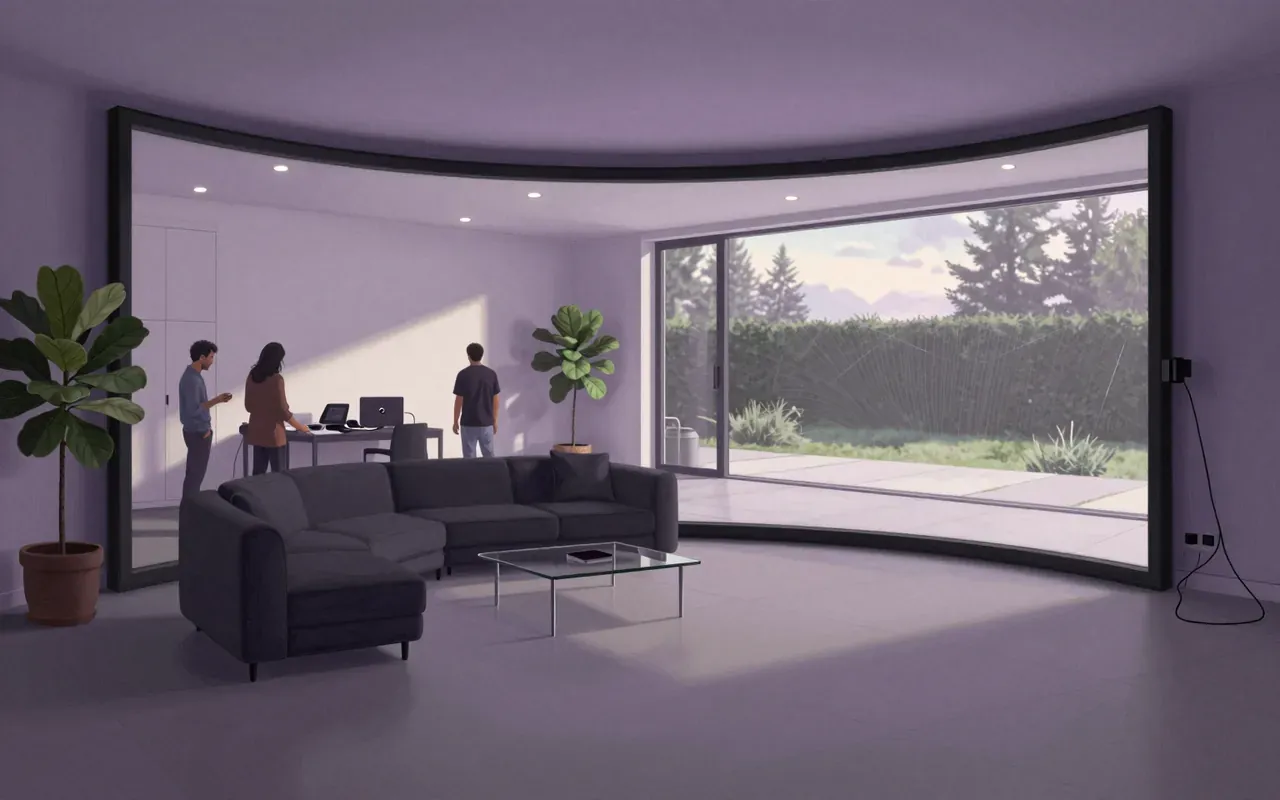
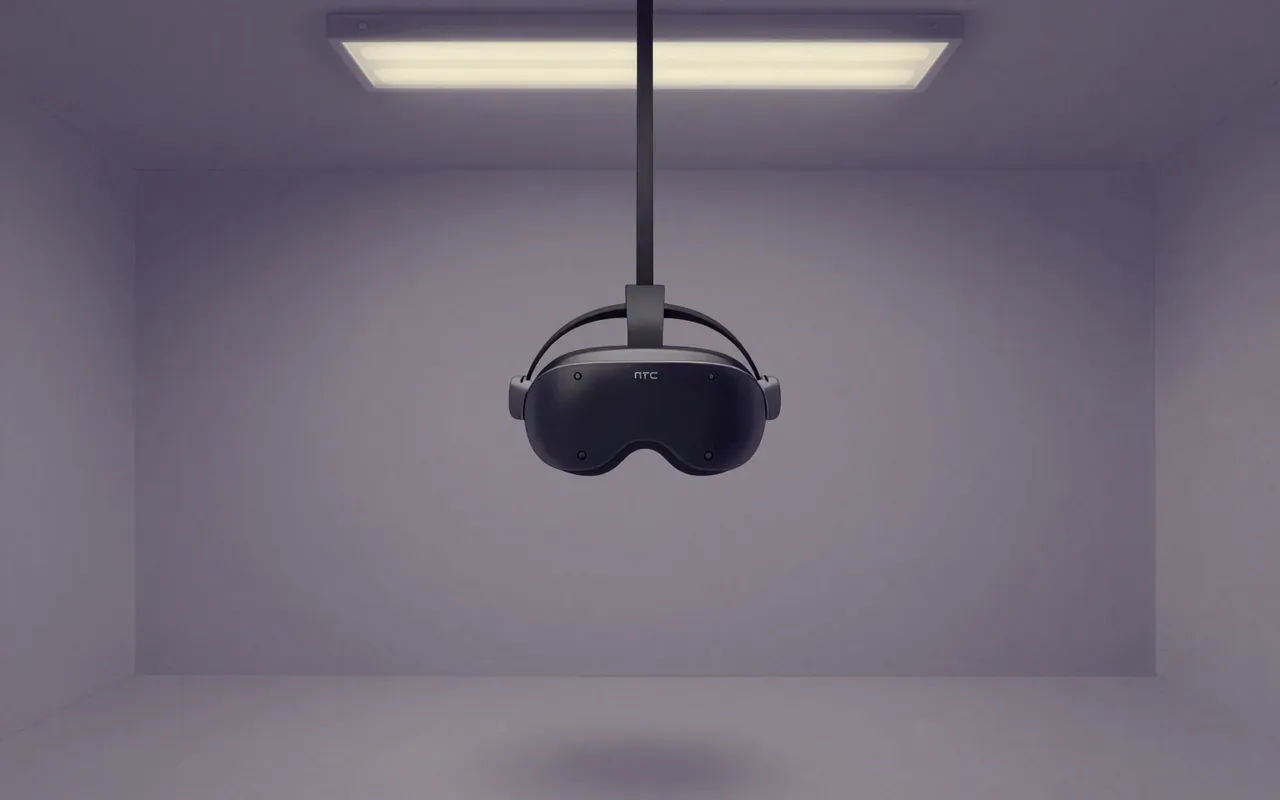
The HTC Vive delivered the first commercially viable implementation of room-scale VR. Its lighthouse tracking system set a benchmark for positional accuracy. But it demanded space, setup rigour, and a high-end PC. Its consumer run ended decisively in 2021. What remains is a hardware reference point—not a platform, not a trend, but a working proof that movement matters more than resolution.

Chapters & takeaways4
  1. 0:59
    The First Working Room-Scale System

    It made room-scale VR real—not theoretical, not demo-only, but purchasable and functional.

  2. 2:37
    How Lighthouses Replace Guesswork

    Positional tracking depends on external lasers, not cameras or inertial sensors alone.

  3. 4:09
    What the Headset Actually Needs

    High-resolution, high-refresh OLEDs demand a powerful PC—and a dedicated link box.

  4. 5:57
    Where the Line Ended Up

    MacOS support lasted three years. Consumer focus lasted five. Enterprise is now its only market.

Worth your time?

Yes. Study the whole thing.

3.5/ 5
What works
  • room-scale-tracking
  • low-latency-motion
  • steamvr-integration
What does not
  • consumer-viability
  • mobility
  • macos-support
Study it if
  • enterprise-developers
  • spatial-designers
  • research-labs
Skip it if
  • casual-users
  • macos-users
  • mobile-first-teams
The written brief1 min read

What it is and the problem it solves

The HTC Vive is a PC-tethered VR headset launched in April 2016. It solves the problem of imprecise, stationary VR by enabling accurate, real-world movement inside virtual environments.

How it works

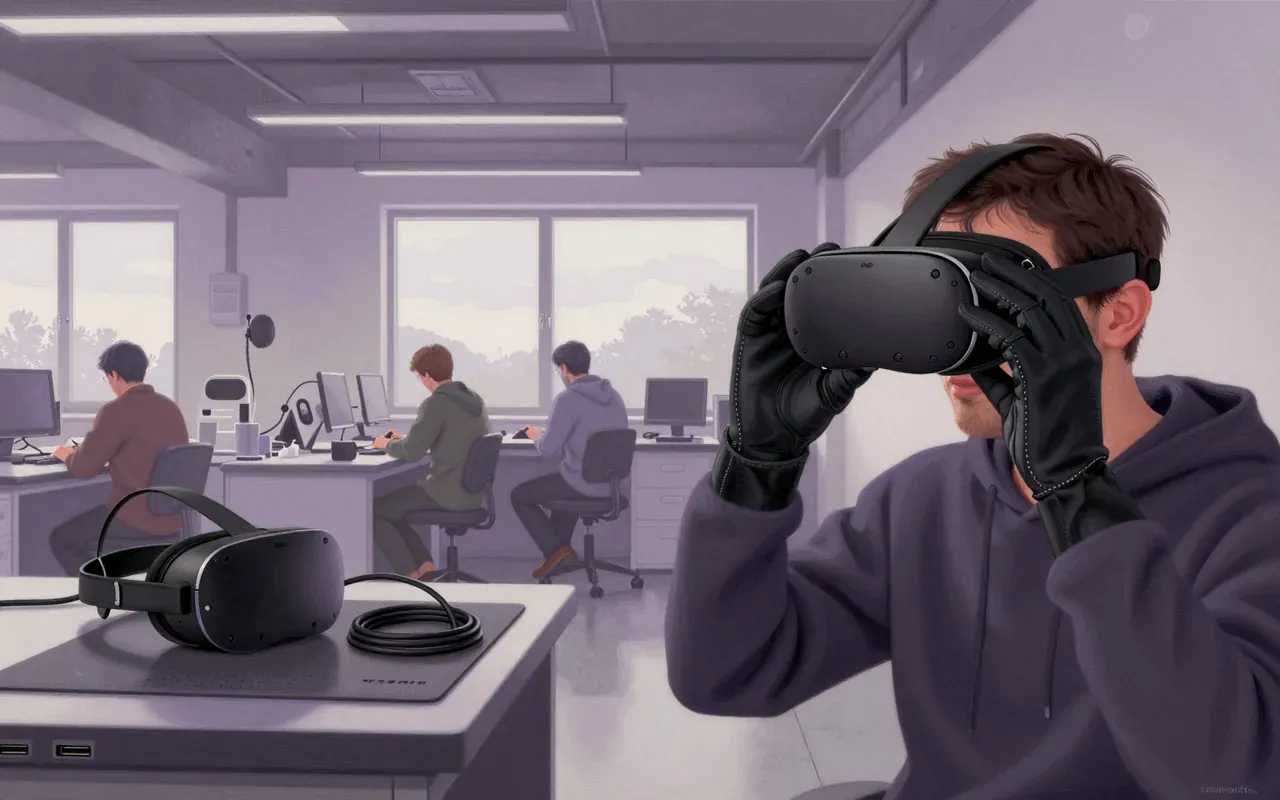
The first-generation HTC Vive uses external base stations—‘lighthouses’—that sweep infrared lasers across a room. Photosensors on the headset and controllers time the laser sweeps to calculate 3D position. This enables room-scale VR: users walk freely within a defined physical space.

What works

The dual OLED displays (1080×1200 per-eye, 90 Hz, 110° FOV) deliver sharp motion clarity. SteamVR integration provides robust runtime and developer tooling. Room-scale tracking works reliably in controlled, lighthouse-calibrated spaces.

What does not

It does not scale to consumer living rooms. The lighthouse setup requires wall mounting, calibration, and line-of-sight. It does not work untethered. macOS support was discontinued in 2020. It does not deliver on early promises of mainstream VR adoption.

What it changes

It establishes room-scale VR as a technical baseline—not just head rotation, but full-body locomotion mapped to virtual space. It shifts VR development from seated demos to spatial interaction design.

Is it worth your time

Only if you need precise, low-latency positional tracking for enterprise training, design review, or research prototyping—and can manage the setup, cabling, and PC dependency. It is not viable for casual or mobile use.
Same field · Hardware4 of 111
10:53
Amiga 500Commodore · 1987The Amiga 500 is a pivotal hardware milestone—not because it introduced new silicon, but because it delivered proven multitasking and colour graphics to mainstream retail at a time when competitors treated those features as optional or impossible in home systems. Its success relied on reuse, repackaging, and distribution—not invention.
11:18
BBC MicroAcorn Computers · 1981The BBC Micro was a procurement win first, an educational tool second. It succeeded because it met rigid broadcast and policy constraints—not because it was inherently superior to alternatives. Its architecture prioritised demonstrable compliance over user flexibility. Its dominance was guaranteed by subsidy rules, not market preference.
9:44
Oculus QuestOculus Quest redefines VR portability by embedding six-DOF tracking directly into a wireless, self-contained unit. It trades PC-grade graphics and open software for immediacy and spatial autonomy. Its success hinges not on fidelity but on removing barriers—then exposing new ones.
9:56
PlayStation 2Sony · 2000The PlayStation 2 is a home video game console developed by Sony Computer Entertainment, first released in Japan on March 4, 2000. It is the successor to the original PlayStation and a sixth-generation console that competed with Nintendo's GameCube, Sega's Dreamcast, and Microsoft's Xbox. It featured a built-in DVD drive and full backward compatibility with original PlayStation games and accessories. Its hardware included a custom-built Emotion Engine processor co-developed with Toshiba. It remains the best-selling video game console of all time, having sold 160 million units worldwide.
Up next in Technology

Oculus Quest

· 9:44

VR stops needing a room—and starts needing a compromise.

9:44