9:44in productionCh. 1 · No wires. No base stations./ 9:44 · ceiling 15 min
Hardware · Software
Oculus Quest
VR stops needing a room—and starts needing a compromise.
Oculus Quest redefines VR portability by embedding six-DOF tracking directly into a wireless, self-contained unit. It trades PC-grade graphics and open software for immediacy and spatial autonomy. Its success hinges not on fidelity but on removing barriers—then exposing new ones.
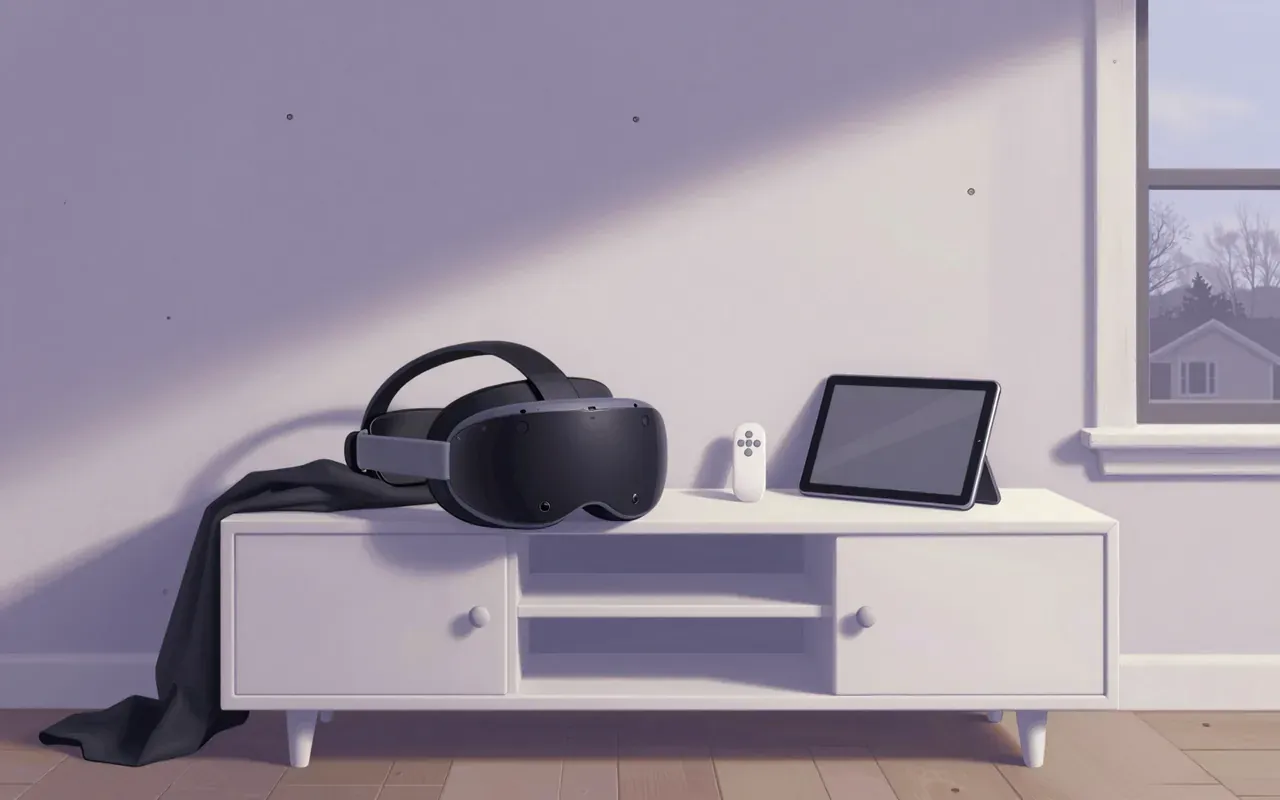
A standalone VR headset released on May 21, 2019. It solves the problem of VR setup friction: no PC required, no external sensors, no cables during use.
How it works
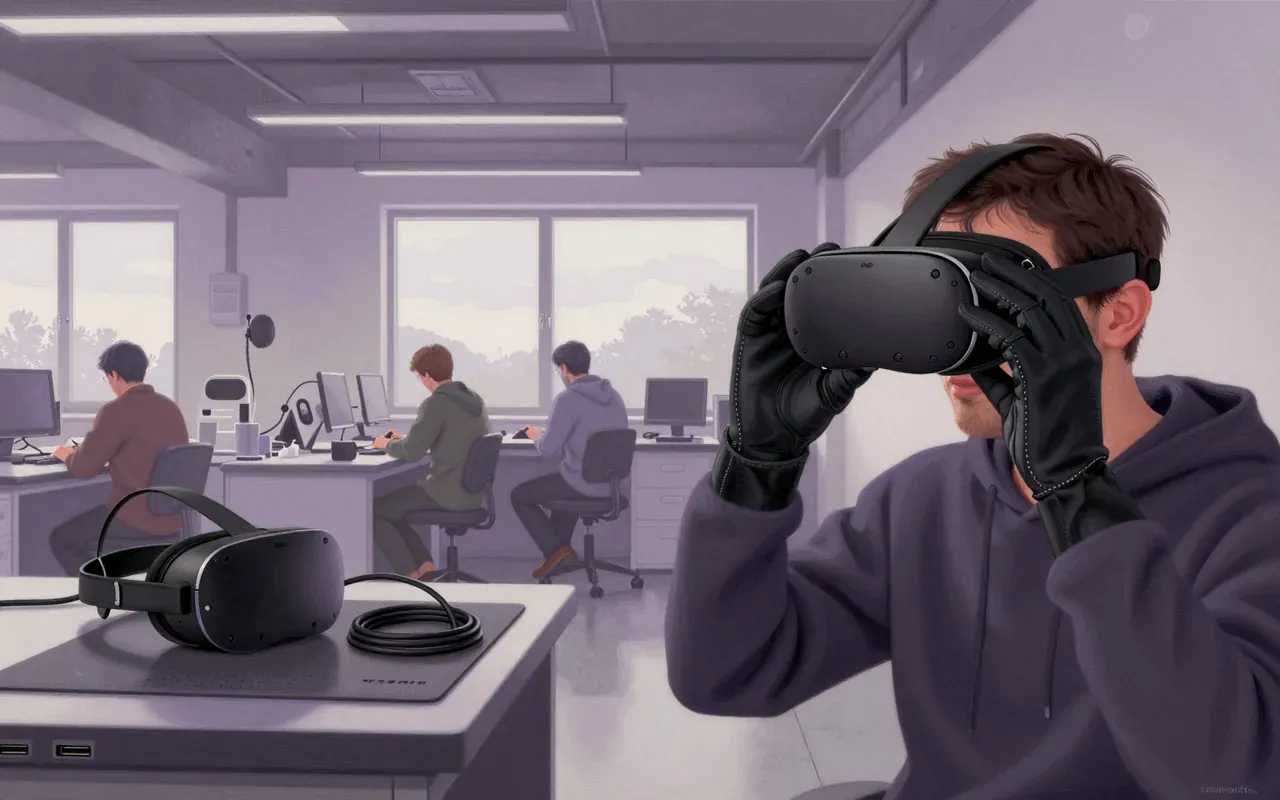
Oculus Quest uses four front-facing wide-angle cameras and internal sensors to run Oculus Insight, an inside-out tracking system based on SLAM. It tracks infrared diodes on the Touch controllers. The same cameras enable Passthrough by showing a real-time view when the user crosses the Guardian boundary.
What works
Six degrees of freedom tracking works reliably indoors using only the headset’s cameras and controllers. Physical IPD adjustment delivers accurate stereo alignment. Oculus Link (added later) bridges the gap to PC VR libraries via USB. Passthrough provides usable spatial awareness at boundary edges.
What does not
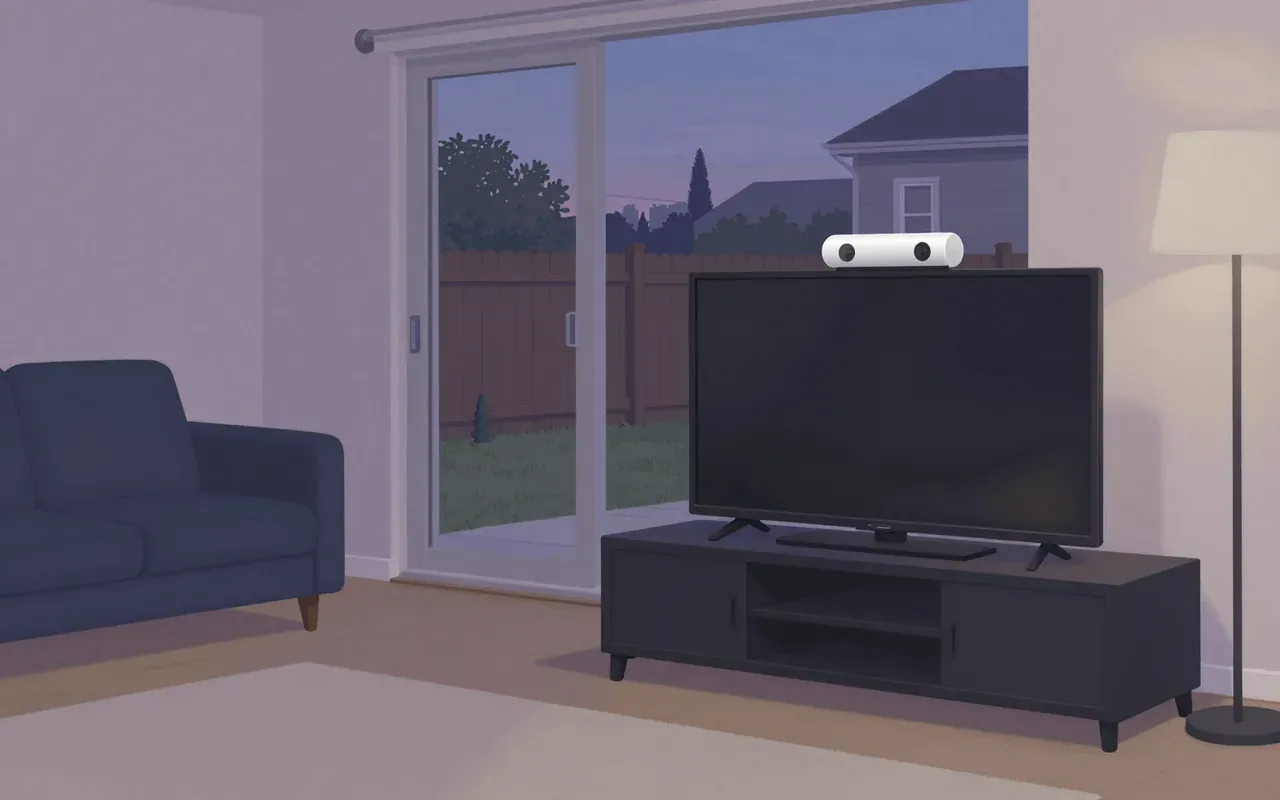
Hand tracking remains experimental and unreliable. The Android-based OS restricts app installation to Oculus Store (at launch) or App Lab (later). Graphical fidelity lags behind PC VR. Passthrough is monochrome and low-resolution. No external sensor support.
What it changes
It shifts VR from tethered, sensor-dependent setups to self-contained systems with robust positional tracking. It proves inside-out tracking can replace external base stations for consumer use—without requiring users to install hardware in their space.
Is it worth your time
Yes—if you need portable, sensor-free six-degrees-of-freedom VR without a PC, and accept its graphical and software constraints. Not if you require high-fidelity rendering, open distribution, or consistent hand tracking.