technologybriefs
10:28in productionCh. 1 · Earth and water/ 10:28 · ceiling 15 min
Systems · Tech history

Metric system

A decimal scaffold built on Earth and water — now anchored to Planck’s constant — that made measurement portable, precise, and political.

The metric system replaced arbitrary, local measures with decimal units rooted in nature — then upgraded them to constants. It works because it is coherent, reproducible, and governed. It falls short where implementation lags, inertia persists, or politics overrides precision. It is not elegant theory — it is operational infrastructure.

Chapters & takeaways4
  1. 0:53
    Earth and water

    The metre and kilogram were derived from nature — not convention — to make measurement universal and reproducible.

  2. 2:46
    From France to the world

    The SI formalised the metric system under international oversight, turning national reform into global infrastructure.

  3. 4:38
    No more prototypes

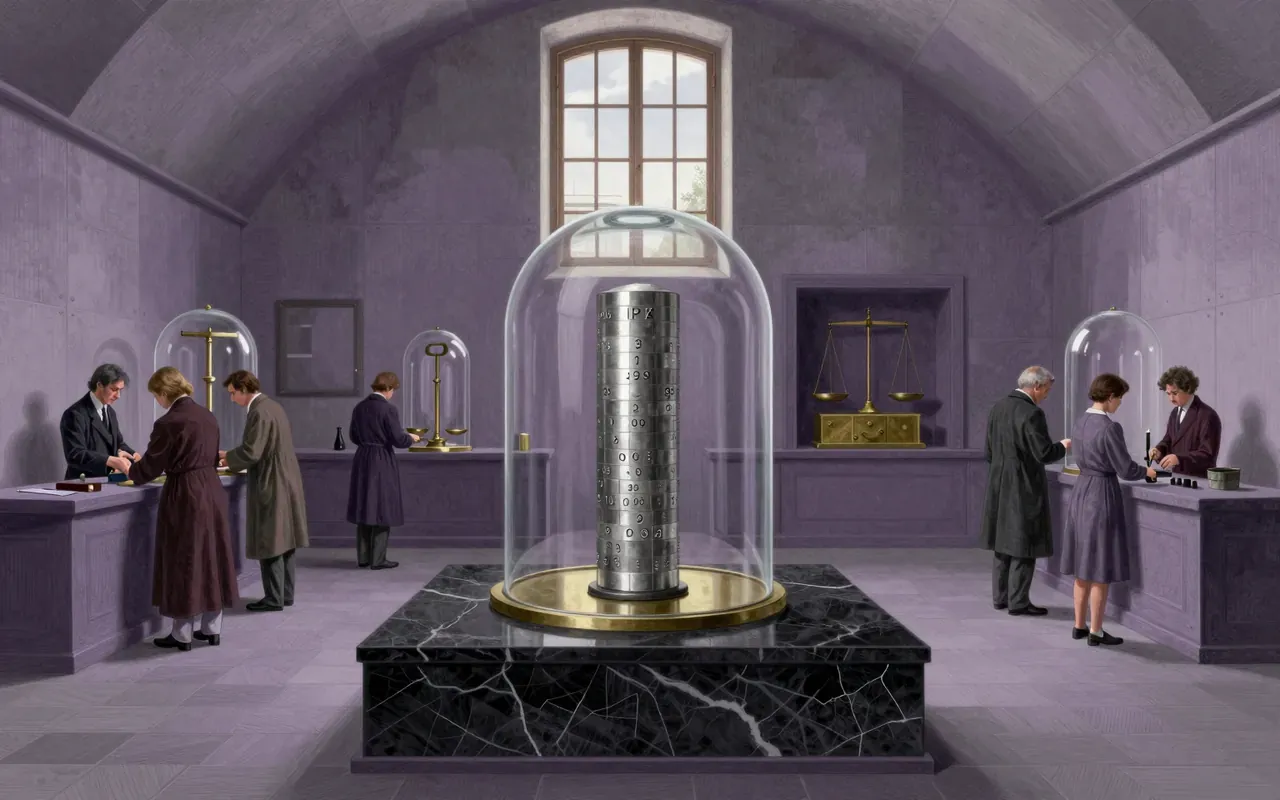
    All base units are now defined by constants — ending reliance on physical artefacts like the platinum–iridium kilogram.

  4. 6:21
    From water to quantum

    The kilogram’s shift from water to Planck’s constant closed a 228-year gap between its original intent and its final precision.

Worth your time?

Yes. Study the whole thing.

4.5/ 5
What works
  • decimal scaling
  • physical-constant definitions
  • international governance via CGPM
What does not
  • eliminate conversion errors
  • achieve full global adoption
  • remove political resistance to standardisation
Study it if
  • engineers
  • regulators
  • educators
Skip it if
  • casual users who never convert units
  • historians studying pre-metric societies
The written brief1 min read

What it is and the problem it solves

It is a coherent, decimal-based system of measurement designed to replace inconsistent traditional units. It solves the problem of incompatible, arbitrary, and non-reproducible standards across regions and disciplines.

How it works

It uses decimal scaling: each unit is a power of ten larger or smaller than the next. The metre was defined as one ten-millionth of the Earth’s quadrant. The kilogram was defined as the mass of one cubic decimetre of water at 4 °C. Later, base units were redefined using invariant physical constants.

What works

Decimal scaling works for calculation and education. Physical-constant definitions work for precision and stability. International governance via the CGPM works for coordination — as shown by the 2019 kilogram redefinition.

What does not

It does not eliminate human error, conversion friction, or legacy unit dependencies. Its adoption remains incomplete in some sectors and jurisdictions. It does not enforce consistency — only enables it.

What it changes

It replaces locally variable standards — like the foot or livre — with reproducible, universal references. It shifts authority from rulers and guilds to physics and international consensus.

Is it worth your time

Yes — if you work with measurement, standardisation, international collaboration, or regulatory compliance. It is not optional infrastructure; it is the operating system for quantification in science, trade, and law.
Same field · Systems4 of 61
Up next in Technology

Microphone

· 10:12

The microphone is not a passive listener—it is an active interpreter, distorting every word before it leaves the room.

10:12