Apache ActiveMQ
ActiveMQ made JMS mainstream—but its Java roots and 2007-era architecture now hold back the very systems it was meant to unify.




Prometheus is a pull-based, label-driven time-series monitoring system built by SoundCloud in 2012 to replace StatsD/Graphite for containerised infrastructure. It works well for short-lived services and dimensional querying—but requires operational discipline around scrape targets and lacks native horizontal scaling or logging integration.

REST is Roy Fielding’s 2000 architectural style for the Web. It defines constraints—not rules—to diagnose scalability failures in distributed hypermedia systems. Its power lies in exposing gaps between promise and practice, especially around statelessness and HATEOAS. Most so-called RESTful APIs ignore its core mechanism: hypermedia-driven state transitions.

Terraform is infrastructure-as-code software developed by HashiCorp in 2014. It uses declarative configuration (HCL or JSON) and provider plugins to manage infrastructure across clouds and on-prem systems. It shifted from MPL 2.0 to BUSL on 10 August 2023, restricting commercial use by competitors and prompting the OpenTofu fork. It supports automation in large-scale service-oriented development but requires strict state management and does not enforce security or runtime behaviour.


PDF delivers guaranteed visual consistency for static documents—but only by freezing layout, embedding everything, and avoiding runtime logic. Its shift to ISO control removed Adobe’s proprietary hooks, yet its security model remains brittle under active exploitation.


Go is a statically typed, compiled programming language designed in 2007 by Robert Griesemer, Rob Pike, and Ken Thompson at Google to improve programming productivity for multicore, networked machines and large codebases. It combines static typing and runtime efficiency like C, readability and usability like Python, and high-performance networking and multiprocessing. Publicly announced in November 2009 and released as version 1.0 in March 2012, Go emphasizes simplicity, safety, and developer tooling — especially around concurrency via goroutines and channels, packaging, testing, and deployment — while deliberately omitting features like inheritance, assertions, pointer arithmetic, and implicit type conversions. Its design reflects a focus on the software development process itself rather than just language syntax or semantics.
Cassandra is a distributed, wide-column database built for write-heavy, multi-datacentre workloads. It prioritises availability and scalability over consistency. It requires upfront schema design aligned to access patterns. It was developed at Facebook for inbox search and released open-source in July 2008.

Hadoop is not a database or a query engine. It is a fault-tolerant batch-processing substrate built for scale, not speed or simplicity.



Kafka is a distributed, open-source event store and stream-processing platform developed at LinkedIn and open sourced in early 2011. It uses a binary TCP-based protocol and a 'message set' abstraction to optimise efficiency, enabling linear writes from bursty streams. It guarantees ordering within partitions, retains messages in a durable append-only log, supports manual offset management, and introduced share groups in 2025 for queue-like semantics. Kafka Connect and Kafka Streams were added in versions 0.9.0.0 and 0.10.0.0 respectively.












Grafana is open-source dashboard software that queries external data sources at render time. It unifies metrics, logs, and traces without storing data itself. Its JSON-based dashboards are versionable and composable. Since 2021, it uses AGPLv3 licensing. It originated from Graphite work at Orbitz and launched in January 2014. Its UI began as a fork of Kibana v3.

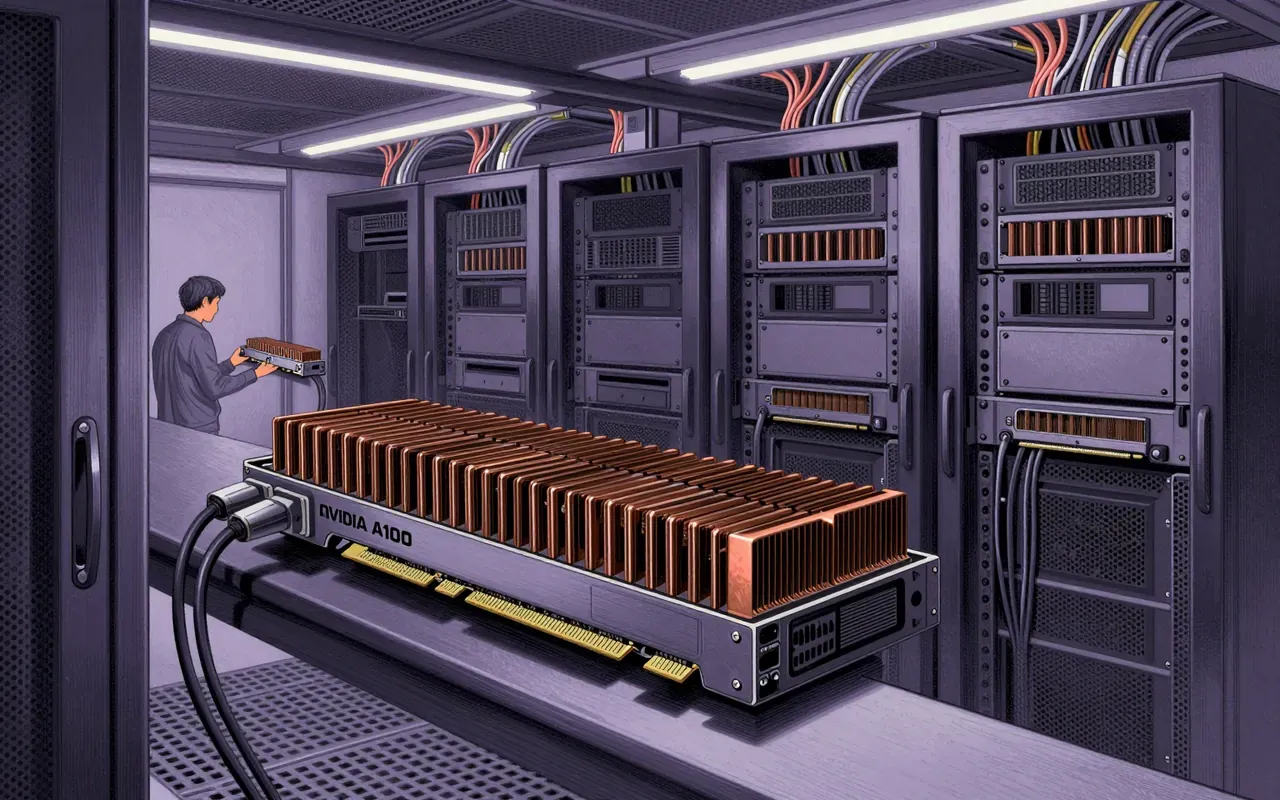
Memcached is a distributed in-memory key-value store designed to reduce load on databases in dynamic web applications. It delivers speed by bypassing disk and network I/O—but requires manual cache management, offers no consistency guarantees, and assumes trust within the network. It works because it is minimal, not because it is clever.
MongoDB is a document-oriented database program released in February 2009. It uses JSON-like BSON documents with optional schemas. It implements its own query language (MQL). It supports indexing with primary and secondary indices. It provides high availability via replica sets. It scales horizontally using sharding. It can be used as a file system called GridFS. It is source-available and designed for unstructured data. It added ACID transactions to broaden enterprise appeal. It launched Atlas, a SaaS offering, in 2016. It replaced AGPL with the Server Side Public License in 2018. As of 2025, it ranked fifth among database software and served over 65,200 customers. Atlas became 70 percent of MongoDB's revenue by 2024.


MySQL AB’s 2001 product was a lightweight, open-source RDBMS built to replace mSQL. It solved developer pain around speed and licensing—but deferred complexity into operational trade-offs. Its success hinged on embedding itself into LAMP, not on technical superiority.

Neo4j is a graph database built for relationship-heavy workloads. It delivers expressive querying and transactional safety—but horizontal scaling, vector search, and unified standards arrived over a decade after launch. Its value is real, but bounded by what it ships—not what it promises.







PostgreSQL is a free and open-source RDBMS that solves the problem of building reliable, scalable, and standards-compliant relational data systems without vendor lock-in. It emerged from Berkeley’s POSTGRES project in 1985 to address limitations in contemporary databases, especially Ingres’ lack of SQL support and type extensibility.

PyTorch is a Python-first deep learning library built by Meta in 2016 as Torch's successor. It enables rapid model prototyping via dynamic computation graphs (Autograd), tensor abstractions, and CUDA-accelerated training. As of 2025, it remains one of the most popular deep learning libraries—alongside TensorFlow and Keras—but its design prioritises researcher agility over production robustness, scalability, or deployment tooling.
Redis is an in-memory key-value database introduced in 2009 by Salvatore Sanfilippo to solve scalability issues at his startup LLOOGG. It delivers low-latency operations by holding all data in memory and using the fork system call to enable concurrent client service and disk persistence. It supports two persistence methods—RDB snapshotting and AOF journaling—with journaling introduced in version 1.1 and considered safer. Default configuration limits data loss to a few seconds upon full system failure. Redis supports master-replica replication with hierarchical trees and introduced clustering in April 2015 with version 3.0. It grew into one of the world’s most popular databases for caching, message brokering, and primary storage. In December 2024, Sanfilippo returned to Redis and implemented the Vector Set data structure for vector similarity search.


Smalltalk is a pure object-oriented language built for constructionist learning at Xerox PARC in the 1970s. Its first interpreter, Smalltalk-72, was written by Dan Ingalls in about 700 lines of BASIC for the Data General Nova in October 1972. It emerged from Alan Kay’s September 1972 bet that a message-passing core could fit on a page of code—and did so by the eighth morning. Smalltalk-80, released publicly in 1980, introduced foundational OOP ideas, featured an integrated development environment from inception, and established total reflection—both structural and computational. It has no primitive types: all values are objects, and all computation occurs via message passing. ANSI Smalltalk was ratified in 1998.

SQLite is a C library that embeds a relational database engine directly into applications. It stores data in a single cross-platform file. It delivers ACID transactions and most SQL-92 features—but omits materialized views, full trigger support, and ALTER TABLE. It relies on file-system locking, not internal concurrency control. It enforces access via file permissions, not users or roles. Its type system is dynamic by default. It is widely deployed because it requires no installation, configuration, or administration.
TensorFlow is a machine learning API developed by Google. It is used mainly for training and inference of neural networks. It is free and open-source software released under the Apache License 2.0. It was developed by the Google Brain team for Google's internal use in research and production. The initial version was released under the Apache License 2.0 in 2015. Google released an updated version, TensorFlow 2.0, in September 2019. TensorFlow can be used in a wide variety of programming languages, including Python, JavaScript, C++, and Java. It is one of the most popular deep learning frameworks, alongside others such as PyTorch.




The OnePlus One delivered flagship hardware at lower cost by relying on Cyanogen OS and an invite-based launch. It worked as a provocation—not as a finished product. Its value was in exposing the fragility of Android's ecosystem, not in shipping a polished experience.


UTF-8 is a variable-width Unicode encoding co-designed by Ken Thompson and Rob Pike in 1992. It guarantees ASCII compatibility, supports all 1,112,064 Unicode code points, and became the dominant web encoding — over 90% of pages in 2019. Its strength is pragmatic interoperability; its weakness is zero tolerance for malformed input and no compression benefit.










BASIC is a pedagogical tool, not a general-purpose language. It succeeded by narrowing scope — to Dartmouth, to undergraduates, to time-shared interaction, to FORTRAN II’s grammar stripped of complexity. Its value lies in what it excluded.

C++ is a systems programming language that enables high-level abstractions without runtime overhead. It delivers performance and control—but only to those who master its intricate, unforgiving rules.

C is a deliberately minimal, hardware-close language that enabled Unix to become portable. It trades safety and abstraction for control and efficiency—and that trade still defines systems programming.

Ethereum is a decentralised mining network and software development platform enabling new cryptocurrencies and programs sharing a single blockchain. It solves the problem of building decentralised applications without forking Bitcoin or relying on centralised servers. It runs a Turing-complete virtual machine—the Ethereum Virtual Machine—specified by Gavin Wood in the Yellow Paper. It executes smart contracts as deterministic code on a decentralised network of nodes. Consensus was originally proof-of-work; it shifted to proof-of-stake on 15 September 2022. The EVM’s instruction set is Turing-complete. Smart contracts execute deterministically across thousands of nodes. The 2022 shift to proof-of-stake cut energy use by over 99%. It supports live, interoperable token standards and composability across deployed contracts. It does not deliver on its original promise of attaching real-world assets like stocks or property to the blockchain at scale. The EVM’s Turing-completeness enables bugs, re-entrancy, and gas-exhaustion failures that have caused repeated, costly exploits. Its consensus upgrade did not resolve scalability or finality trade-offs. It changed software development by making stateful, shared computation a first-class primitive on open networks. It enabled permissionless issuance of tokens and composable financial primitives—but entrenched a model where economic incentives dominate protocol governance. Yes—if you need programmable, trust-minimised execution across untrusted parties and can absorb the cost, complexity, and risk of on-chain logic. No—if you require predictable latency, low cost, or formal verification guarantees.


Fortran is the first high-level programming language to achieve broad use. It succeeded not by abstracting away hardware, but by proving abstraction could coexist with assembly-level performance — specifically for numeric computation on the IBM 704. Its compiler introduced the basic block and Monte Carlo–driven memory layout, establishing techniques that remain standard. It made computing accessible to scientists — but only those doing number-crunching, and only on IBM hardware.

Git is a distributed version control system invented by Linus Torvalds in April 2005 to replace BitKeeper for Linux kernel development. It was built from scratch because no existing free system met Torvalds’s strict criteria: sub-three-second patch application, distributed BitKeeper-like workflow, strong corruption safeguards, and rejection of CVS-style design. Git maintains a full local repository copy, uses SHA-1 hashing for object identification, and is grounded in a content-addressable filesystem model.




Java is a programming language built to enforce portability through mandatory compilation to JVM bytecode and strict memory safety via garbage collection and pointer omission. It solves cross-platform inconsistency at the cost of runtime overhead and abstraction rigidity. Its success rests on standardisation—not inevitability.

JavaScript is the de facto client-side language of the web — not because it was well-designed for beginners, but because it shipped fast, ran everywhere, and locked in a runtime model no site could ignore.

JPEG is a 1992 DCT-based lossy compression standard. It delivers predictable 10:1 size reduction with acceptable visual trade-offs. It defines only the codec—not the file format. Its lossless mode is unused. It remains dominant not by superiority but by inertia.

JSON is a syntactic constraint, not a data model. It works because it refuses to be more than a wire format — and fails wherever meaning, safety, or evolution is required.


Linux is a Unix-like kernel, not an operating system. It filled GNU’s missing-kernel gap. It works by reimplementing Unix system calls from documentation—not AT&T code. It succeeded because GPLv2 enforced openness, and because it ran on cheap x86 hardware. It failed to be a standalone OS or POSIX-compliant out of the box. It changed how software projects scale: through licence-driven collaboration, not top-down design. It is worth your time if you need control, transparency, and the ability to rebuild every layer.

Lisp is the first language to treat code as data—and the first to prove that a small set of primitives plus eval suffices for universal computation. Its cost is runtime overhead; its payoff is programmable programmability.



Pascal is a disciplined, small-language experiment from 1970. It delivers on teaching structured programming and safe data modelling. It fails as a general-purpose systems language. Its influence lies in its constraints — not its adoption.

PNG is a specification, not a product. It is a response to legal constraint, not technical ambition. It works where it was designed to work — and fails where it was never meant to go.

Python is a dynamically typed, whitespace-delimited programming language conceived by Guido van Rossum in December 1989 as a successor to ABC. Its first release was Python 0.9.0 in 1991. It introduced a strict visual grammar for code blocks, paired dynamic typing with reference counting and cycle detection for memory management, and codified its philosophy in PEP 20. Python 3.0 (2008) broke backward compatibility. Optional static typing arrived in 3.5. Van Rossum named it after Monty Python's Flying Circus and wrote the first interpreter as a Christmas holiday project.

Ruby is a deliberately opinionated scripting language that enforces object uniformity at runtime. It delivers on its promise of simplicity and expressiveness—but only within its chosen domain: developer-facing tools and applications where flexibility trumps performance or safety.

Rust delivers provable memory and thread safety through compile-time ownership and borrowing rules—not runtime enforcement. It works where it is applied strictly, fails where those rules are bypassed or ignored, and demands upfront investment in reasoning over runtime convenience. Its success lies not in eliminating trade-offs, but in making them explicit, auditable, and unignorable.

Safari is Apple’s proprietary web browser, introduced in January 2003 as part of Mac OS X Jaguar and made default with Mac OS X Panther later that year. It is deeply integrated into Apple's ecosystem—shipping with macOS, iOS, iPadOS, and visionOS—and relies on the WebKit rendering engine, an open-source fork of KHTML. Its initial development prioritized speed and innovation, with Apple claiming it was the fastest Mac browser at launch. The browser’s architecture evolved through successive versions, introducing features like Acid2 compliance (Safari 2), HTML5 and Acid3 support (Safari 4), reader mode and extensions (Safari 5), Intelligent Tracking Prevention (Safari 11), FIDO2 and Apple Pay support (Safari 13), and AI-powered Highlights (Safari 18). It has undergone major UI redesigns in Safari 15, 18, and 26, and now follows a calendar-year versioning scheme. While a Windows version existed between 2007 and 2012, it was discontinued due to low market share. Safari remains second globally in usage after Chrome, and its privacy and security features—including cross-site tracking prevention, Link Tracking Protection, and passkey support—are central to its modern identity.

The GNU Manifesto is not code. It is a deliberate, public, repeatable act of movement-building—written to recruit, not just explain.




TypeScript is a compiler-layered static typing system for JavaScript. It solves scalability problems in large codebases by enabling early error detection and better tooling — without breaking compatibility. Its mechanism is transpilation, not runtime enforcement. Its biggest win is developer velocity in complex projects — proven by the 8–12× speedup in TypeScript 7.0. Its cost is added complexity and no runtime guarantees.



XML is a deliberately constrained application profile of SGML, standardised by W3C in 1998. It delivers strict, interoperable document structure at the cost of verbosity, parsing overhead, and zero runtime semantics. It succeeded where SGML failed—not by being simpler, but by being bounded.