What it is and the problem it solves
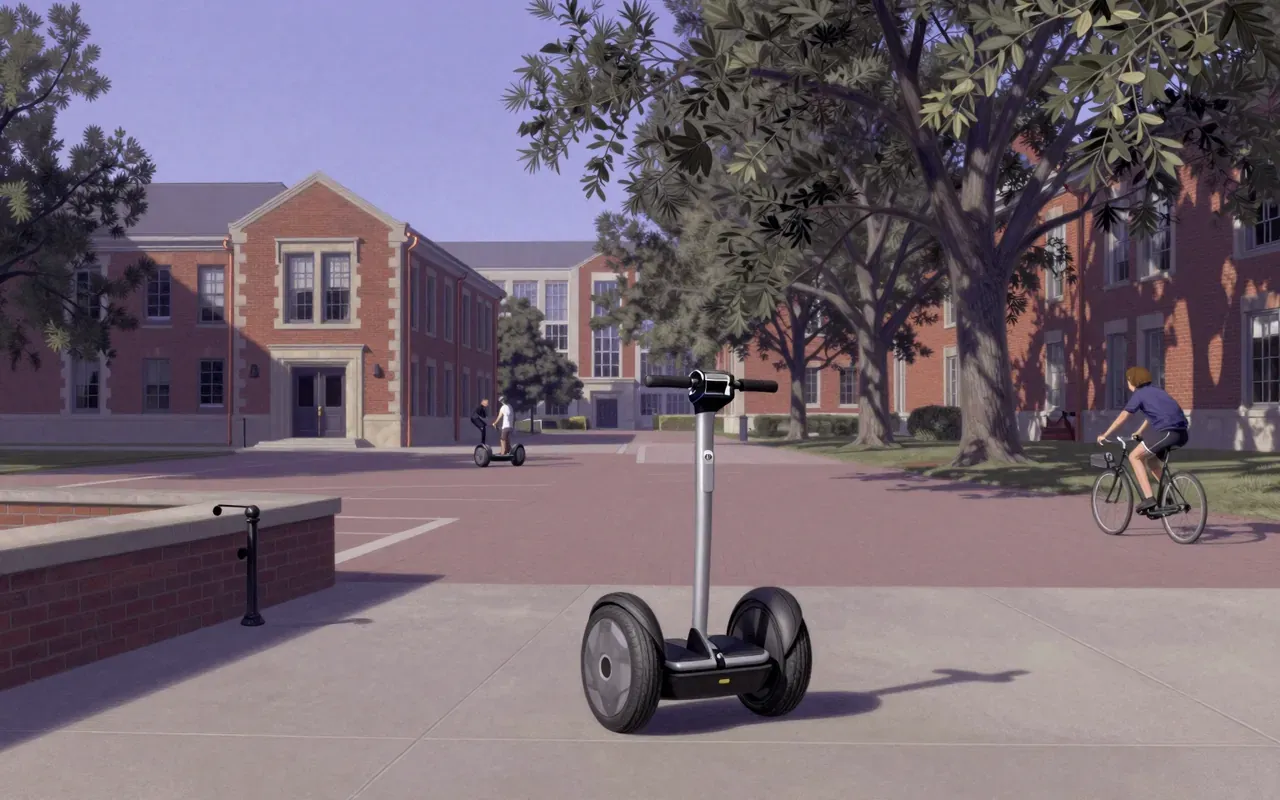
It is a two-wheeled, self-balancing personal transporter. It solves the problem of short-distance, hands-free mobility on smooth, level surfaces without requiring walking or driving.
How it works
It balances using gyroscopes and tilt sensors to solve the inverted pendulum control problem. It interprets rider lean as acceleration or braking commands. Steering uses a twist-grip that differentially speeds the two wheels.
What works
Its balance mechanism works reliably. Its NiMH battery delivers 6–10 miles per charge. Its three-speed settings (6, 8, and 10 mph) and twist-grip steering give precise low-speed control in constrained spaces.
What does not
It does not scale to mass transit. It does not integrate with pedestrian infrastructure. It does not meet real-world expectations of range, portability, or regulatory acceptance. Its promised ubiquity never materialised.
What it changes
It changes how niche professional sites manage short-distance internal logistics — police patrols, warehouse inspections, corporate campus tours — but only where terrain, policy, and budget align.
Is it worth your time
Only if you operate in controlled, flat, indoor or campus environments where low-speed mobility justifies its cost, weight, and regulatory ambiguity — not for general urban transport.