technologybriefs
9:52in productionCh. 1 · Where it sits/ 9:52 · ceiling 15 min
Hardware · Systems

Virgin Galactic

2004

A $450,000 joyride that redefined ‘astronaut’ — but not spaceflight.

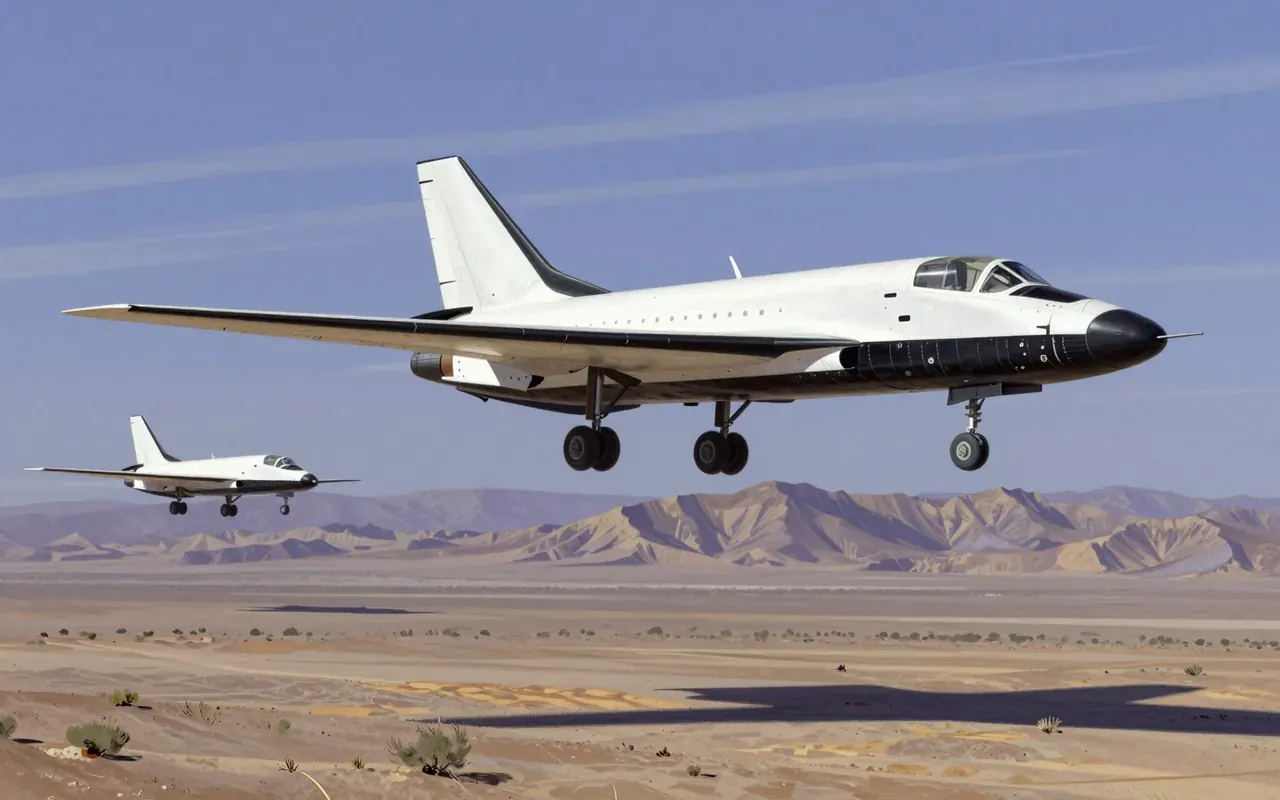
Virgin Galactic is a British-American spaceflight company founded by Richard Branson and the Virgin Group. It develops commercial suborbital spacecraft air-launched from White Knight Two. As of 2026, twelve flights using VSS Unity have exceeded 50 miles altitude under US standards. Key milestones include VSS Unity’s first spaceflight on 13 December 2018 (82.7 km), its first flight with a passenger and crew flotation in February 2019 (89.9 km), and the 11 July 2021 flight carrying Branson — the first founder to fly aboard his own company’s spacecraft. Public ticket sales began in February 2022 at $450,000, culminating in the first commercial flight, Galactic 01, in June 2023.

Chapters & takeaways4
  1. 1:09
    Where it sits

    It is a British-American company headquartered in California, launching from New Mexico — not a US-only venture, and not based at the launch site.

  2. 2:19
    How it lifts off

    Its spacecraft do not launch vertically — they drop from a carrier plane at 15 km, trading rocket complexity for aircraft dependency.

  3. 3:58
    What it has flown

    Twelve flights have crossed 50 miles — all with VSS Unity, all since 2018, with peak altitude at 89.9 km.

  4. 5:43
    What it sells

    Public tickets launched at $450,000 in February 2022; first commercial flight was June 2023.

Worth your time?

No. The brief is enough.

2.5/ 5
What works
  • validates 50-mile astronaut status under US law
  • delivers 4 minutes of weightlessness reliably
  • executes end-to-end commercial flight with paying passengers
  • uses air-launch to avoid vertical-pad infrastructure
What does not
  • achieve orbital flight
  • demonstrate multi-vehicle fleet operations
  • publish maintenance cycle or cost-per-flight data
  • fly more than once per month consistently
Study it if
  • regulators setting astronaut definitions
  • insurers assessing suborbital risk
  • tourism operators benchmarking ultra-premium experiences
Skip it if
  • engineers designing launch systems
  • scientists requiring microgravity time
  • policymakers seeking space access democratisation
The written brief1 min read

What it is and the problem it solves

Virgin Galactic is a British-American spaceflight company founded by Richard Branson and the Virgin Group. It solves the problem of selling brief, high-altitude human spaceflight experiences to paying customers — not transportation, not research infrastructure, not orbital capability.

How it works

Virgin Galactic’s suborbital spacecraft are air-launched from beneath White Knight Two. The carrier aircraft lifts the spaceplane to ~15 km, then releases it. VSS Unity ignites its rocket motor for a 60-second burn, climbing to ~89 km before gliding back to land on a runway.

What works

VSS Unity reliably reaches above 50 miles under US standards: twelve times as of 2026. It achieves crew weightlessness for ~4 minutes. Its air-launch architecture avoids vertical-pad infrastructure. Its June 2023 Galactic 01 flight confirmed end-to-end commercial execution — ticket sale, training, flight, landing.

What does not

It does not deliver orbital access, reusable rapid-turnaround operations, or scalable passenger throughput. It has not flown more than once per month since 2018. It has not demonstrated recovery or reuse of White Knight Two or VSS Unity beyond nominal post-flight inspection.

What it changes

It changes the regulatory and cultural threshold for who counts as an astronaut in US law — by validating the 50-mile altitude standard for commercial crew — but does not alter launch economics, payload capacity, or access to space for science or industry.

Is it worth your time

It is not yet worth your time unless you are pricing, regulating, insuring or operating in commercial human suborbital flight — because only twelve flights have occurred as of 2026, all using one vehicle, with no public data on turnaround time, maintenance cost, or reliability beyond altitude claims.

Same field · Hardware4 of 198
9:56
Haptic technologyHaptic technology delivers programmed mechanical stimuli—not touch. It works where fidelity is secondary to signal: telerobotics, sensory research, and audio-triggered wearables. It fails where nuance matters: texture, temperature, pressure gradients. Its history is one of substitution, not replication.
9:27
Lidar1961Lidar began as Colidar: a satellite-tracking tool that measured distance by laser time-of-flight. It solved one problem well—precise, line-of-sight ranging—and nothing else. Its legacy is hardware lineage, not capability.
11:43
FM broadcastingEdwin Howard ArmstrongFM broadcasting is a noise-resilient analog transmission method that trades bandwidth for fidelity and static immunity. Armstrong engineered it deliberately—not as an evolution of AM, but as its functional alternative. Its mechanism works. Its early promise did not. Its regulatory impact did.
10:54
Chain driveHans RenoldThe chain drive is a mechanical transmission system using a roller chain and sprockets to move torque across distance. Hans Renold’s 1880 bush roller chain solved critical wear and slippage problems of earlier pin-and-link designs—and became the basis for all modern precision roller chains. It enables adjustable gear ratios and higher torque via duplex configurations. But it inherently produces speed variation (chordal effect) due to discrete link engagement. Its first commercial validation came in James Starley’s tricycles using his 1877 differential. It remains essential hardware—not legacy tech—where reliability, torque and spacing outweigh the need for constant velocity.
Up next in Technology

Virtual machine

· 10:09

Virtual machines don’t replace hardware — they repackage its failures as features.

10:09