What it is and the problem it solves
A rigid-platter magnetic storage device. It solved the problem of slow, sequential-only storage—replacing punch cards and tape for active working datasets.
How it works
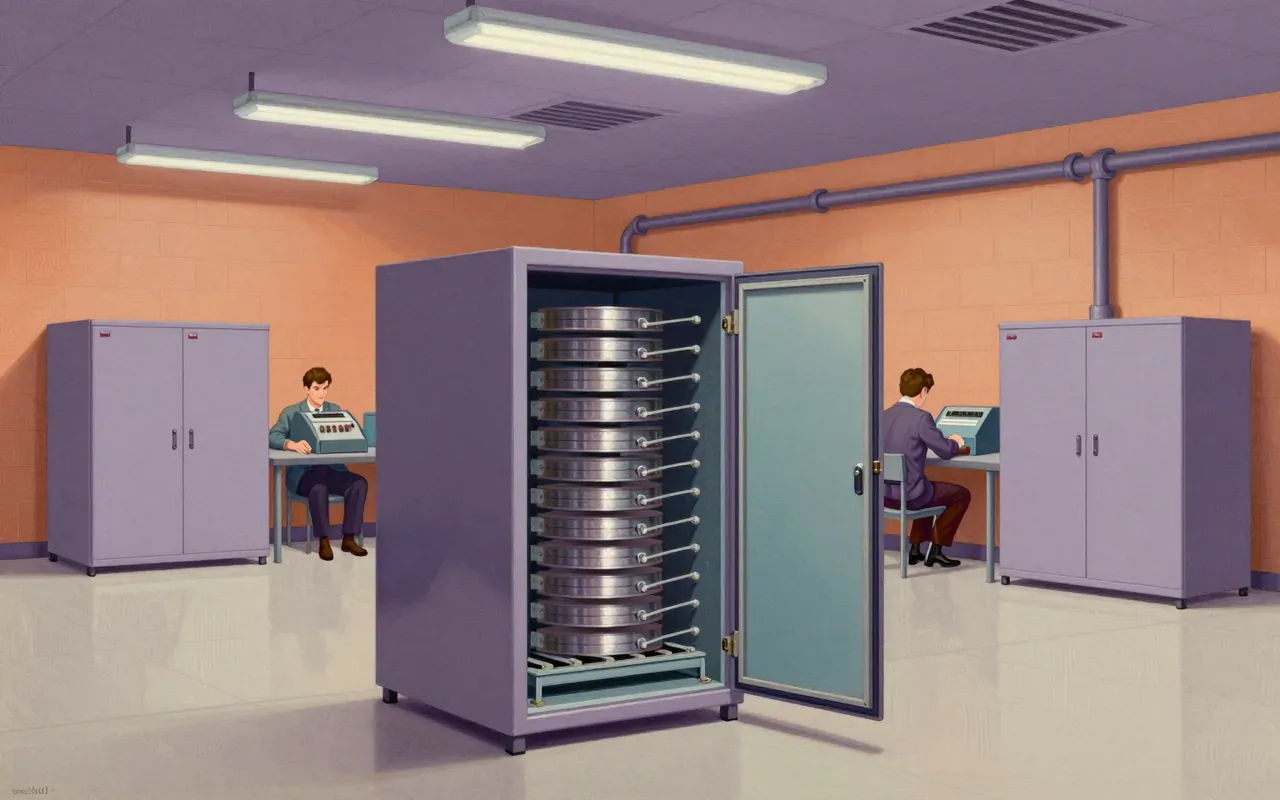
It magnetises a thin film of ferromagnetic material on both sides of rigid, rotating platters. Read/write heads move on an actuator arm. Servo control positions the heads precisely over tracks. Data is stored and retrieved in any order.
What works
Random-access data retrieval works reliably. Non-volatility works: data persists when powered off. The core architecture—platters, heads, actuator, servo—has endured for nearly 70 years.
What does not
It does not scale down without mechanical trade-offs. It cannot match SSDs in random read/write speed, access latency, or durability under motion or vibration. Its areal density gains now require complex, costly innovations like HAMR or MAMR.
What it changes
It established random-access, non-volatile secondary storage as standard for general-purpose computers. It enabled persistent, addressable data at scale—shifting computing from batch processing to interactive systems.
Is it worth your time
Yes—if you need high-capacity, low-cost, non-volatile storage where speed and shock resistance are secondary. Not if latency, power use or portability matter most.