technologybriefs
9:13in productionCh. 1 · Qi: The phone standard that stuck/ 9:13 · ceiling 15 min
Energy · Hardware

Inductive charging

Wireless charging isn’t magic — it’s a patch for plug fatigue, standardised for phones and stalled for cars.

Inductive charging solves plug fatigue for phones and parked EVs — but offers no working standard for moving vehicles or grid feedback. Its value is narrow, its overhead real, and its expansion unstandardised.

Chapters & takeaways4
  1. 0:51
    Qi: The phone standard that stuck

    Qi dominates small-device charging because it shipped — not because it’s superior.

  2. 2:51
    J2954: One standard, one use case

    SAE J2954 is the only vehicle wireless charging standard — and it covers only parked cars.

  3. 4:30
    DWPT: Still in draft, not deployment

    Dynamic wireless charging has no standard — only development started in 2023.

  4. 5:40
    V2G wireless: Coordination, not code

    Vehicle-to-grid wireless charging has no standard — only coordination began in 2026.

Worth your time?

Yes. Study the whole thing.

3.5/ 5
What works
  • Qi for small devices
  • SAE J2954 for static vehicle charging
What does not
  • dynamic wireless power transfer
  • vehicle-to-grid wireless charging
Study it if
  • consumer electronics integrators
  • EV infrastructure planners
Skip it if
  • grid operators
  • autonomous mobility engineers
The written brief1 min read

What it is and the problem it solves

It is a contactless power delivery method solving the friction of plugging in small electronics and parked electric vehicles.

How it works

Inductive charging uses electromagnetic induction between two coils — one in the charger, one in the device — to transfer power without physical contact.

What works

Qi works reliably for smartphones and wearables. SAE J2954 works for static vehicle charging — it is the first and only published standard for that purpose.

What does not

Dynamic wireless power transfer has no ratified standard. Vehicle-to-grid wireless charging has no standard — only coordination began in 2026.

What it changes

It eliminates plug-based interfaces for small devices and enables automated charging for parked EVs — but adds inefficiency, cost, and thermal overhead versus wired alternatives.

Is it worth your time

Yes, if you work with consumer electronics integration or EV infrastructure planning — but only for static use cases; dynamic and vehicle-to-grid variants remain unstandardised and unproven.

Same field · Energy4 of 23
10:20
Chevrolet BoltGeneral MotorsThe Chevrolet Bolt EV redefined the mass-market electric vehicle by delivering over 200 miles of range at a $30,000 post-incentive price—verified in production by October 2016. Its development relied on LG for battery and drivetrain, GM for final assembly in Lake Orion, and Israeli engineers for the user interface. Prototype testing covered five key domains. But the sources say nothing about real-world durability, software evolution, charging speed, or cost of ownership.
10:21
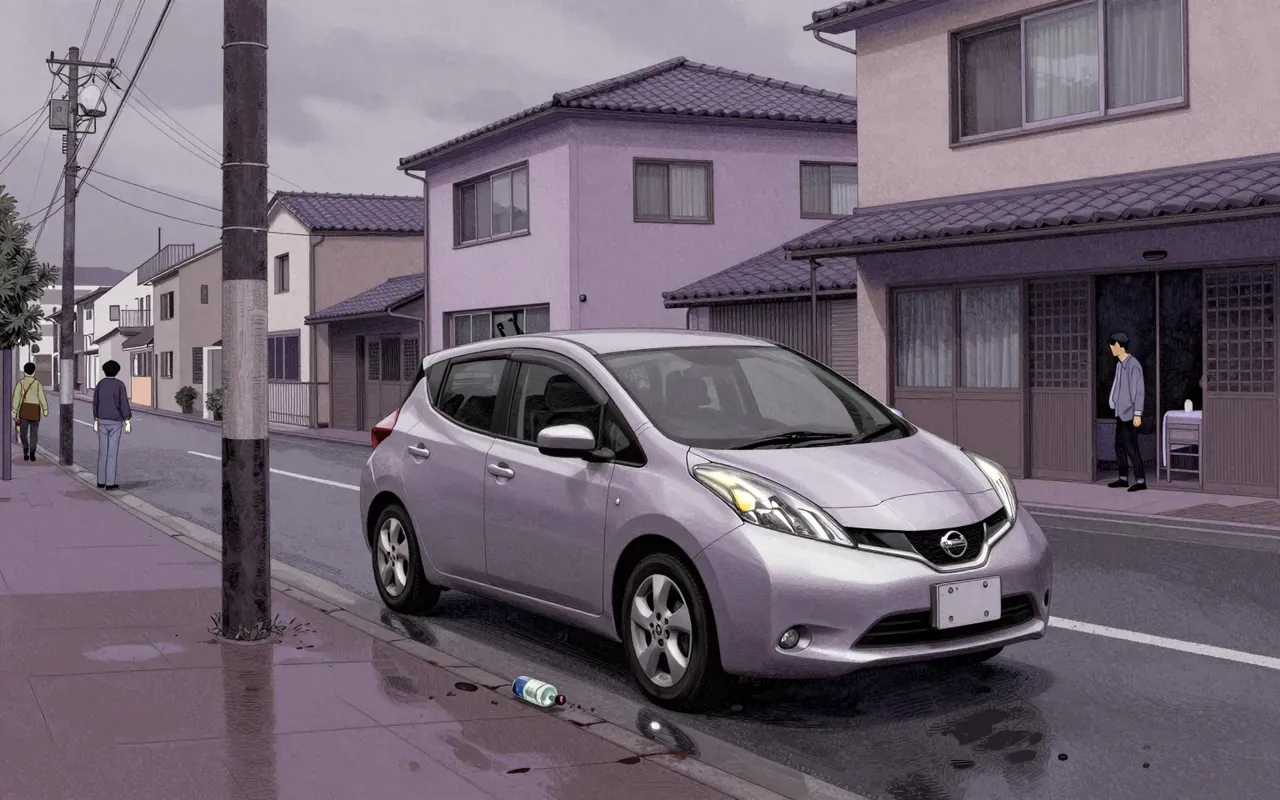
Nissan LeafNissanThe Nissan Leaf is a battery electric car produced by Nissan since 2010. It was unveiled on 1 August 2009 as the world's first mass-market electric and zero-emission vehicle. Production began on 22 October 2010 at the Oppama facility in Yokosuka, Kanagawa. The first generation used a 192-cell laminated lithium-ion battery pack co-developed with NEC, positioned under the floor between the wheels for optimized handling and space. Its motor delivered 80 kW (110 hp) and enabled ~160 km (100 miles) of range on a full charge. It was offered exclusively as a 5-door hatchback until 2025, when it became a crossover SUV model. By December 2020, cumulative global deliveries reached 500,000 units.
9:06
Regenerative brakingRegenerative braking is a core subsystem—not a feature—in electrified transport. It works by repurposing the drive motor as a generator during deceleration, feeding recovered energy back to storage. It improves efficiency and reduces mechanical brake wear. But it cannot stop a vehicle alone, demands tight integration with friction braking, and only functions where high-voltage power electronics and energy storage are already present. Its value lies in incremental energy recovery—not autonomy from conventional braking.
9:25
Small modular reactorSMRs are defined by size (<300 MWe), modularity (factory-built, transportable), and flexibility (multi-unit, non-electric applications). They do not represent a new nuclear technology class in physics or fuel cycle—but a new delivery model. As of March 2026, most are light-water reactors, many include passive safety, and none are confirmed to be cheaper, faster to license, or commercially operational beyond prototype stage.
Up next in Technology

Xerox Alto

· 10:54

It didn’t invent the GUI—it proved the desktop metaphor could run on microcode and shift registers.

10:54