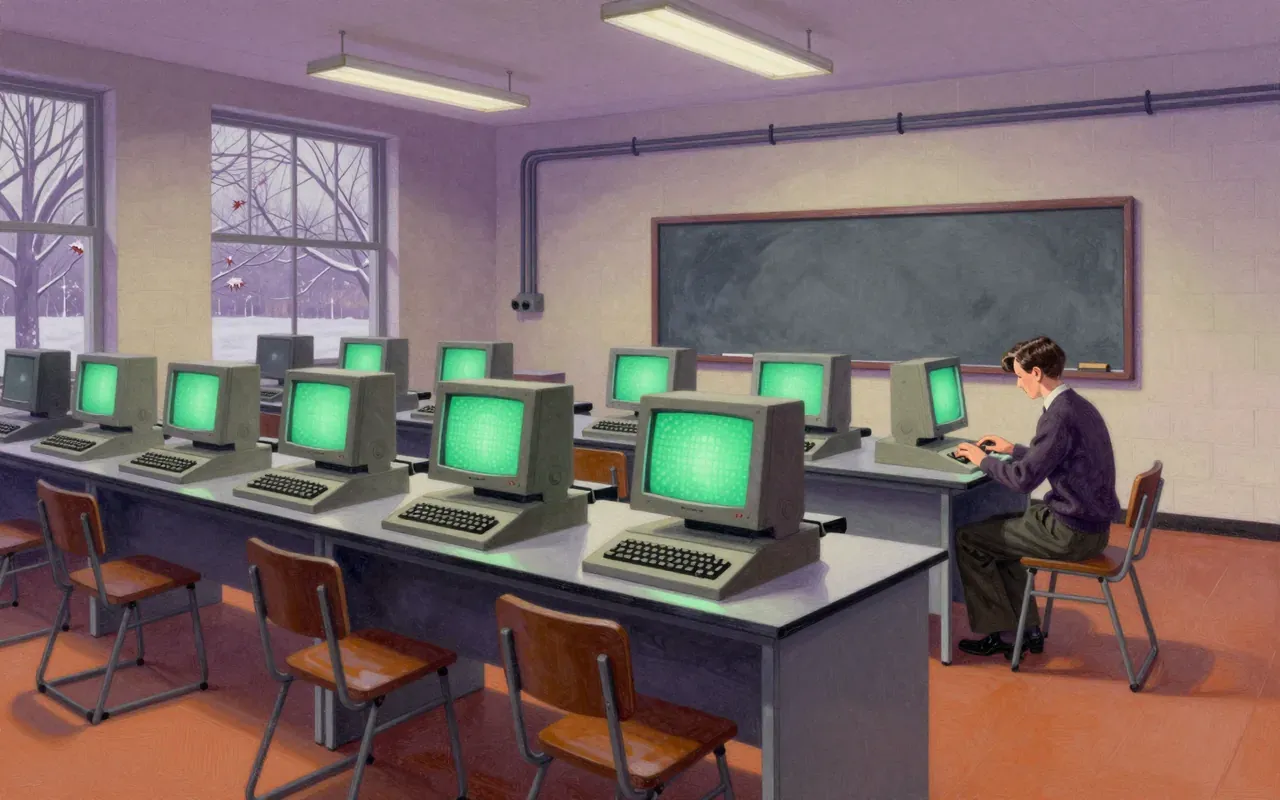
BASIC did not democratise computing — it made Dartmouth undergraduates the first non-STEM users of time-shared interactivity.
BASIC is a pedagogical tool, not a general-purpose language. It succeeded by narrowing scope — to Dartmouth, to undergraduates, to time-shared interaction, to FORTRAN II’s grammar stripped of complexity. Its value lies in what it excluded.
BASIC was built for non-scientific students — not engineers, not researchers, not hobbyists.
3:07
What came before
DARSIMCO and DOPE failed. Fortran and ALGOL were rejected. BASIC was the third attempt — and the first that worked.
4:38
Why time-sharing mattered
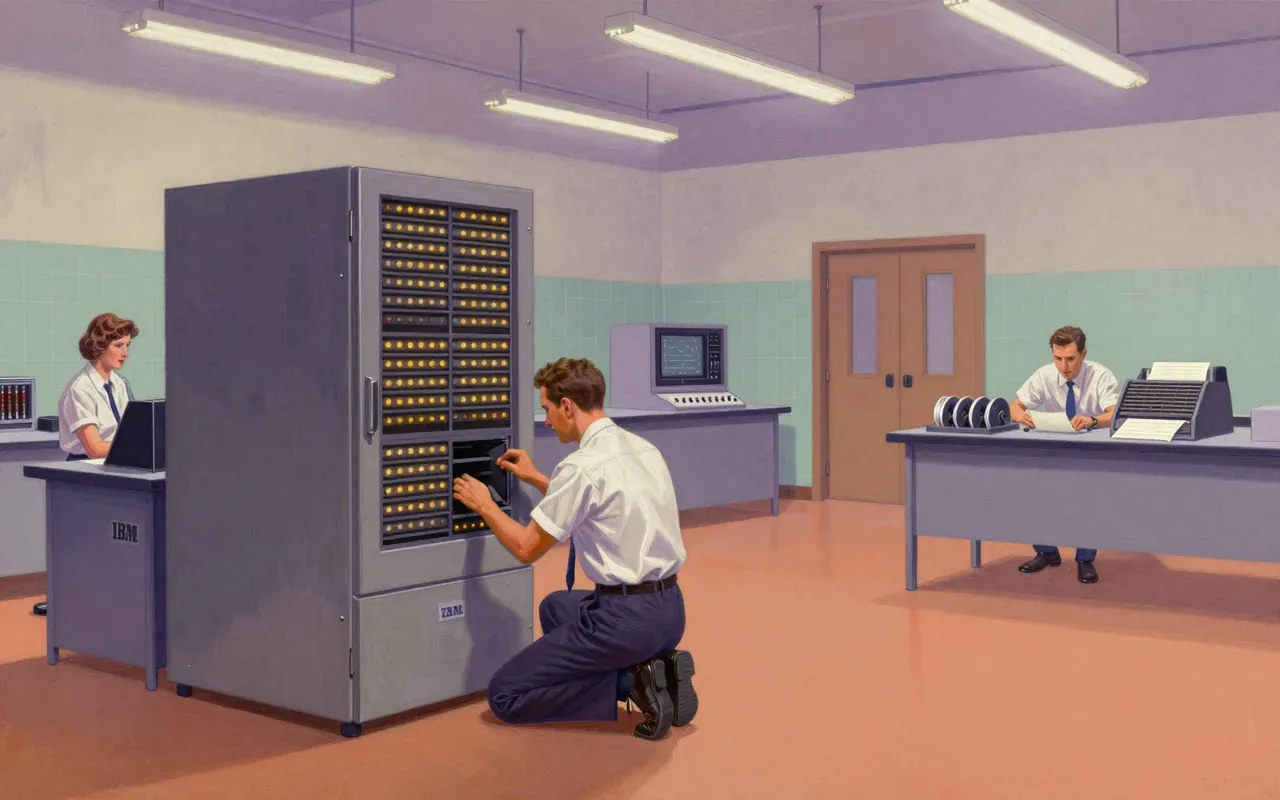
Batch processing killed learning. Time-sharing saved it — and BASIC was written to exploit that architecture.
6:18
How it was built
Kemeny wrote it. It copied FORTRAN II — but stripped away everything that got in the way of typing and running.
Worth your time?
Yes. Study the whole thing.
4/ 5
What works
gives non-STEM students direct program execution
replaces Fortran’s arithmetic IF with IF...THEN
uses FOR...NEXT instead of cryptic DO loops
relies on time-sharing to deliver interactivity
What does not
democratise computing beyond Dartmouth
support software engineering practice
enable portable or reusable code
Study it if
non-STEM undergraduates
instructors needing immediate feedback
institutions with time-shared mainframes
Skip it if
professional developers
systems programmers
users without centralised time-sharing infrastructure
The written brief1 min read
What it is and the problem it solves
BASIC is a simplified programming language designed to solve the problem of inaccessible computing for non-scientific students. It replaces cryptic syntax and batch-only execution with immediacy and readability.
How it works
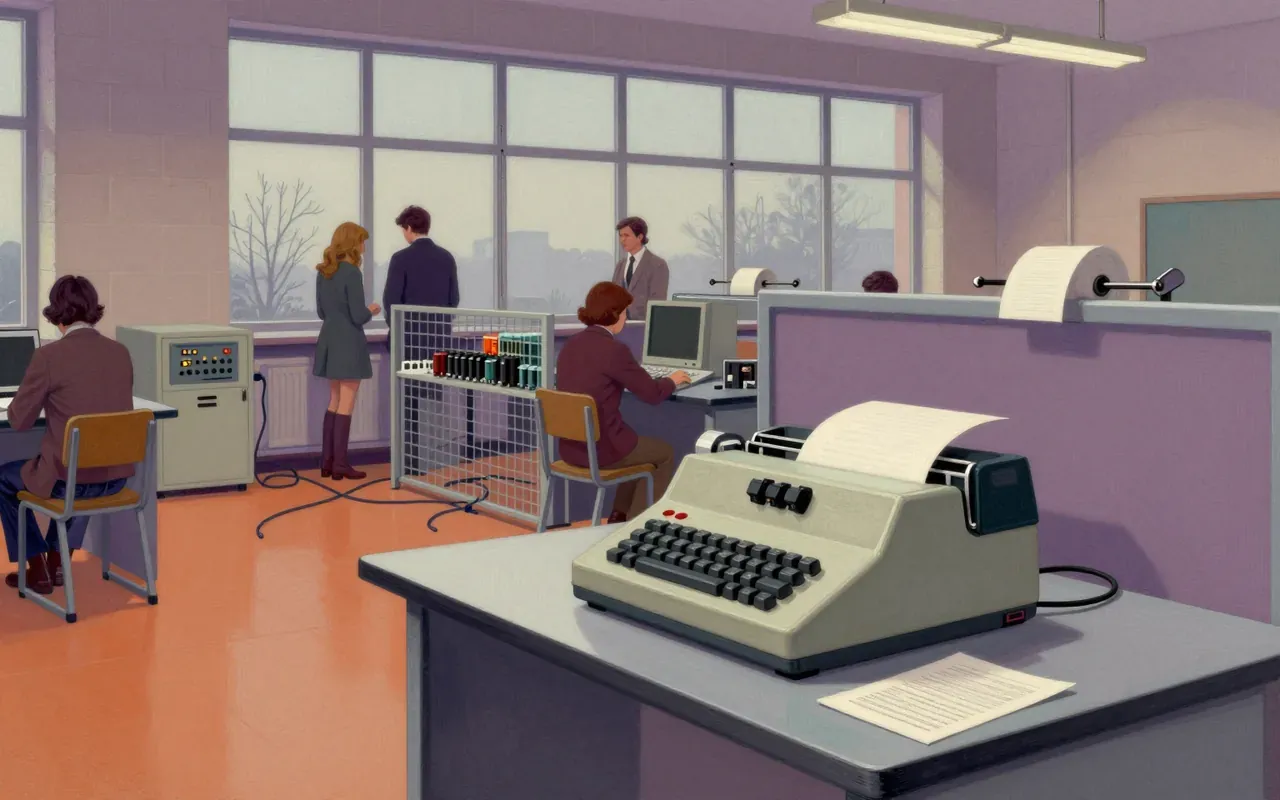
BASIC runs on a time-shared mainframe, giving each user the illusion of exclusive access. It uses one statement per line, numeric line numbers for branching and looping, and commands modelled on FORTRAN II — like FOR…NEXT instead of DO loops, and IF…THEN instead of Fortran’s arithmetic IF.
What works
The FOR…NEXT loop and IF…THEN conditional work as intuitive replacements for Fortran’s arithmetic IF and DO constructs. Time-sharing delivers immediate feedback — turning computation into dialogue rather than submission.
What does not
It does not scale beyond education on a single time-shared system. It does not support structured programming, modular design, or data abstraction. It does not eliminate batch-processing delays unless time-sharing is already implemented.
What it changes
It changes who gets to write code: non-STEM undergraduates at Dartmouth gain direct, interactive access to computing for the first time. It shifts pedagogy from deferred output to live iteration.
Is it worth your time
Yes, if you are teaching computing to non-technical students in a constrained hardware environment where immediate feedback matters more than expressiveness or portability.