technologybriefs
10:20in productionCh. 1 · The Printer Problem/ 10:20 · ceiling 15 min
Hardware · Tech history

Ethernet

Ethernet didn’t invent networking—it weaponised collision.

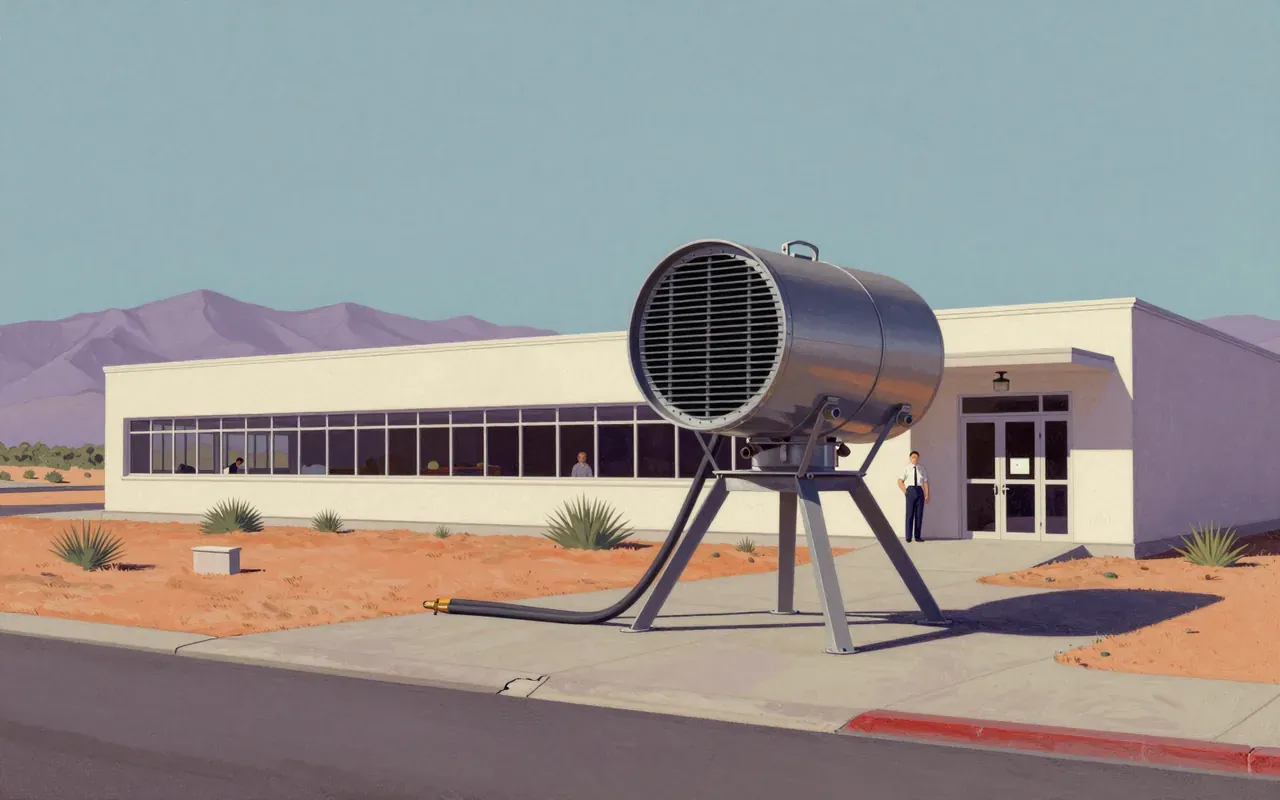
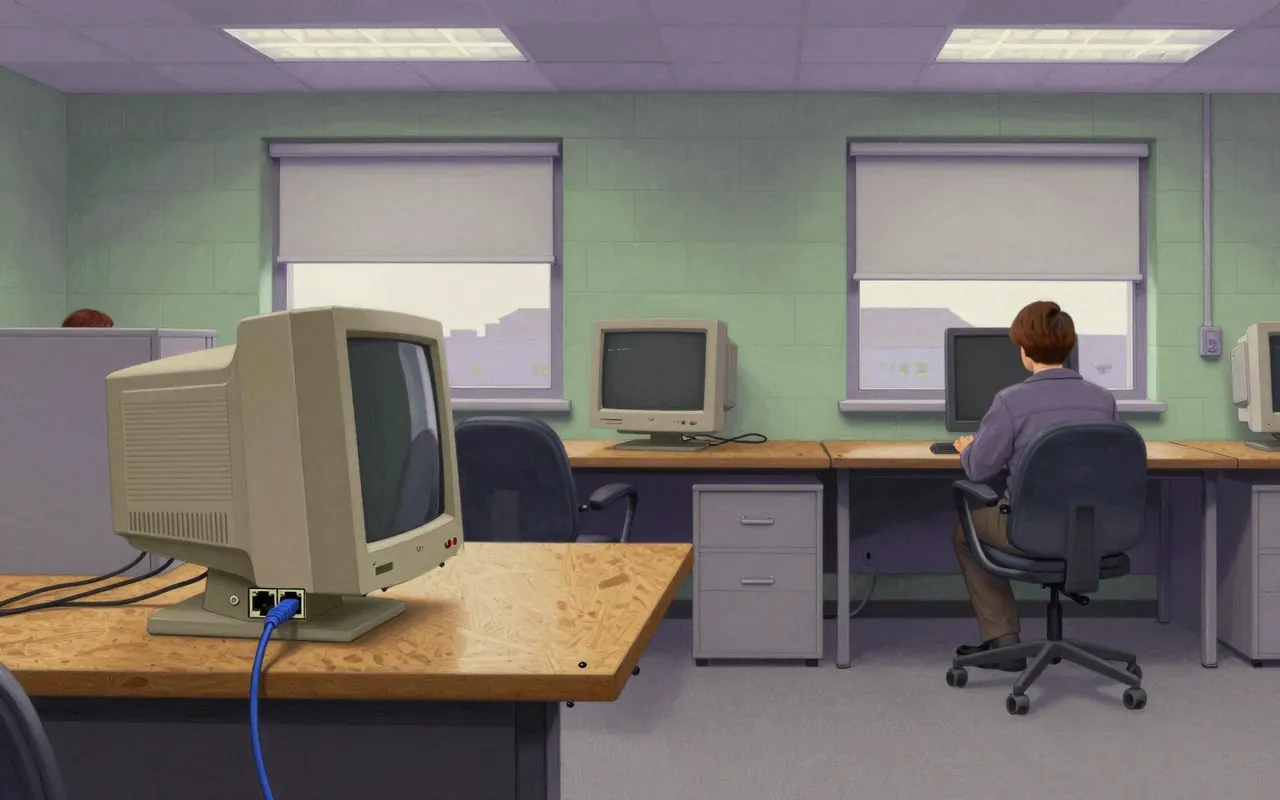
Ethernet is the coaxial-cable LAN co-invented by Metcalfe and Boggs at Xerox PARC in 1973 to link Alto computers to printers and ARPANET. It introduced CSMA/CD—carrier sensing before transmission, plus collision detection and random back-off—to adapt ALOHAnet for wired use. It ran first on November 11, 1973 at 2.94 Mbit/s. A 1980 Xerox report measured 98% throughput under heavy load. It was standardised as IEEE 802.3 in 1983. CSMA/CD does not scale or support modern requirements like QoS or determinism—and was phased out in favour of switched, full-duplex Ethernet.

Chapters & takeaways6
  1. 0:54
    The Printer Problem

    Ethernet was built to solve a concrete, immediate problem: connecting Alto PCs to printers and ARPANET—not to build 'the internet'.

  2. 1:56
    How Collision Became Controllable

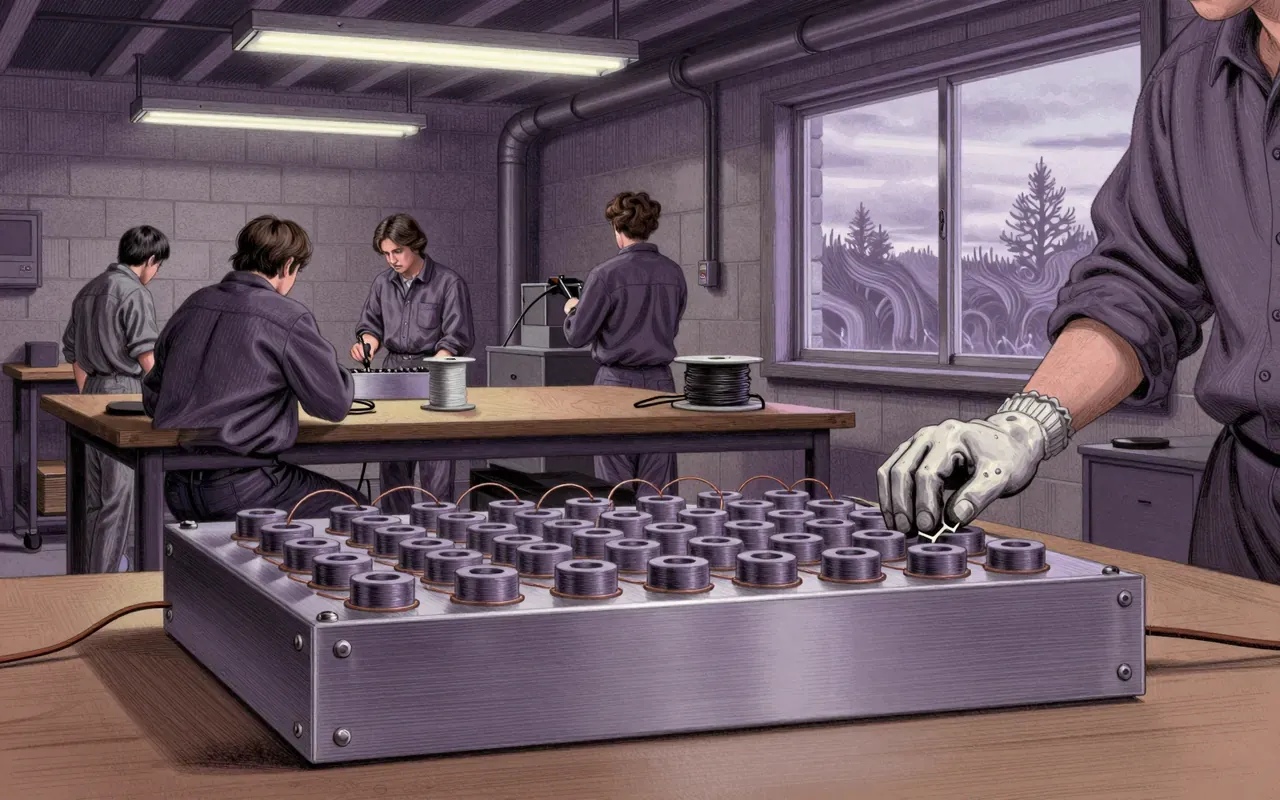
    CSMA/CD is not theoretical elegance—it’s ALOHAnet’s radio protocol grafted onto coax, with listening added to reduce chaos.

  3. 3:01
    Two Birth Dates, One Function

    November 11, 1973 is the only verifiable birth date—when it ran at 2.94 Mbit/s—not May 22, when the name appeared on paper.

  4. 4:08
    The 98% Illusion

    98% throughput under heavy load in 1980 proves CSMA/CD worked—but only on a single coax segment with predictable traffic.

  5. 5:25
    A Name Before the Network

    'Ethernet' was named before it worked—first in a schematic memo titled 'Alto Ethernet', not in code or hardware.

  6. 6:40
    Coax as Ether

    Coax wasn’t chosen for speed or future-proofing—it was the only shared physical medium that could carry megabit pulses between Altos in the same building.

Worth your time?

Yes. Study the whole thing.

4/ 5
What works
  • collision avoidance via carrier sensing
  • efficient retransmission under load
  • low-cost shared-medium operation
What does not
  • guarantee delivery
  • support quality-of-service
  • scale beyond single coax segments
  • function in full-duplex mode
Study it if
  • network historians
  • protocol educators
  • legacy-system maintainers
Skip it if
  • cloud architects
  • real-time systems engineers
  • modern network designers
The written brief1 min read

What it is and the problem it solves

Ethernet is a coaxial-cable local network invented to connect Xerox Alto computers to laser printers and ARPANET. It solved the problem of unreliable, low-throughput peripheral and wide-area connectivity in early personal computing environments.

How it works

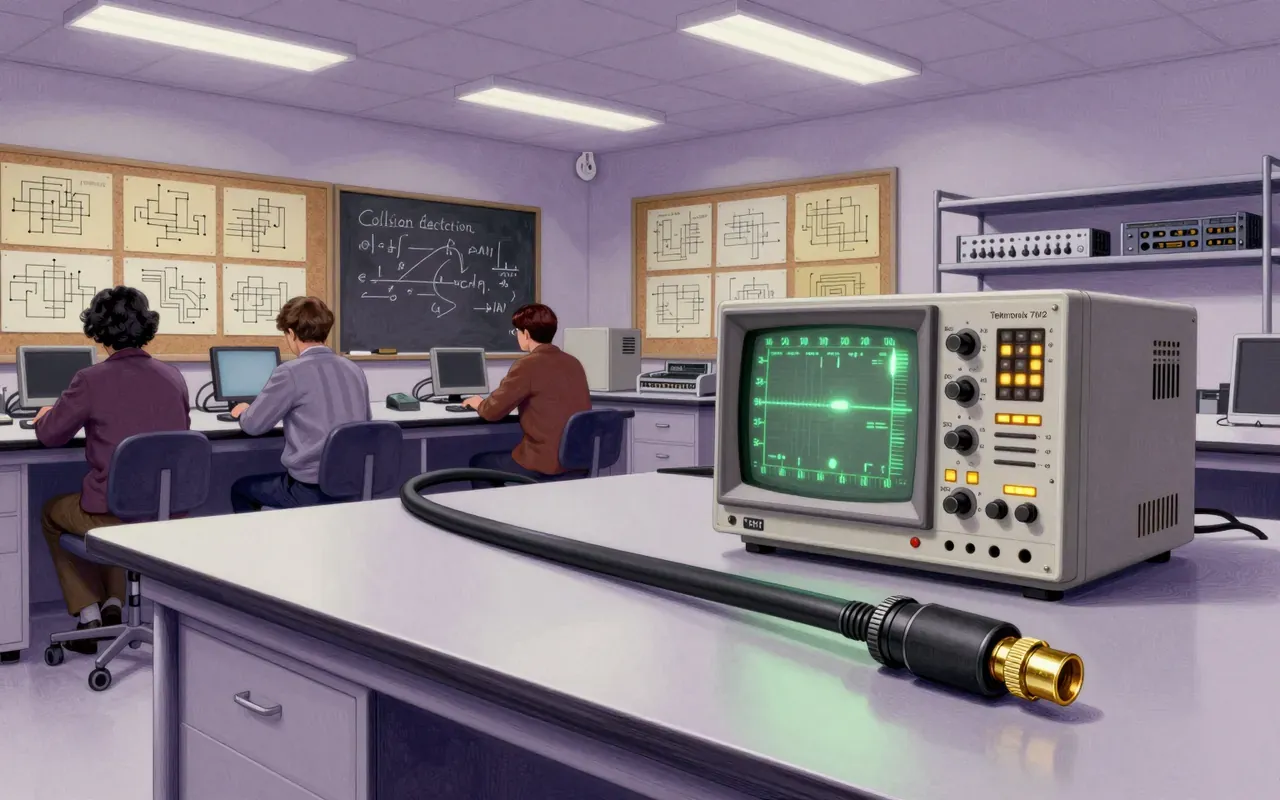
Ethernet uses coaxial cable as a shared medium. Stations listen before transmitting (carrier sense). If the channel is clear, they send packets. If two stations transmit simultaneously, a collision occurs. Each station detects the collision, stops transmission, waits a random back-off time, then retries.

What works

CSMA/CD delivered 98% throughput under heavy load on installed systems by 1980. It functioned reliably at 2.94 Mbit/s on November 11, 1973. It replaced ALOHAnet’s blind transmission with carrier sensing—cutting collisions and improving efficiency.

What does not

CSMA/CD does not scale beyond small coaxial segments. It fails under high latency or full-duplex conditions. It cannot guarantee timing, prioritisation, or deterministic delivery. It was abandoned in switched Ethernet after the mid-1990s.

What it changes

Ethernet established the dominance of shared-medium, packet-switched LANs over proprietary and circuit-switched alternatives. It shifted networking from point-to-point leased lines to broadcast-based, decentralised, plug-and-play interconnection.

Is it worth your time

Yes—if you work with local networks, legacy infrastructure, or network protocol fundamentals. Its CSMA/CD mechanism remains a canonical case study in distributed contention resolution, but it is obsolete for new deployments.
Same field · Hardware4 of 19
9:54
5G5G is a defined cellular standard—not a monolithic upgrade. Its real-world impact depends entirely on deployment mode, spectrum choice, and backhaul investment. It enables new use cases only where standalone architecture and mid-band spectrum converge. Elsewhere, it functions as a marketing label atop LTE infrastructure.
9:20
ArduinoArduino is a pedagogical tool repackaged as infrastructure. It delivers on accessibility — not scalability, safety, or sustainability.
9:09
BluetoothBluetooth is a short-range wireless technology standard for exchanging data and building personal area networks. In the most widely used mode, Bluetooth has a range of up to 10 metres due to a 2.5 milliwatt transmission power limit. Bluetooth operates using UHF radio waves in the 2.402–2.48 GHz ISM bands. Bluetooth serves as a wireless alternative to wired connections for file exchange and audio device interconnection. The short-link radio technology that became Bluetooth was initiated in 1989 by Nils Rydbeck at Ericsson Mobile to develop wireless headsets. Principal design and development of Bluetooth began in 1994, yielding a workable solution by 1997. The first Bluetooth device, a hands-free mobile headset, was revealed in 1999 and won the 'Best of show Technology Award' at COMDEX. The Ericsson R520m, released in Quarter 1 of 2001, was the first commercially available Bluetooth phone. Bluetooth uses a radio technology called frequency-hopping spread spectrum. The specifications were formalized by the Bluetooth Special Interest Group (SIG) and formally announced on 20 May 1998. The Institute of Electrical and Electronics Engineers (IEEE) standardized Bluetooth as IEEE 802.15.1 but no longer maintains the standard.
10:33
Boston Dynamics1992Boston Dynamics builds legged robots that solve terrain traversal problems no wheeled system can handle. Its breakthroughs are mechanical—not cognitive. It delivers motion, not agency. Its value lies in proving dynamic locomotion is possible—not in deploying it widely.
Up next in Technology

Federico Faggin

· 9:16

Federico Faggin didn’t invent the idea of a microprocessor—he built the first one that actually worked, and forced the world to take it seriously.

9:16