technologybriefs
8:48in productionCh. 1 · The Breakup/ 8:48 · ceiling 15 min
Hardware · Tech history

PlayStation

A revenge console built on CDs—not cartridges—that made 3D gaming cheap, developer-friendly, and unavoidable.

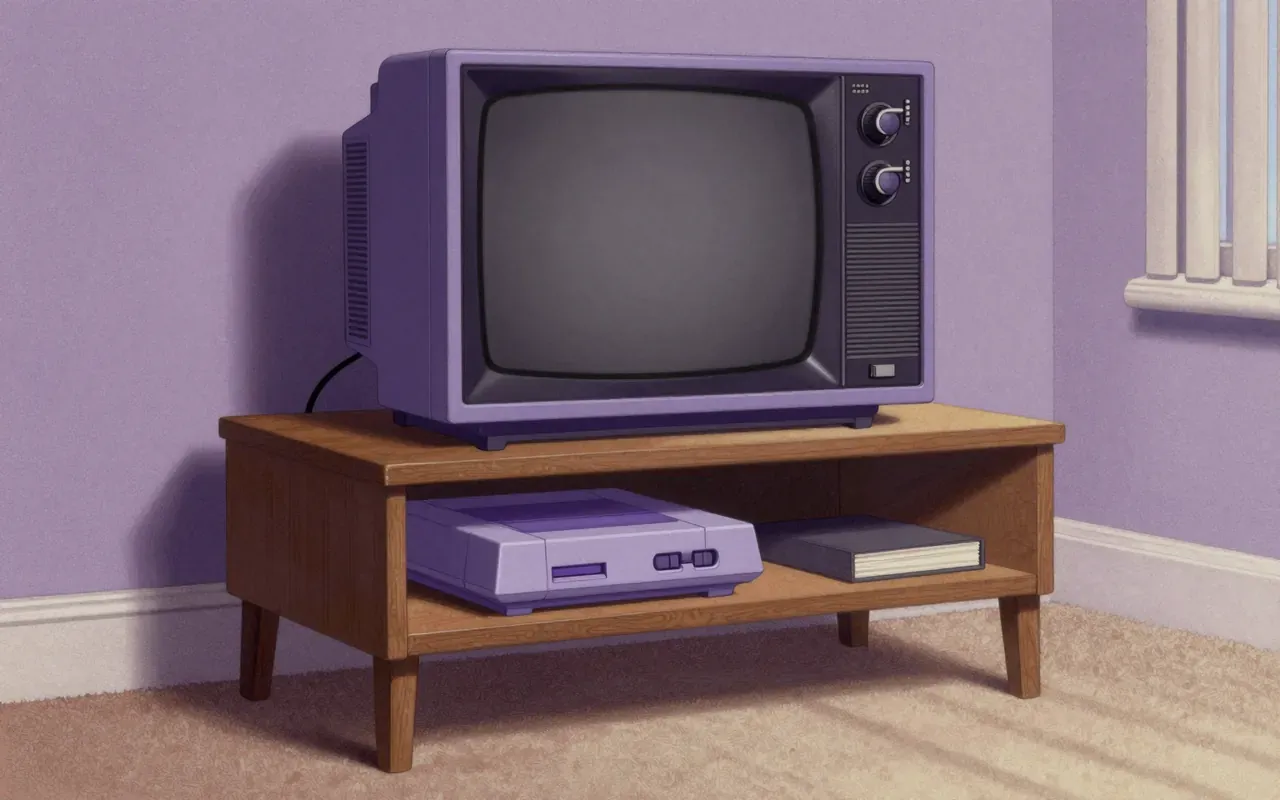
PlayStation is a proprietary CD-ROM-based home console launched in Japan in 1994. It emerged from Ken Kutaragi’s initiative after Sony’s 1991 joint CD-ROM project with Nintendo collapsed. Sony President Norio Ohga greenlit a rival platform in response to that humiliation. A June 1992 boardroom demonstration of a 3D-capable CD-ROM system secured internal support. After observing Sega’s Virtua Fighter arcade success, Sony committed to 3D polygon graphics as the core focus. The project received formal executive approval in 1993. Developers favoured it because CD-ROM manufacturing was cheaper and easier than Nintendo’s cartridge system. It shipped over 100 million units.

Chapters & takeaways4
  1. 0:56
    The Breakup

    PlayStation began as a failed Nintendo collaboration—and became a rival platform because Sony leadership felt humiliated.

  2. 2:32
    The Boardroom Pivot

    A single 3D CD-ROM demonstration in June 1992 convinced Sony’s board to continue the project—after Kutaragi reminded them of Nintendo’s betrayal.

  3. 3:48
    The Arcade Signal

    Sega’s Virtua Fighter arcade hit settled PlayStation’s technical direction: 3D polygons, not 2D sprites, would define the platform.

  4. 5:11
    The Format Advantage

    CD-ROMs lowered manufacturing cost and developer friction—giving PlayStation an edge over cartridge-based rivals.

Worth your time?

Yes. Study the whole thing.

4.5/ 5
What works
  • Makes 3D game development cheaper via CD-ROM.
  • Shifts console economics away from cartridges.
  • Establishes Sony as a first-party platform owner.
  • Uses observed market behaviour (Virtua Fighter) to lock technical direction.
What does not
  • Deliver backward compatibility with Super Famicom.
  • Achieve its original hybrid SNES-CD vision.
  • Rely on proprietary semiconductor breakthroughs (no chip specs provided).
Study it if
  • Platform strategists
  • Hardware historians
  • Developer relations leads
Skip it if
  • Console collectors seeking rarity (no scarcity claims given)
  • AI or software engineers (no AI/software claims given)
The written brief1 min read

What it is and the problem it solves

It is Sony’s proprietary 3D-focused gaming console, launched in 1994, solving the problem of high-cost, inflexible game distribution by replacing cartridges with mass-produced CDs.

How it works

It is a CD-ROM-based home console prioritising 3D polygon graphics over 2D sprites. It uses off-the-shelf CD manufacturing to cut production costs. Its architecture was designed to appeal to developers by lowering the cost and complexity of game distribution compared to cartridge-based rivals.

What works

Its CD-ROM delivery cuts manufacturing cost and time. Its 3D-first design attracts developers alienated by Nintendo’s cartridge constraints. Its launch timing capitalises on arcade-led demand for polygon-based games, confirmed by Virtua Fighter’s success.

What does not

It does not deliver on the original 1991 ‘Play Station’ prototype’s promise of compatibility with Nintendo’s Super Famicom. It abandons that hybrid vision entirely after the partnership collapse.

What it changes

It changes console development from proprietary, high-cost cartridge ecosystems to open, low-barrier CD-ROM platforms—shifting power toward third-party developers and accelerating 3D as the industry standard.

Is it worth your time

Yes—if you are evaluating how platform strategy, grievance-driven R&D, and format economics reshape hardware markets. No—if you assume its success was inevitable or technological destiny.
Same field · Hardware4 of 19
9:54
5G5G is a defined cellular standard—not a monolithic upgrade. Its real-world impact depends entirely on deployment mode, spectrum choice, and backhaul investment. It enables new use cases only where standalone architecture and mid-band spectrum converge. Elsewhere, it functions as a marketing label atop LTE infrastructure.
9:20
ArduinoArduino is a pedagogical tool repackaged as infrastructure. It delivers on accessibility — not scalability, safety, or sustainability.
9:09
BluetoothBluetooth is a short-range wireless technology standard for exchanging data and building personal area networks. In the most widely used mode, Bluetooth has a range of up to 10 metres due to a 2.5 milliwatt transmission power limit. Bluetooth operates using UHF radio waves in the 2.402–2.48 GHz ISM bands. Bluetooth serves as a wireless alternative to wired connections for file exchange and audio device interconnection. The short-link radio technology that became Bluetooth was initiated in 1989 by Nils Rydbeck at Ericsson Mobile to develop wireless headsets. Principal design and development of Bluetooth began in 1994, yielding a workable solution by 1997. The first Bluetooth device, a hands-free mobile headset, was revealed in 1999 and won the 'Best of show Technology Award' at COMDEX. The Ericsson R520m, released in Quarter 1 of 2001, was the first commercially available Bluetooth phone. Bluetooth uses a radio technology called frequency-hopping spread spectrum. The specifications were formalized by the Bluetooth Special Interest Group (SIG) and formally announced on 20 May 1998. The Institute of Electrical and Electronics Engineers (IEEE) standardized Bluetooth as IEEE 802.15.1 but no longer maintains the standard.
10:33
Boston Dynamics1992Boston Dynamics builds legged robots that solve terrain traversal problems no wheeled system can handle. Its breakthroughs are mechanical—not cognitive. It delivers motion, not agency. Its value lies in proving dynamic locomotion is possible—not in deploying it widely.
Up next in Technology

Prestressed concrete

Eugène Freyssinet · 10:00

Prestressed concrete doesn’t beat physics—it negotiates with it, using tension to buy compression time.

10:00