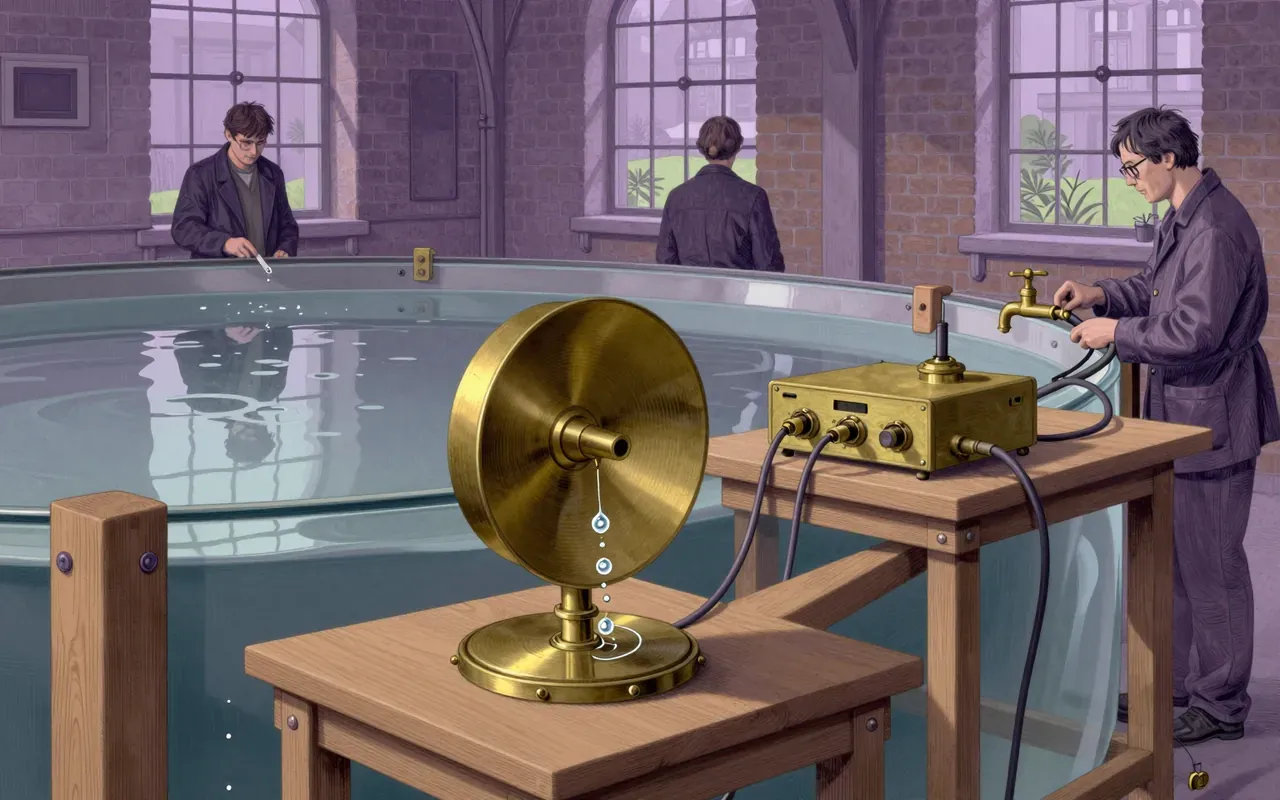
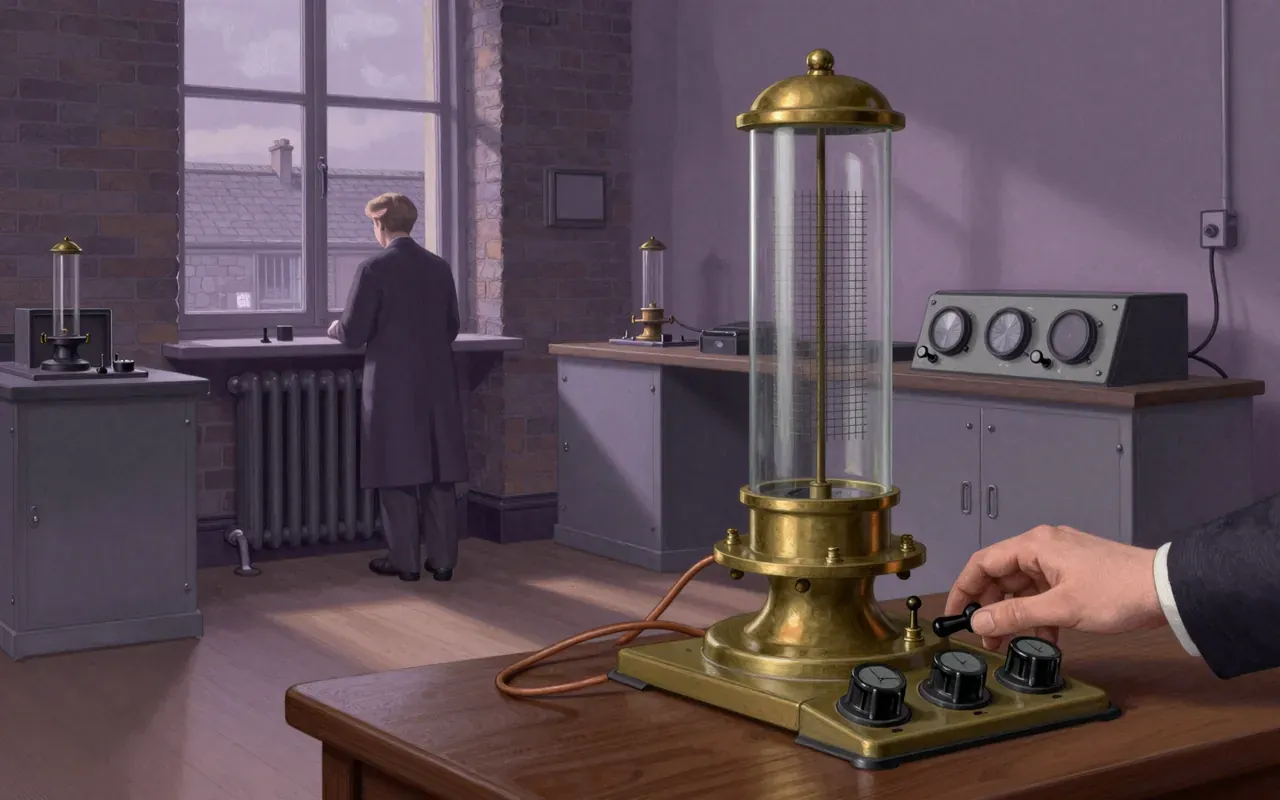
Langevin’s 1915 sonar was the first active underwater echo-ranging system. It used electrostatic and quartz piezoelectric transducers to send and receive ultrasound. Distance was calculated from signal time-of-flight. Though patented and physically demonstrated, it did not become operational before World War I ended. Electrostatic transducers were soon abandoned; quartz piezoelectric methods endured and scaled. The invention established the core mechanism of modern sonar — but delivered no tactical utility in its intended conflict.
It was built for one urgent purpose: finding submarines during World War I.
1:43
The first active echo-ranger
It used ultrasound and echo timing — the first system to do so with piezoelectric quartz.
3:02
How time became distance
Distance came from time-of-flight; ultrasound generation and detection relied on quartz piezoelectricity.
4:12
What got left behind
Its electrostatic transducers were abandoned, but its quartz method endured.
5:23
The prototype that missed the war
It proved echo ranging possible — yet delivered no wartime deployment.
6:48
The pivot point
It shifted detection from listening to probing — and made piezoelectric ultrasound engineering routine.
Worth your time?
Yes. Study the whole thing.
3.5/ 5
What works
establishing time-of-flight ultrasound ranging
proving quartz piezoelectricity for underwater transmission and reception
shifting detection from passive to active
What does not
deliver operational capability
achieve wartime deployment
use magnetostrictive or modern transducer designs
Study it if
historians of military technology
transducer engineers
acoustics researchers
Skip it if
naval operators of 1918
modern sonar procurement officers
AI or software developers
The written brief1 min read
What it is and the problem it solves
An active underwater echo-location system for submarine detection. It solved the problem of locating submerged vessels beyond the range of human hearing and passive acoustic listening.
How it works
It transmitted ultrasonic pulses underwater using electrostatic or quartz piezoelectric transducers. It measured the time delay between transmission and echo return to calculate distance.
What works
Piezoelectric quartz crystals successfully generated and detected ultrasound. Signal time-of-flight calculation worked in principle and laid groundwork for later systems.
What does not
The system was not operational before World War I ended. Electrostatic transducers proved impractical and were soon superseded.
What it changes
It changed submarine detection from passive listening (hydrophones) to active echo ranging. It established time-of-flight ultrasound as a viable method for underwater distance measurement.
Is it worth your time
Yes — if you work on underwater sensing, transducer physics, or early 20th-century military R&D. Its mechanism established the core sonar paradigm, but it delivered no operational capability during the war.