Caissons enable dry foundation work underwater by pumping out water—but pneumatic versions introduce decompression sickness as an unavoidable occupational hazard. They are ancient in principle, 19th-century in pressurised form, and still in active use today—not because they evolved, but because the physics of submerged construction leaves few alternatives.
Dry conditions directly improve concrete placement—this is its primary functional advantage.
5:02
What fails
Decompression sickness is not a side effect—it is the defining occupational hazard of pneumatic caisson use.
6:14
How old it is
The technique predates industrialisation: Romans and medieval engineers used it for harbours and bridge piers.
7:34
When it changed
Pneumatic pressurisation—a 19th-century innovation—enabled deeper, more complex foundations but added physiological risk.
Worth your time?
Yes. Study the whole thing.
3.5/ 5
What works
dry concrete placement underwater
foundation construction in saturated soils
continuous adaptation since antiquity
What does not
eliminate decompression risk
integrate with digital systems
reduce labour intensity
Study it if
geotechnical engineers
civil infrastructure planners
occupational health specialists
Skip it if
software developers
AI product managers
cloud architects
The written brief1 min read
What it is and the problem it solves
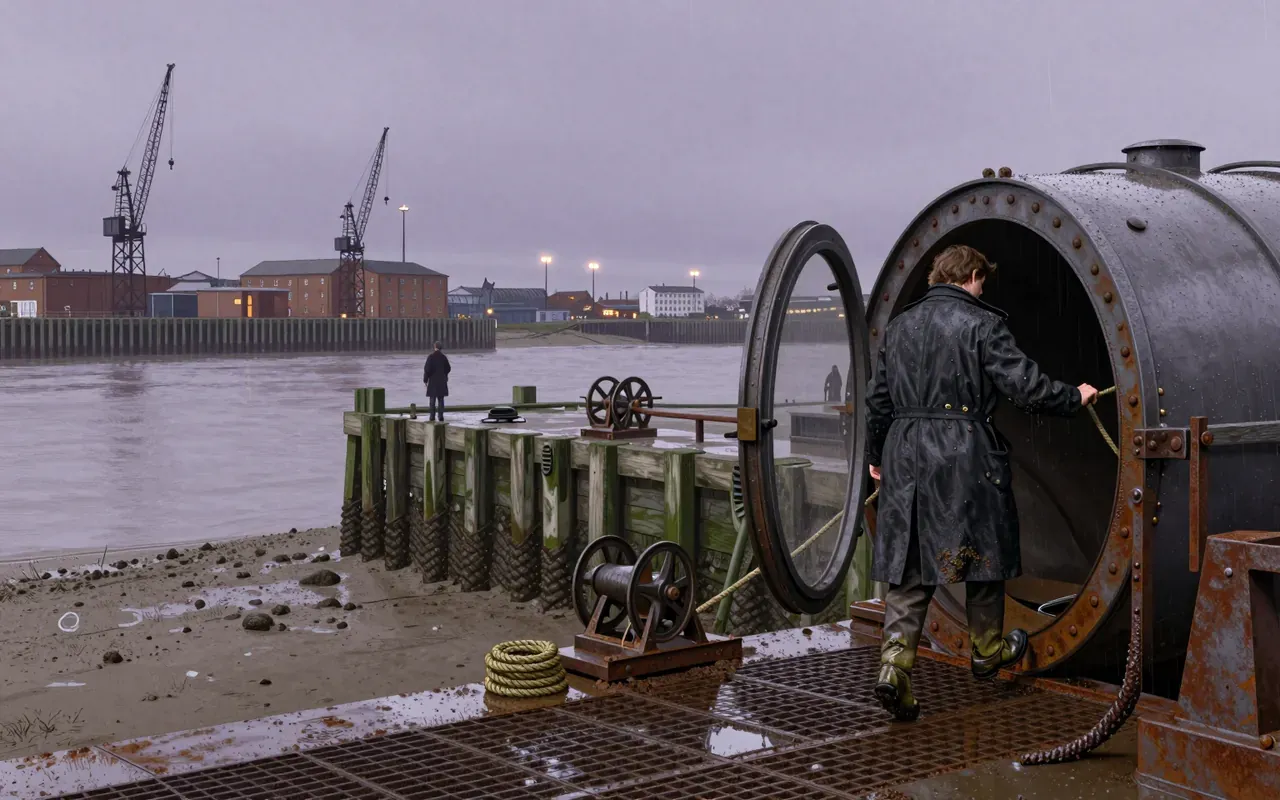
A caisson solves the problem of building stable foundations below water level. It is a physical enclosure that retains soil and excludes water, allowing construction in otherwise inaccessible submerged ground.
How it works
A caisson is a watertight retaining structure built into waterlogged ground or submerged sites. Water is pumped out from inside it to create dry working conditions.
What works
Dry working conditions inside pneumatic caissons improve concrete placement quality. The principle has been applied continuously since antiquity—by Roman and medieval engineers—and remains functional in modern geotechnical engineering.
What does not
It does not eliminate occupational risk. Pneumatic caissons require controlled decompression to avoid decompression sickness—first identified in caisson workers and named ‘caisson disease’.
What it changes
It changes how deep foundations are built underwater. It enables concrete placement in dry conditions where open excavation would fail—but at the cost of introducing a known, life-threatening physiological hazard.
Is it worth your time
Yes—if you are designing or supervising foundations in submerged or water-bearing strata. No—if you expect automation, software integration, or hazard elimination. It demands rigorous decompression protocols and offers no digital interface.