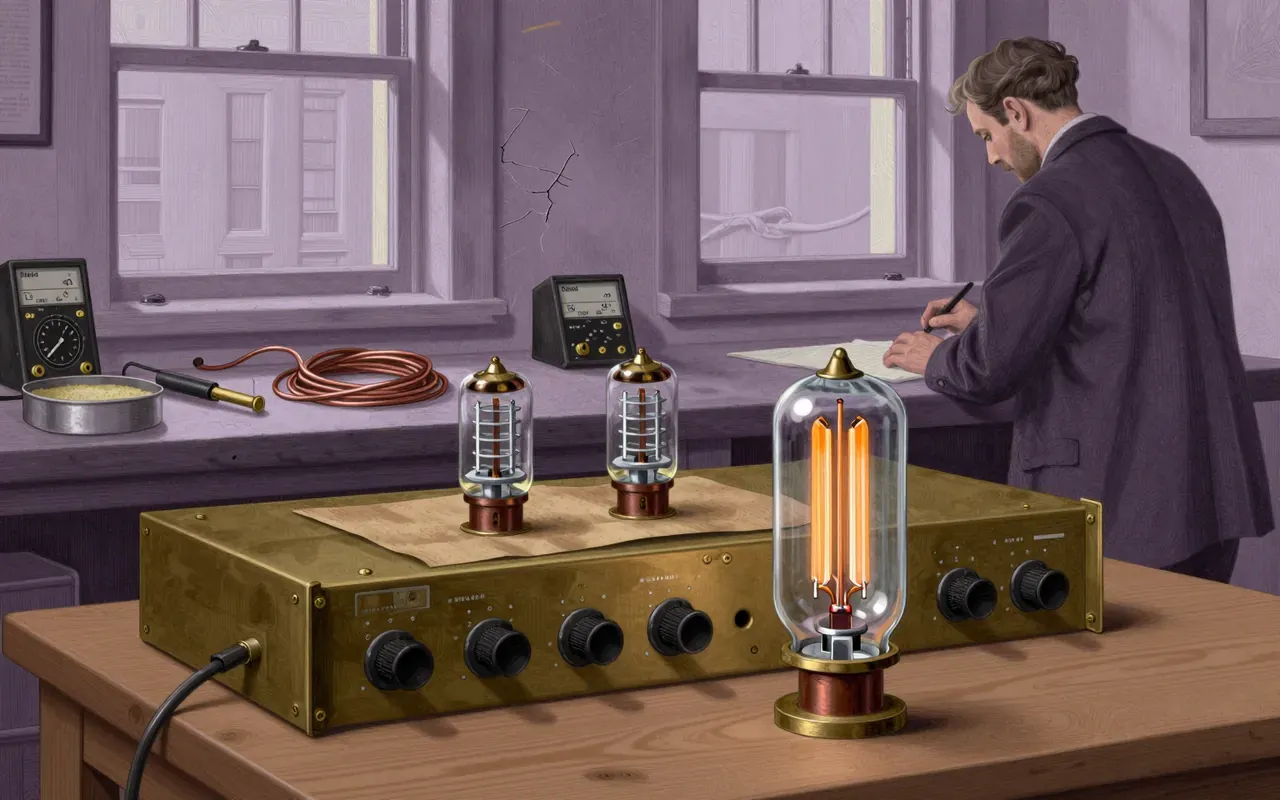
Cochlear implants are not hearing aids. They are neural stimulators. Early versions delivered one channel of electrical pulse — enough to trigger sensation and low-frequency pitch, but not speech. Their value lies in proving that targeted nerve stimulation can substitute for biological transduction. That insight redirected decades of research — but did not deliver functional hearing.
The first cochlear implant was a single-channel device built in 1957 by Djourno and Eyriès.
2:25
Why one channel wasn’t enough
Single-channel implants failed at speech detection because they couldn’t map frequency to location in the cochlea.
4:20
Sensation without meaning
A biocompatible single-channel implant gave pitch perception under 600 Hz — but zero word recognition.
6:26
The redesign begins
NASA engineer Adam Kissiah began redesigning the implant in the mid-1970s — after the limits of single-channel devices were clear.
1 more chapterFewer chapters
Worth your time?
Yes. Study the whole thing.
3.5/ 5
What works
generates auditory sensation
produces pitch perception below 600 Hz
confirms direct nerve stimulation is viable in humans
What does not
restore hearing
enable speech detection
support word recognition
Study it if
neural interface engineers
auditory prosthetics researchers
rehabilitation technologists
Skip it if
audiologists seeking clinical tools
deaf education specialists
patients expecting functional hearing
Who should study it, and who should skipHide who it is for
The written brief1 min read
What it is and the problem it solves
A neuroprosthetic device for people with profound sensorineural deafness. It bypasses damaged hair cells to stimulate the auditory nerve.
How it works
It delivers electrical pulses directly to the auditory nerve via an electrode implanted in the cochlea.
What works
It generates auditory sensations and rudimentary pitch perception in congenitally deaf users. Biocompatible single-channel versions confirmed neural responsiveness in human trials.
What does not
Single-channel implants cannot differentiate frequencies across cochlear regions. They produce pitch perception below 600 Hz but no word recognition.
What it changes
It establishes direct neural stimulation as a viable route to auditory sensation — shifting focus from acoustic amplification to neuroprosthetic signal delivery.
Is it worth your time
Only if you work on neural interfaces, audiology hardware, or rehabilitation engineering — not as a clinical solution for speech understanding at this stage.