The telephone is a specification before it is a device: Bell’s 1876 patent defined intelligibility as requiring electrical undulations that mirror air vibrations. Reis named it and transmitted voice earlier—but not intelligibly. Bell’s liquid transmitter worked once, under lab conditions, proving the principle. Nothing else in the record shows reliability, scalability, or usability beyond that demonstration. The invention establishes a physical condition for fidelity—not a working system.
Reis coined 'telephone' and demonstrated voice transmission via electronic signals in 1861—but his device used intermittent current and failed at intelligibility.
2:22
Undulation, not interruption
Bell’s breakthrough was specifying undulating current—not intermittent—as the necessary condition for accurate sound reproduction.
4:15
One sentence, heard whole
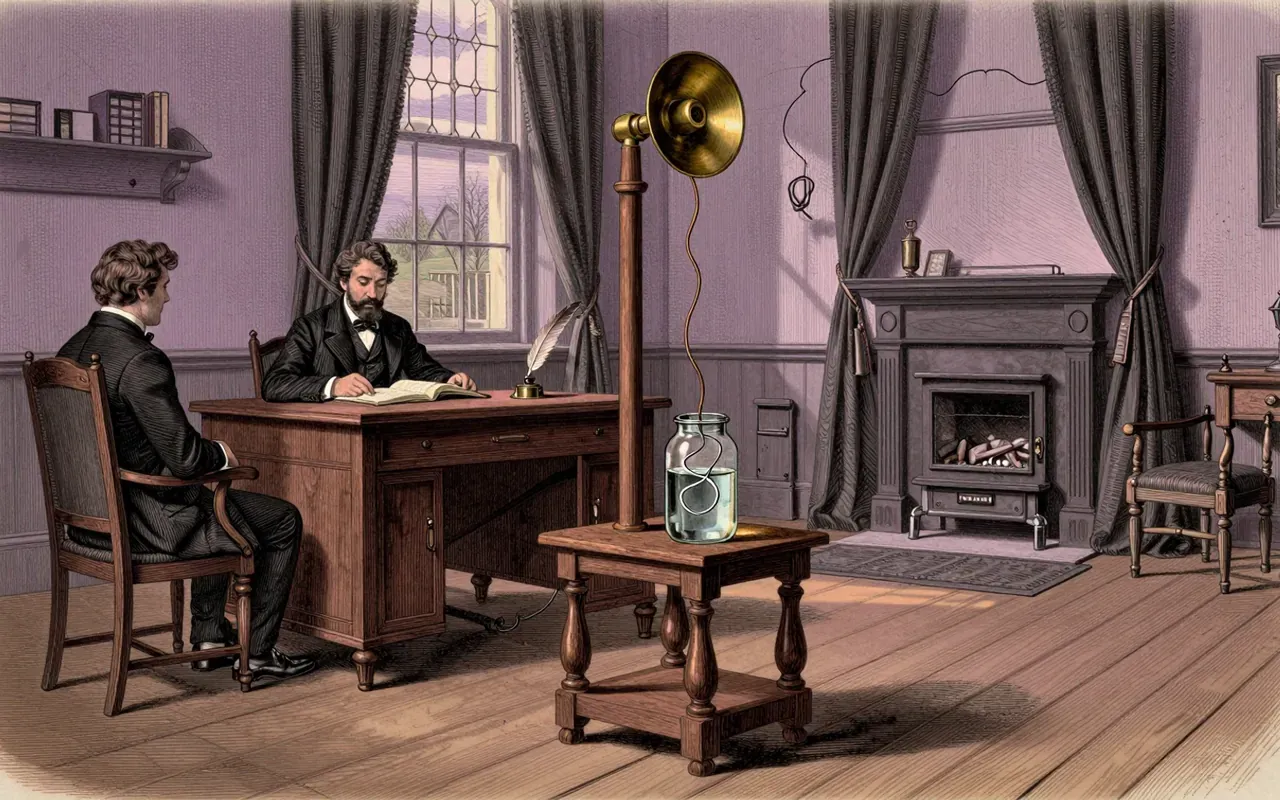
On 10 March 1876, Bell achieved the first clearly intelligible voice transmission using a liquid transmitter—and that result validated his patent’s core claim.
6:08
What it does, not what it looks like
The telephone is defined by its function: converting voice into electronic signals for transmission and acoustic reproduction—not by its form or commercial success.
1 more chapterFewer chapters
Worth your time?
Yes. Study the whole thing.
3.5/ 5
What works
establishes undulating current as the physical basis for intelligible voice transmission
validates a precise correspondence between air vibration and electrical waveform
produces one verified instance of fully intelligible speech at distance
Who should study it, and who should skipHide who it is for
The written brief1 min read
What it is and the problem it solves
A device that solves the problem of transmitting intelligible human speech over distance. Not just sound, but speech: distinct words, not tones or noise.
How it works
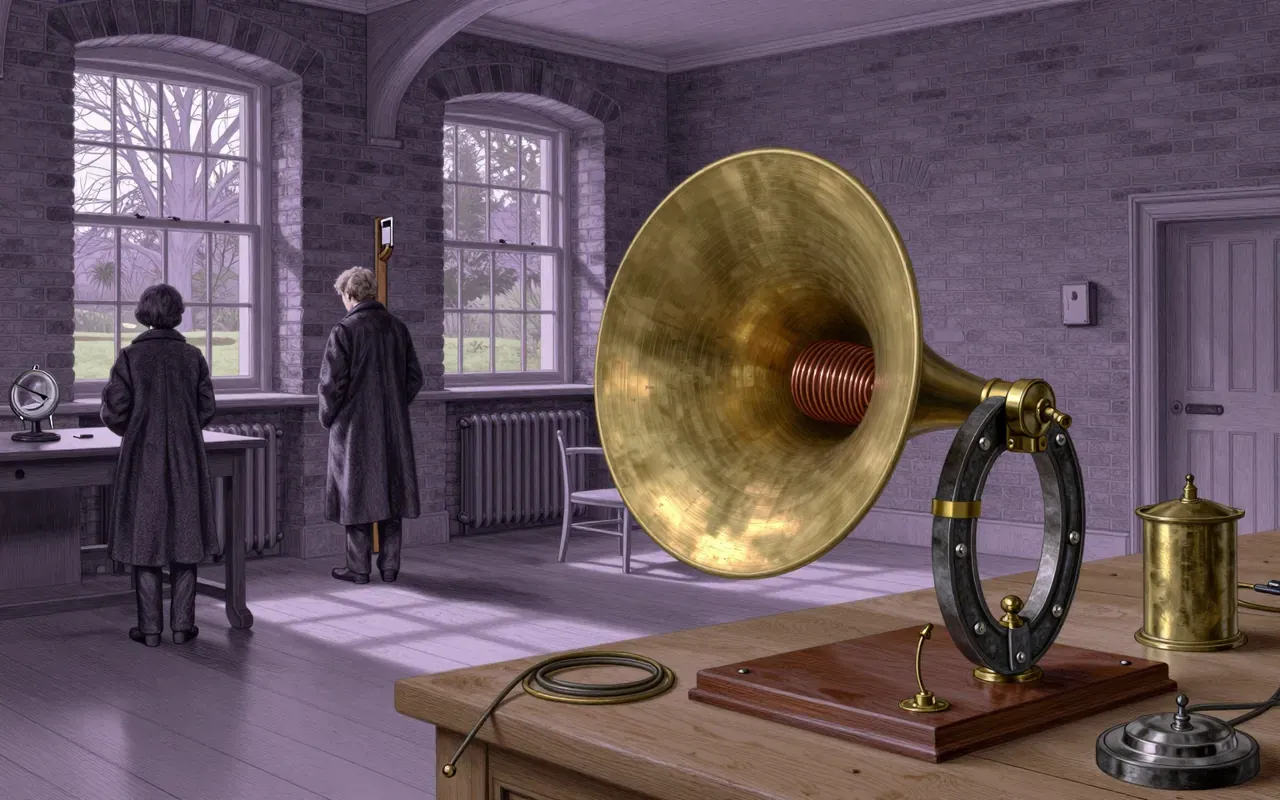
It converts sound—especially voice—into electronic signals by matching air vibrations with electrical undulations. Bell’s 1876 patent specified this principle explicitly. Reis had earlier used electrical impulses for voice transmission, but with intermittent current, not undulating.
What works
Bell’s 10 March 1876 demonstration transmitted clear, intelligible speech using a liquid transmitter. His patent covered electrical undulations matching air vibrations—and that method produced clearly intelligible voice replication at a second device.
What does not
Reis’s device did not reproduce intelligible speech reliably. Bell’s liquid transmitter worked only in controlled conditions and required manual adjustment. Neither system scaled beyond point-to-point lab demonstrations without major engineering overhaul.
What it changes
It shifts telegraphy from coded pulses to direct vocal replication. That redefines ‘message’ from discrete symbols to continuous acoustic waveform—and makes the ear, not the eye, the primary interface for long-distance communication.
Is it worth your time
Yes—if you work on signal fidelity, transduction, or the history of real-time human communication. It establishes the foundational mechanism for all voice telecommunication: continuous analogue representation via current modulation.