What it is and the problem it solves
A roll-based photographic medium that solved the problem of fragility, weight, and immobility in plate-based photography.
How it works
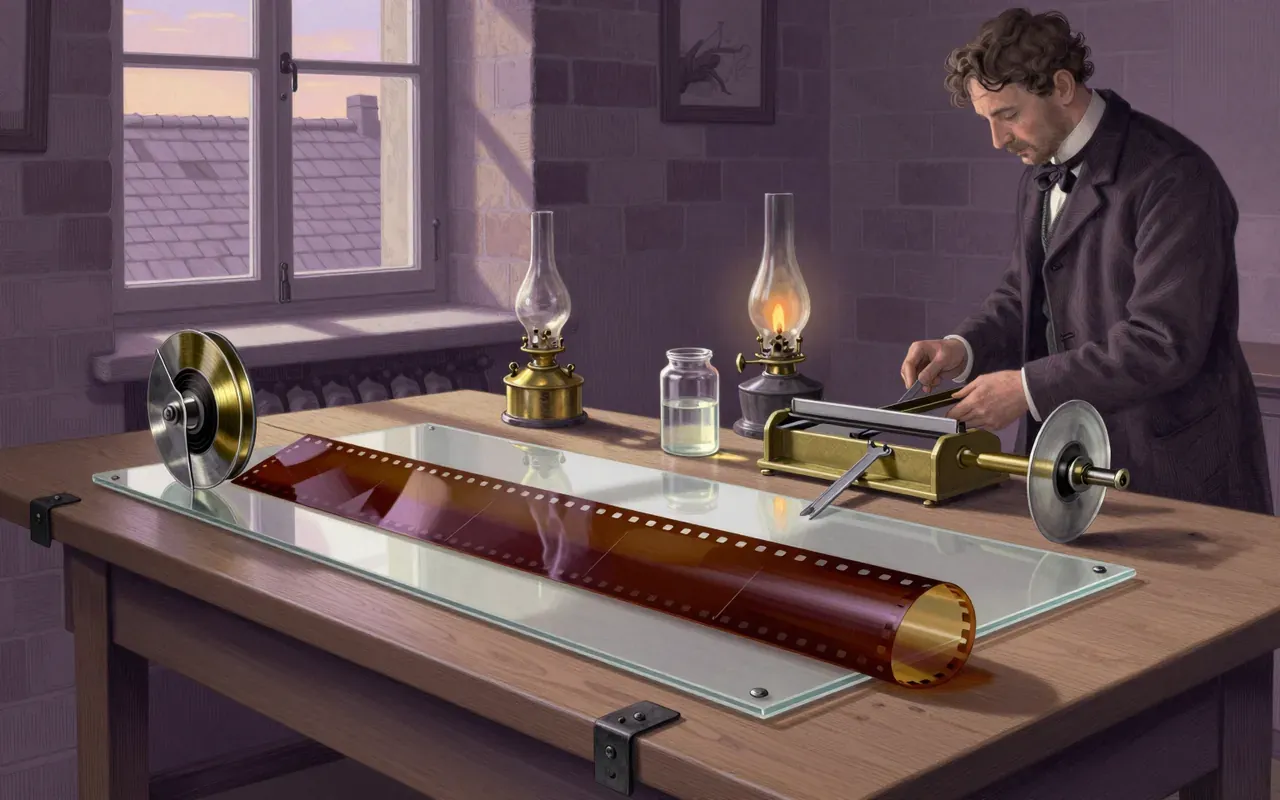
Eastman’s film replaced glass plates with flexible rolls: first paper-backed in 1885, then transparent cellulose nitrate in 1889. It relied on Hurter and Driffield’s 1876 emulsion sensitivity work to quantify speed.
What works
The 1884–1889 patent sequence (two 1884 patents, one 1885 patent, and 1889 nitrocellulose process patents) created a closed system: roll film + Kodak camera + centralised development. That system worked reliably enough to sell 100-exposure pre-loaded cameras in 1888.
What does not
The 1889 nitrocellulose film was highly flammable. It offered no intrinsic safety, durability, or standardisation—only portability and disposability.
What it changes
It moved photography from a wet-plate craft requiring darkroom skills to a point-and-shoot service model. Amateurs sent film away and received prints—no chemistry, no timing, no expertise required.
Is it worth your time
Yes—if you work in imaging systems, archival preservation, or tech-history. Its separation of capture from development remains the foundational architecture of all consumer imaging.