technologybriefs
8:31in productionCh. 1 · Byproduct, not breakthrough/ 8:31 · ceiling 15 min
Tech history · Hardware

Neon lamp

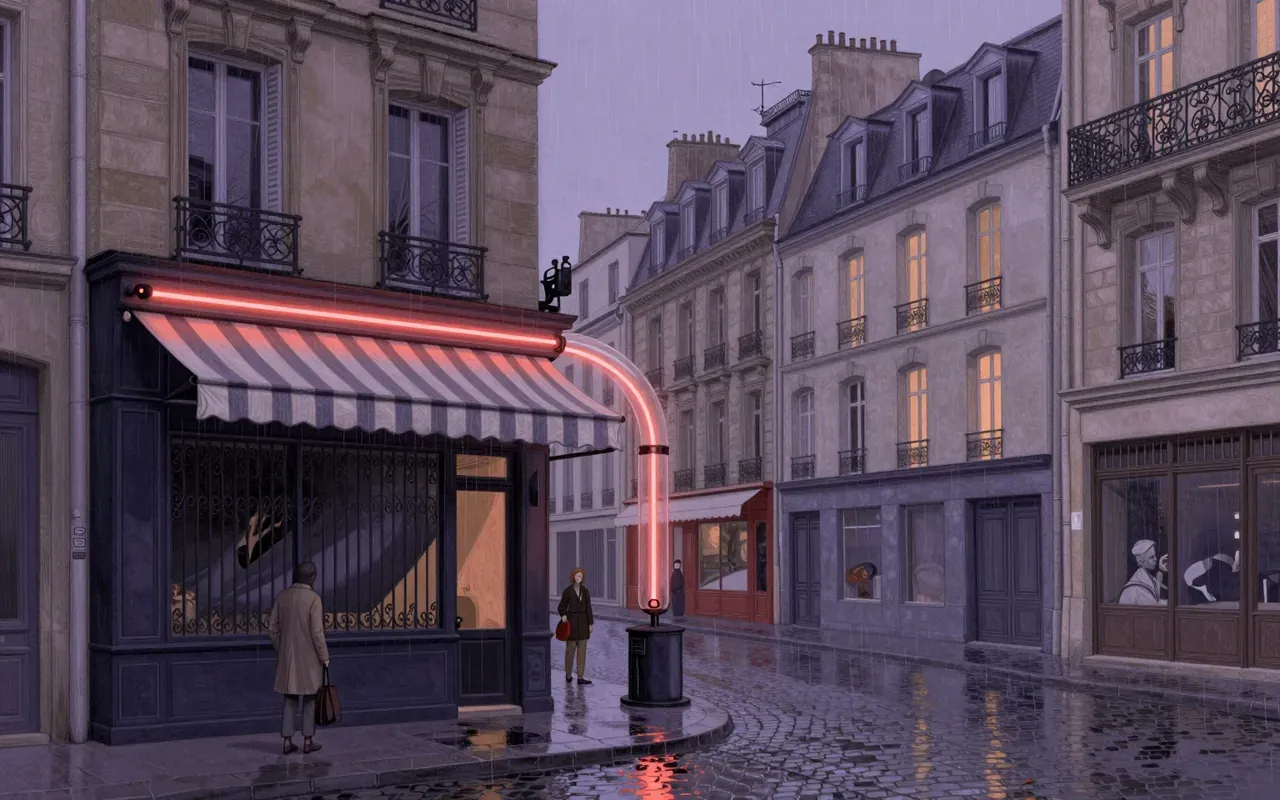
Claude didn’t invent neon light—he weaponised air liquefaction to sell signs.

Claude’s neon tube lighting was not the first gas-discharge light—but it was the first commercially viable one. Its success hinged on solving two engineering problems: keeping neon pure inside a sealed tube, and stopping electrodes from eroding under electrical stress. It turned air liquefaction waste into revenue. It did not enable low-power indicators—that came later, with Moore’s coronal-discharge lamp. It did not eliminate maintenance—it deferred it. Its real innovation was industrial integration, not physics.

Chapters & takeaways4
  1. 1:00
    Byproduct, not breakthrough

    Neon lighting was built on surplus gas, not pure invention.

  2. 2:16
    No pumps, no leaks, no decay

    Sealed-tube gas purity was the real patentable leap.

  3. 3:41
    Sputter-resistant electrodes made it last

    Electrodes had to survive sputtering—or the sign died in months.

  4. 4:50
    Rarefied gas, not voltage, was the bottleneck

    Glow discharge only worked at low pressure—and only if the gas stayed clean.

Worth your time?

Yes. Study the whole thing.

4/ 5
What works
  • public demonstration at Paris Motor Show, December 1910
  • French patent filed 7 March 1910
  • sealed-tube gas purification
  • sputter-resistant electrode design
What does not
  • enables low-power indicator use
  • operates via coronal discharge
  • eliminates gas degradation
Study it if
  • gas-discharge lighting engineers
  • industrial gas process designers
  • early 20th-century tech historians
Skip it if
  • modern LED circuit designers
  • UI/UX practitioners
  • consumer electronics product managers
The written brief1 min read

What it is and the problem it solves

A sealed-glass, glow-discharge tube using purified neon gas to produce bright red-orange light. It solves the problem of short-lived, dim, or unreliable electric signage before 1910.

How it works

Georges Claude’s neon tube lighting uses glow discharge in rarefied neon gas inside a sealed glass tube. Light emerges when current passes through the gas. Two innovations enabled this: purification of inert gases within the sealed tube, and electrode design resistant to sputtering.

What works

The Paris Motor Show demonstration in December 1910 proved public viability. The March 1910 French patent filing confirms functional priority. Electrode sputter resistance and in-tube gas purification made sustained operation possible where earlier discharge tubes failed.

What does not

It does not scale to low-power indicator use. It does not operate via coronal discharge (that belongs to Daniel Moore’s later 1917 lamp). It does not eliminate gas degradation—Claude’s sealed-tube purity was an improvement over earlier tubes with gas-replenishment devices, but sputtering still limited electrode life.

What it changes

It changes how cities are lit at night—not by replacing incandescent bulbs indoors, but by enabling durable, high-visibility signage. It establishes neon as a commercial byproduct of air liquefaction, binding lighting innovation to industrial gas infrastructure.

Is it worth your time

Yes—if you work on gas-discharge lighting, electrode longevity, or early 20th-century industrial gas processing. No—if you assume neon lamps are simple bulbs or that Claude’s system scaled without trade-offs in maintenance, voltage control, or gas replenishment.

Same field · Tech history4 of 139
Up next in Technology

Newcomen atmospheric engine

Thomas Newcomen · 1712 · 11:53

It didn’t run on steam pressure—it ran on the weight of the air above it.

11:53