10:23in productionCh. 1 · Packet radio, not broadcast/ 10:23 · ceiling 15 min
Hardware · Internet culture
Wi-Fi
1997
Wi-Fi replaced cables with radio — but gave up control, security, and predictability to do it.
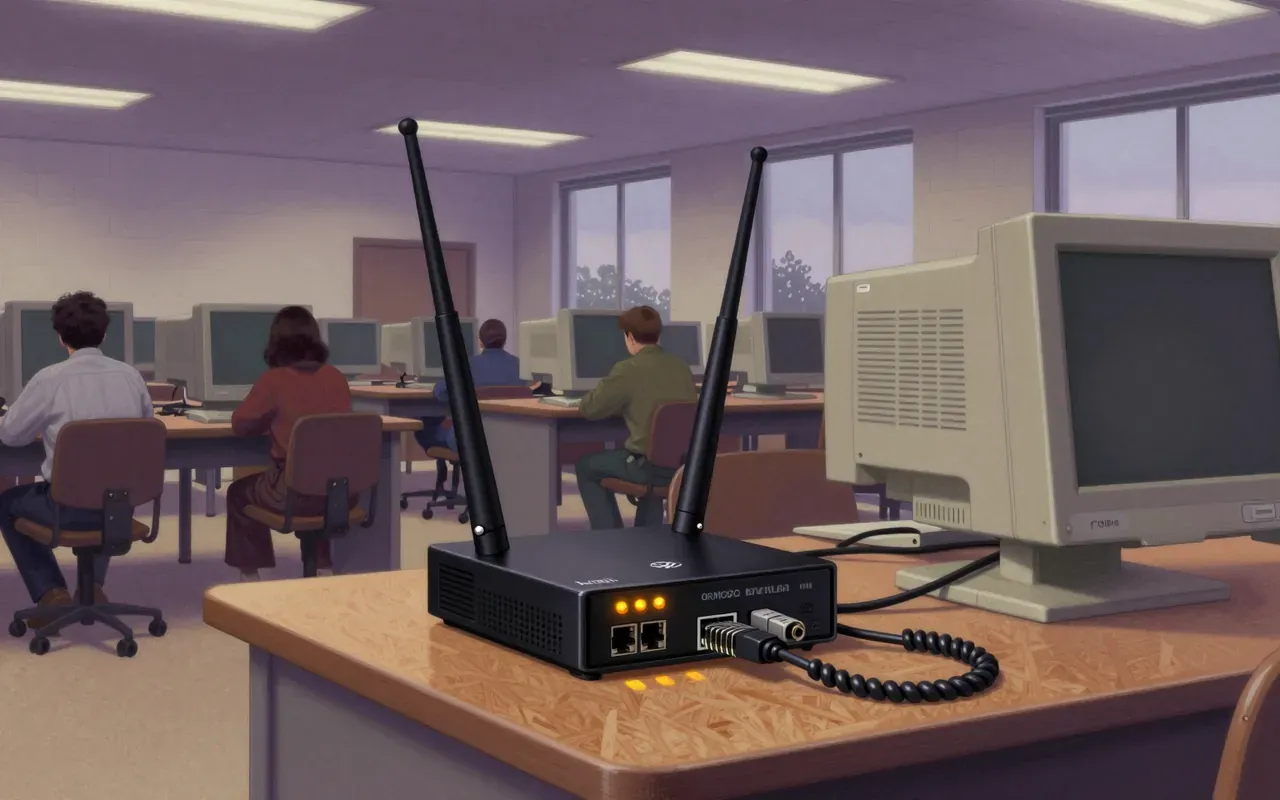
Wi-Fi is a family of wireless network protocols based on the IEEE 802.11 family of standards, which are commonly used for local area networking of devices and Internet access, allowing nearby digital devices to exchange data by radio waves.
real-time applications like voice or video in 1997
The written brief1 min read
What it is and the problem it solves
Wi-Fi is a family of wireless local area network protocols based on IEEE 802.11. It solves the problem of connecting nearby digital devices to each other and the internet without physical cabling.
How it works
Wi-Fi stations send data packets over radio channels. They modulate and demodulate carrier waves to transmit information. Channel sharing follows CSMA/CA — carrier-sense multiple access with collision avoidance. Different versions use different physical layer techniques: 802.11b uses direct-sequence spread spectrum; 802.11a and later use orthogonal frequency-division multiplexing.
What works
The 1997 802.11 standard delivers up to 2 Mbit/s link speeds between nearby devices using radio waves. It works by packetised data exchange over shared radio channels governed by CSMA/CA. Its physical layer techniques — spread spectrum and OFDM — enable robustness against interference in unlicensed bands.
What does not
It does not encrypt traffic. It does not guarantee delivery or latency. It does not scale reliably in dense deployments due to CSMA/CA’s collision-avoidance overhead and lack of coordination. It does not interoperate across versions without hardware or firmware upgrades.
What it changes
It enables device-to-device and device-to-internet communication without cables in fixed indoor environments. It shifts network attachment from infrastructure-bound ports to location-based radio coverage. It moves the bottleneck from wiring labour to radio spectrum contention.
Is it worth your time
Yes — if you need local wireless networking at up to 2 Mbit/s in 1997. It replaces wired Ethernet drops for mobility, but demands careful channel management and offers no security, encryption, or quality-of-service guarantees.