Saved
Culture

Internet culture

25
briefs
9:51
average
246 min
in total
3
inventors
All briefs25
9:22

Domain Name System

Paul Mockapetris

DNS is the distributed name-resolution system invented by Paul Mockapetris in 1983. It replaced the ARPAnet’s central hosts file. It uses a hierarchical zone model and originally ran over UDP. Later concerns about reliability, security, and privacy drove TCP use and protocol extensions. RFCs 882, 883, 973, 1034, and 1035 define its evolution. Mockapetris implemented the first version, 'Jeeves', for TOPS-20 the same year.


9:34

Peering

Peering isn’t cooperation — it’s mutual hostage-taking with better ping.
10:26

Social media

Social media was never invented—it was assembled from discarded university terminals, dial-up modems, and failed startups.
10:55

Metaverse

The metaverse is a dead architecture — promised as universal, delivered as fragmented, abandoned before it shipped.
8:58

Dreamcast

Sega · 1998

The Dreamcast was Sega’s final home video game console. It launched in Japan on November 27, 1998, and globally in late 1999. It used off-the-shelf components, shared hardware with the NAOMI arcade board, avoided DVD licensing with GD-ROM, and shipped with a built-in dial-up modem — the first console to do so. It achieved strong initial sales: 150,000 units sold out in Japan on day one; over 225,132 sold in North America in 24 hours; more than 500,000 in two weeks; and 31% of US video game revenue by Christmas 1999. But momentum collapsed in 2000. Competition from PlayStation 2 and Xbox, weak third-party support, and financial strain forced Sega to discontinue the console on March 31, 2001 — ending its hardware business. Total sales: 9.13 million units. Games released: over 600.

10:05

Yahoo

Human curation was the first scalable way to organise the web—but it collapsed the moment scale demanded automation.
8:50

File Transfer Protocol

Abhay Bhushan · 1971

FTP is a foundational but fatally flawed protocol. It delivered interoperable file transfer in 1971, but its reliance on unencrypted channels and rigid two-connection architecture made it unsustainable. It changed how machines shared data — then became the textbook example of inherited insecurity.

8:46

AltaVista

AltaVista didn’t make search useful — it made search possible, then left relevance unsolved.
10:04

Cloud gaming

Cloud gaming moves the game out of your machine — but puts your reflexes at the mercy of your ISP.
10:36

Comcast

A monopoly built on coaxial cable—and sustained by regulatory inertia, not technical superiority.
9:42

Discord

Discord replaced the forum with the server—but made persistence depend on invitation, not openness.
10:01

Juniper Networks

Juniper didn’t invent the internet router — it weaponised packet switching against Cisco’s incumbency.
10:40

PageRank

PageRank didn’t rank pages — it ranked links, and in doing so, rewired how machines read trust.
10:27

X (social network)

A broadcast tool that never chose between being a utility and a media company—and paid for it every time it changed owners.
8:48

ARPANET

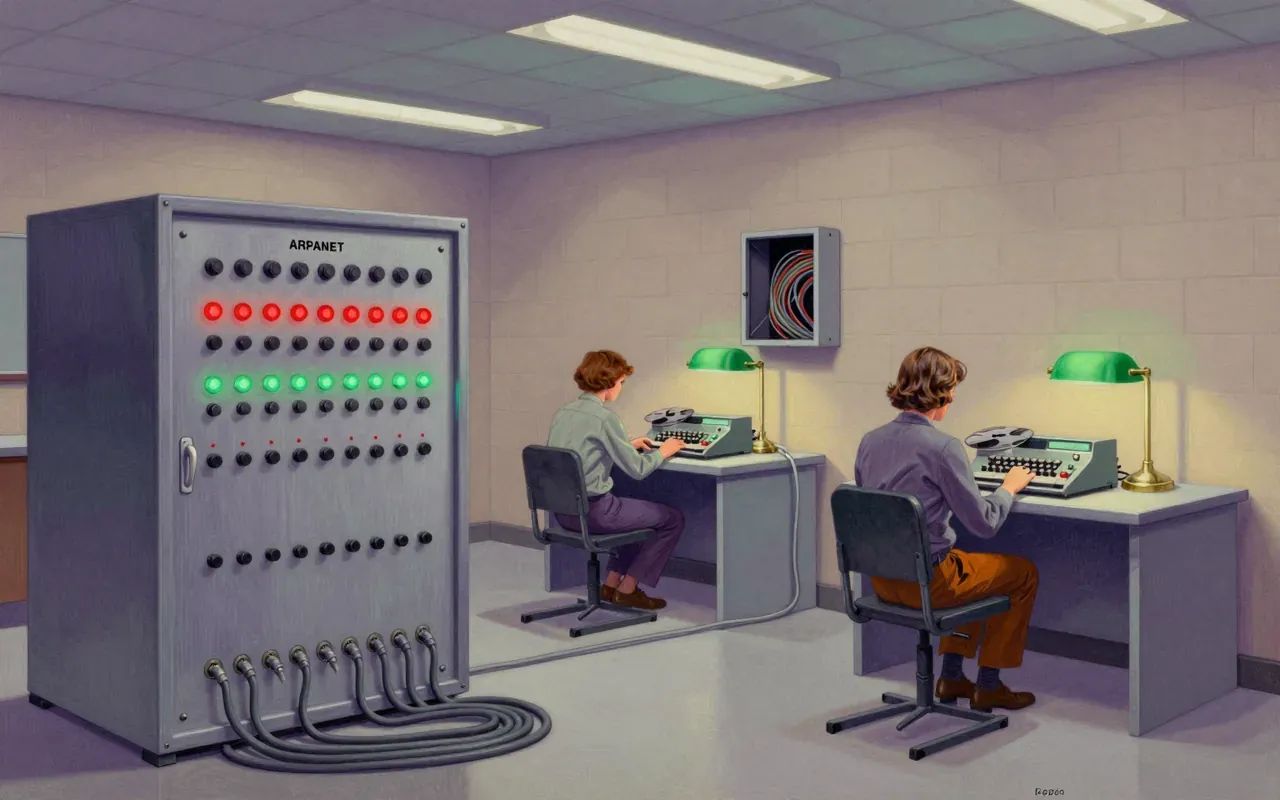
ARPANET wasn’t the internet—it was the first proof that a decentralised, packet-switched network could survive its own complexity.
8:41

IPv4

IPv4 didn’t build the Internet — it split the protocol stack, then ran out of numbers.
10:24

IPv6

IPv6 fixes IPv4’s address math—but forces hosts to solve problems routers used to handle.
10:41

Modem

The modem didn’t connect the world—it stretched digital logic over analog duct tape until the tape snapped.
10:23

Wi-Fi

Wi-Fi replaced cables with radio — but gave up control, security, and predictability to do it.