9:35in productionCh. 1 · What it is/ 9:35 · ceiling 15 min
Hardware · Semiconductors
Commodore 64
Custom silicon—not marketing—made the C64 dominant. Everything else was cost engineering.
The Commodore 64 delivers audiovisual capability through custom silicon—not software or architecture. Its dominance came from cost-engineered integration of the VIC-II and SID chips, not scalability or abstraction. It changed what consumers expected from home computers—but left no direct lineage in modern computing stacks.
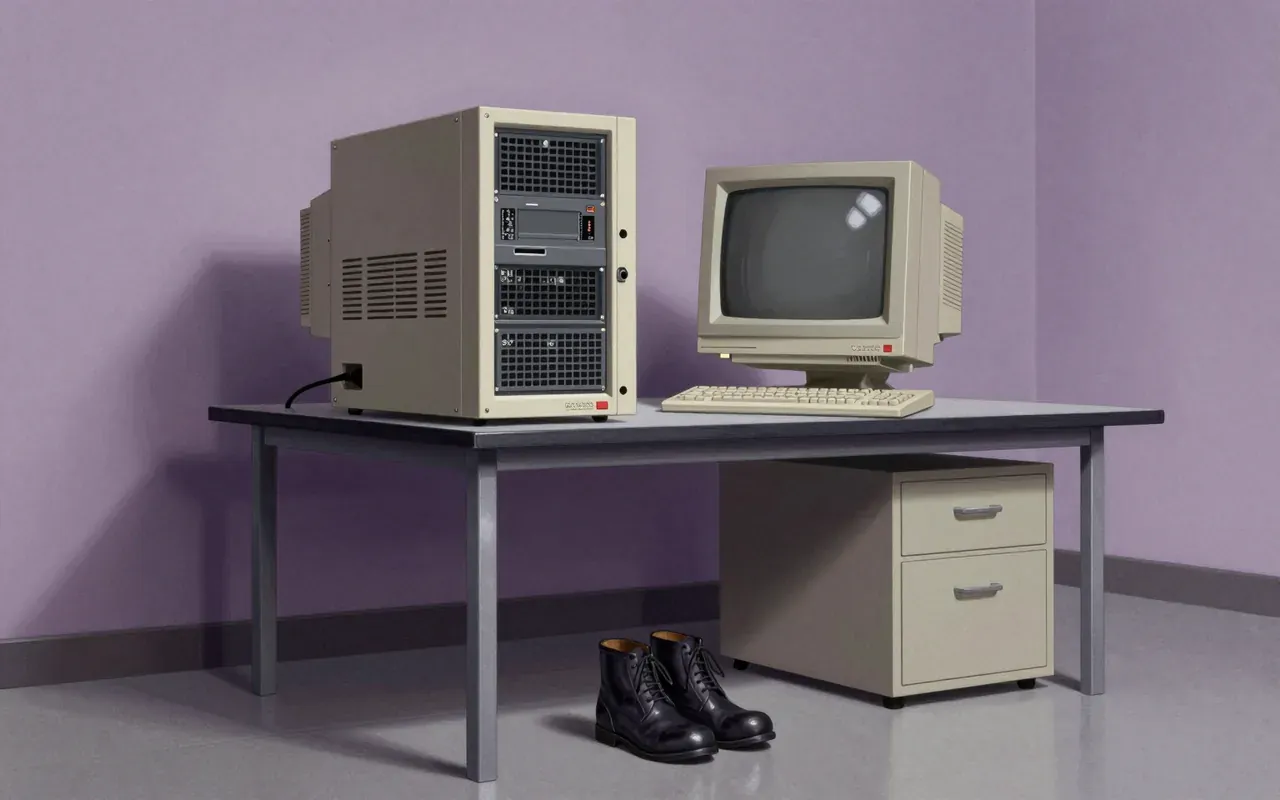
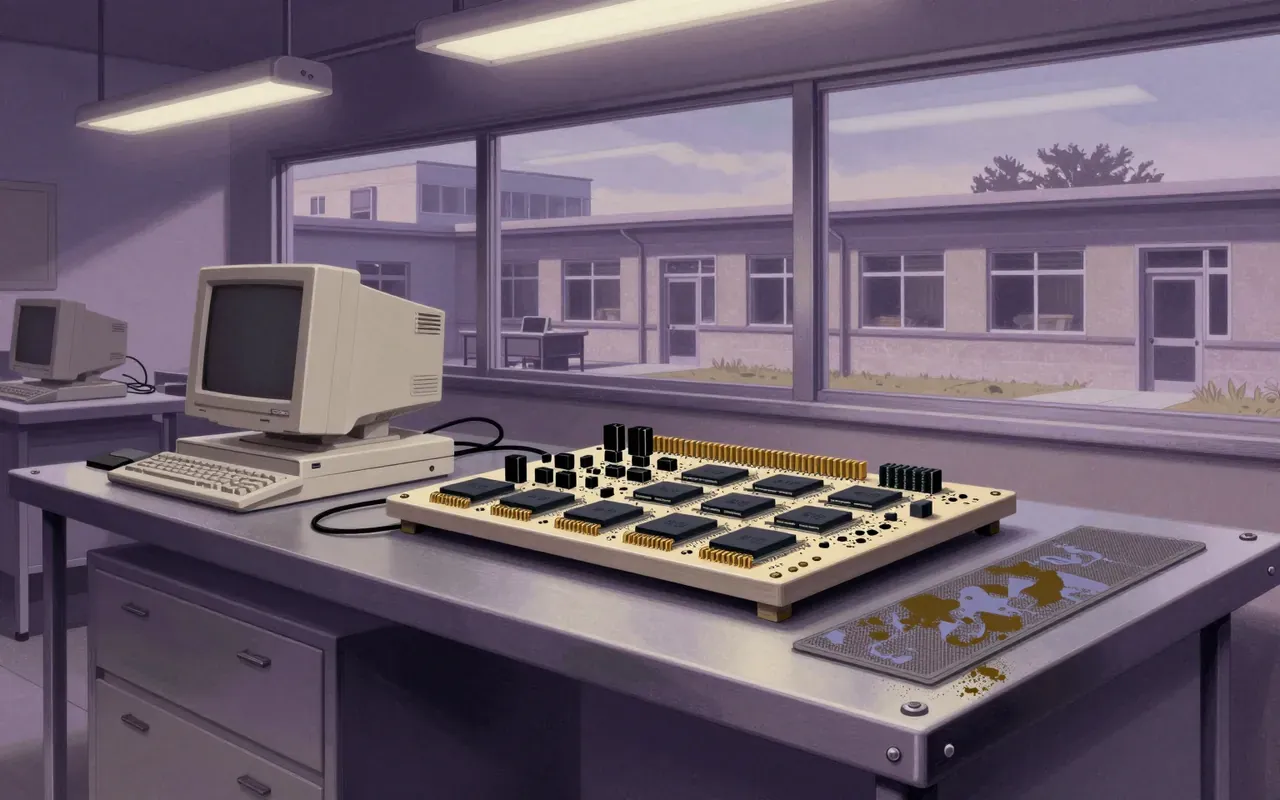
The Commodore 64 is an 8-bit home computer introduced in January 1982. It solves the problem of delivering affordable, high-fidelity sound and graphics to non-professional users—by integrating purpose-built silicon instead of relying on general-purpose logic.
How it works
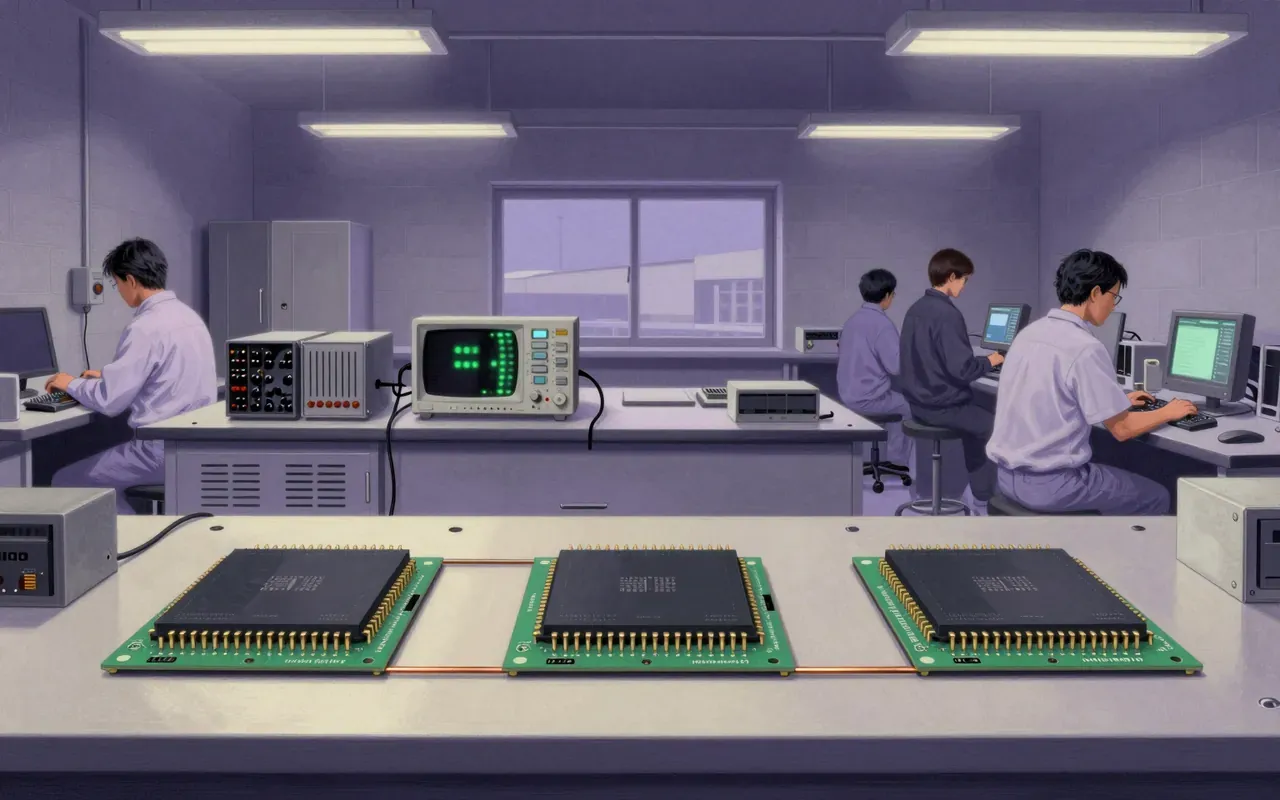
It uses two custom MOS Technology chips: the VIC-II for multicolor sprites and the SID for waveform synthesis. These were designed in early 1981 and finalised in November 1981. The system is built around 64 KiB of RAM, which defines its name and memory ceiling.
What works
Its VIC-II and SID chips deliver multicolor sprites and waveform synthesis unavailable on competing non-custom systems. This gives it demonstrable audiovisual superiority over contemporaries like the Apple II or TRS-80—within its 64 KiB memory constraint.
What does not
It does not establish a software ecosystem that outlived its hardware. It does not pioneer networking, storage abstraction, or user interface paradigms. Its architecture imposes hard limits: no memory management unit, no multitasking OS, no expandable address space beyond 64 KiB without bank switching.
What it changes
It changes the price-performance threshold for home audiovisual computing. It proves custom chips can be amortised across millions of units—not just consoles—to deliver capabilities previously reserved for expensive workstations or arcade machines.
Is it worth your time
Yes—if you are studying how custom silicon enabled mass-market audiovisual capability in low-cost 8-bit systems. No—if you assume its sales dominance implies architectural influence on later platforms; it did not scale to 16-bit or beyond.