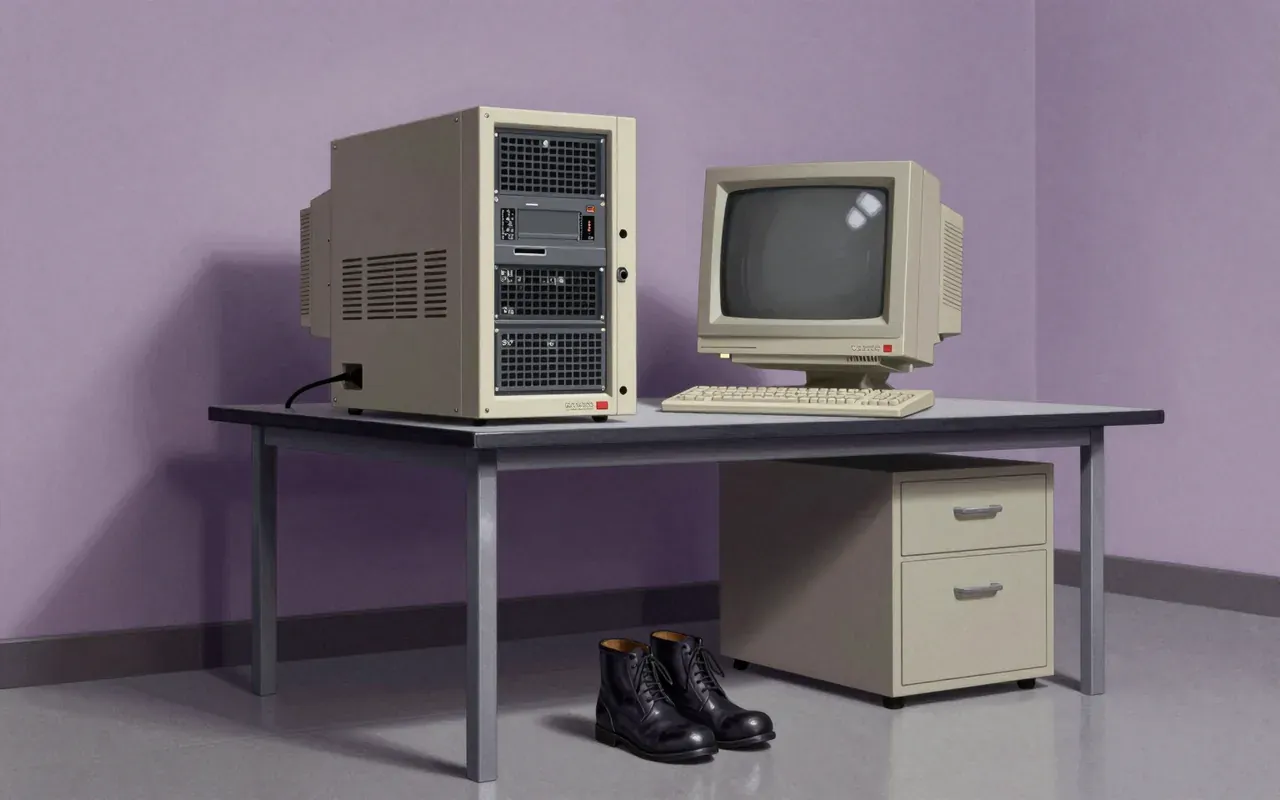
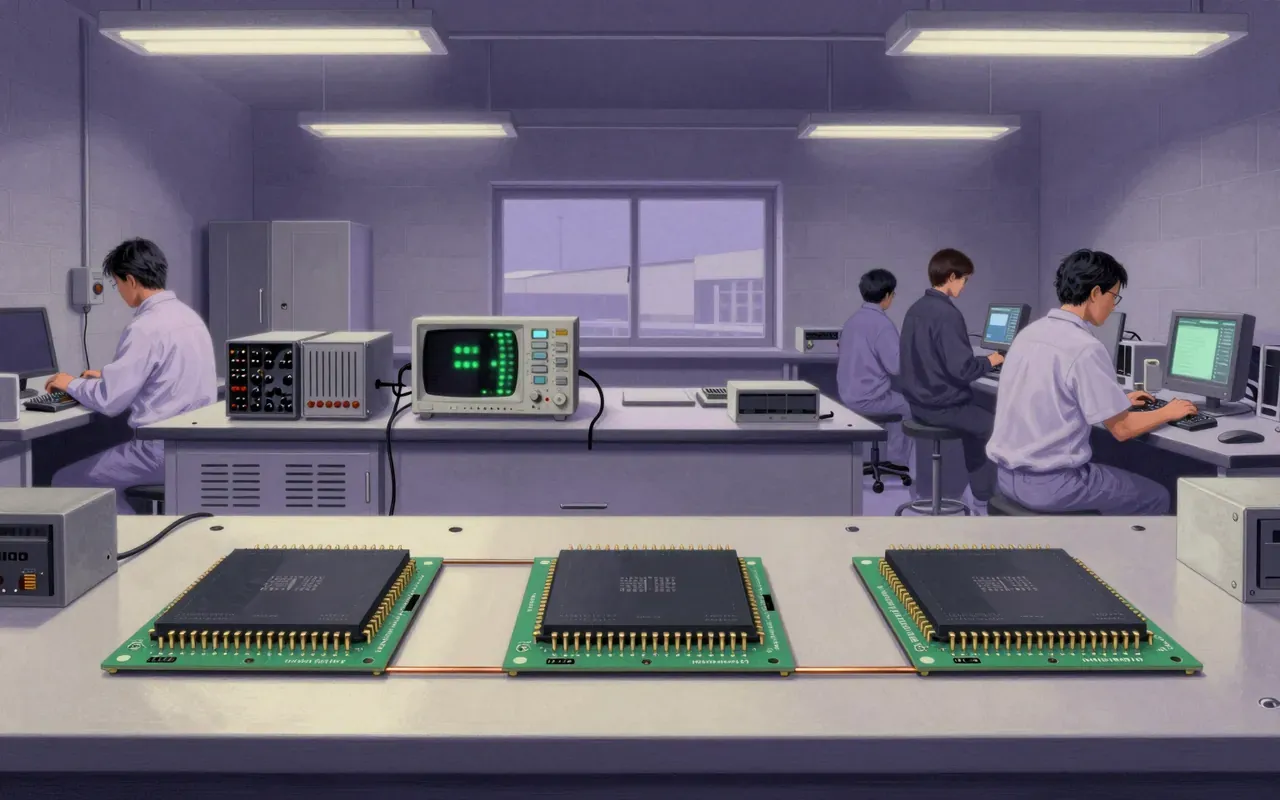
Silicon Graphics didn’t invent 3D graphics — it weaponised geometry, then collapsed under the weight of its own architecture.
Silicon Graphics built the first practical hardware-accelerated 3D graphics systems. Its Geometry Engine — designed at Stanford under ARPA — delivered ~6 million geometry operations per second. It pioneered scalable cc-NUMA architectures in the mid-1990s. But its reliance on proprietary MIPS and failed transitions to Itanium and Xeon eroded its position as PC graphics commoditised. It filed for bankruptcy in 2009.
Silicon Graphics was a US manufacturer founded in 1981 to build high-performance 3D graphics workstations. It solved the problem of slow, software-only rendering by moving geometry calculations into custom silicon.
How it works
Silicon Graphics built workstations around custom VLSI chips — starting with the Geometry Engine, a geometry pipeline designed by Jim Clark and Marc Hannah at Stanford under ARPA contract. Later systems used MIPS processors and ran IRIX, SGI’s UNIX System V variant. In the mid-1990s, it introduced SN systems using cache-coherent non-uniform memory access (cc-NUMA).
What works
The Geometry Engine delivered ~6 million operations per second — the first VLSI geometry pipeline. The IRIS 1000 series used Multibus-based terminals. The IRIS 3000 enabled the first widespread use of hardware graphics accelerators. SN systems scaled memory coherently across nodes.
What does not
Its architecture transitions failed: from MIPS to Itanium to Xeon. It lost credibility as PC graphics commoditised. It did not survive its own pivot attempts — no verified claim confirms sustained success beyond Hollywood VFX and government contracts.
What it changes
It established hardware-accelerated 3D graphics as a requirement for professional visual computing. It proved that real-time geometry processing could be offloaded to dedicated silicon — changing how films, simulations, and scientific visualisation were built.
Is it worth your time
Only if you are studying how hardware acceleration shaped visual computing — or how architectural rigidity accelerates decline when markets shift. Its technical innovations are historically decisive; its business strategy is a textbook failure case.