What it is and the problem it solves
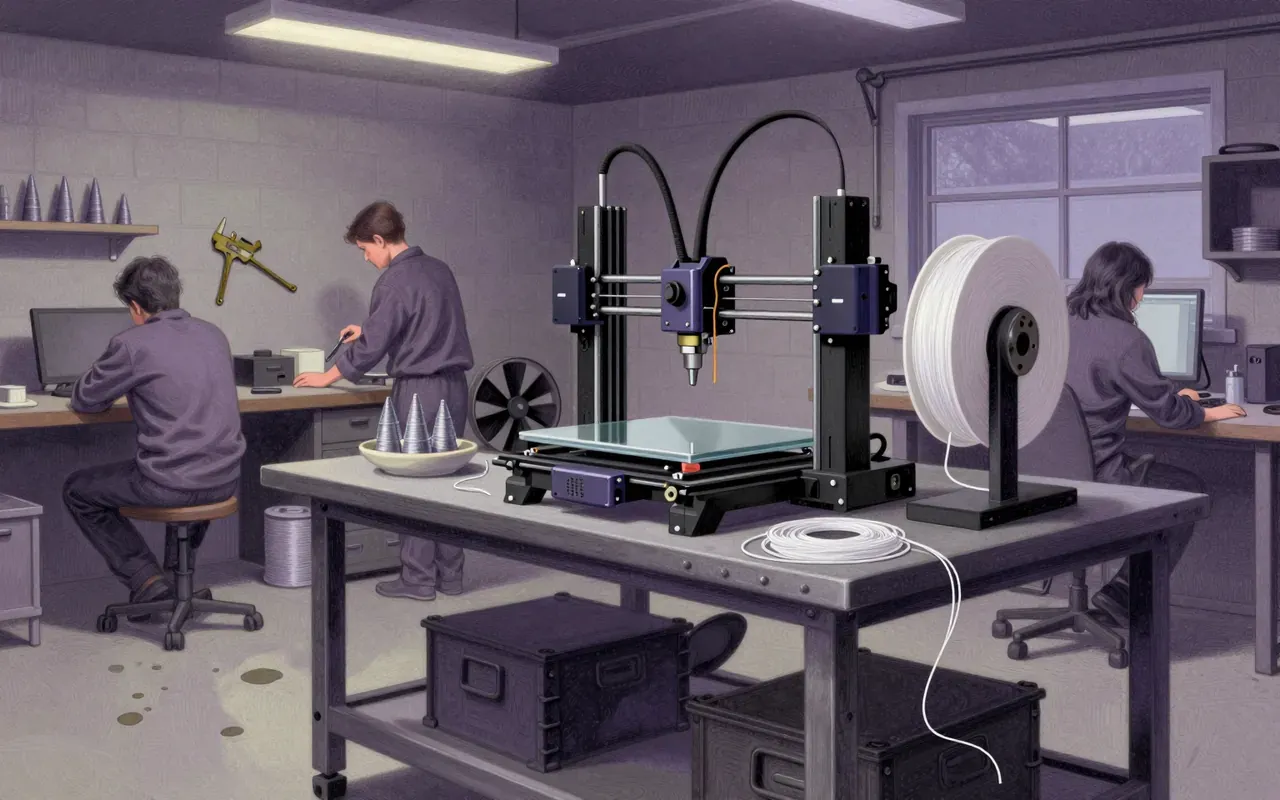
Fused filament fabrication is a thermoplastic extrusion-based 3D printing process. It solves the problem of affordable, desktop-scale rapid prototyping for non-industrial users.
How it works
It heats thermoplastic filament to melting point and extrudes it layer by layer through a moving nozzle onto a build platform.
What works
Open-source firmware, community-driven hardware iteration, and plug-and-play filament compatibility work reliably across thousands of consumer and prosumer printers.
What does not
It does not achieve dimensional accuracy comparable to industrial subtractive methods. It does not eliminate warping, stringing, or layer adhesion failures without careful calibration and environmental control.
What it changes
It changed access to physical prototyping by decoupling 3D printing from proprietary hardware and licensing after the 2009 FDM patent expiry.
Is it worth your time
Yes—if you need low-cost, open-source prototyping with moderate precision and material flexibility. No—if you require tight tolerances, high strength, or production-grade surface finish.