11:16in productionCh. 1 · The Boca Raton Breakaway/ 11:16 · ceiling 15 min
Hardware · Tech history
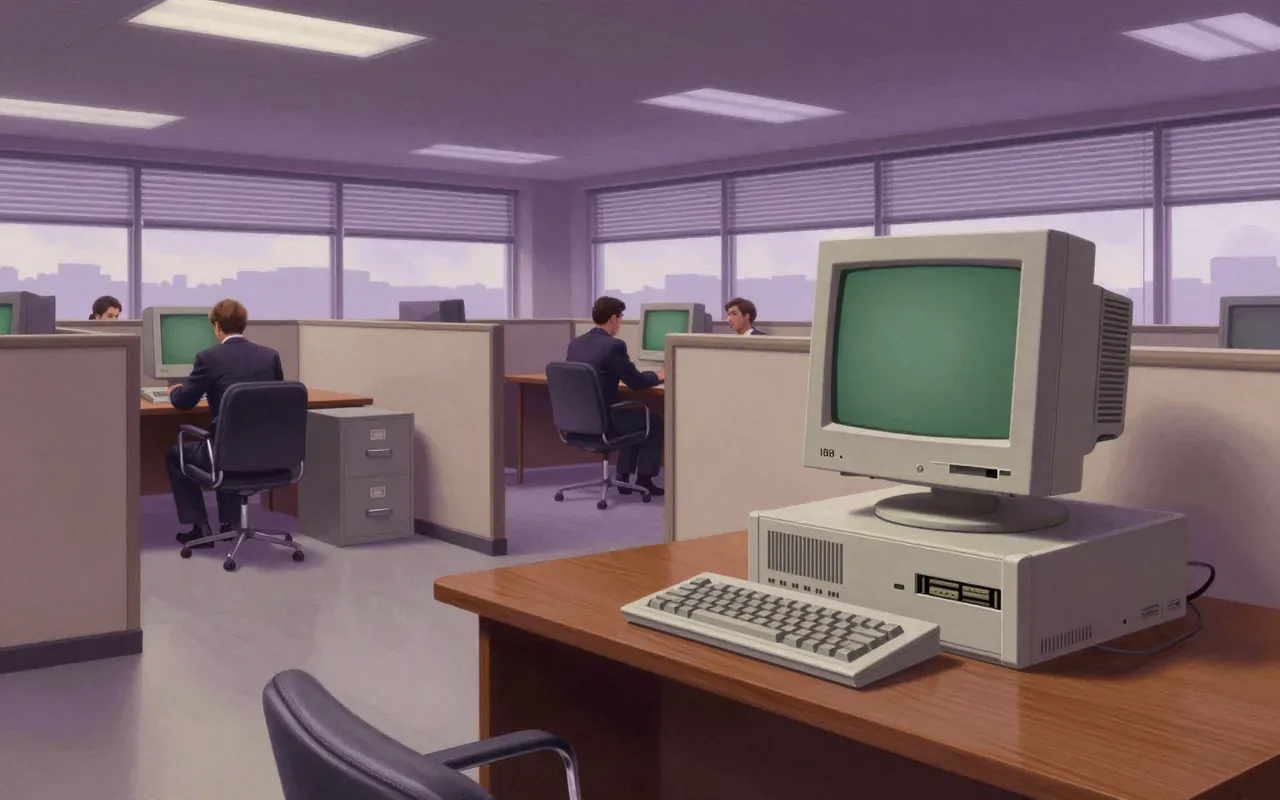
IBM Personal Computer
1981
IBM didn’t build a computer — it published a spec and outsourced the standard.
The IBM PC is not a triumph of engineering — it is a triumph of delegation. It solved speed and cost by refusing to build anything new. Its power came from publishing, not protecting. Its legacy is not what IBM shipped, but what everyone else copied — and extended — using the specs IBM handed out on day one.
It was built by a small, autonomous team in Boca Raton — not IBM’s mainframe division.
2:06
Off-the-Shelf, On Time
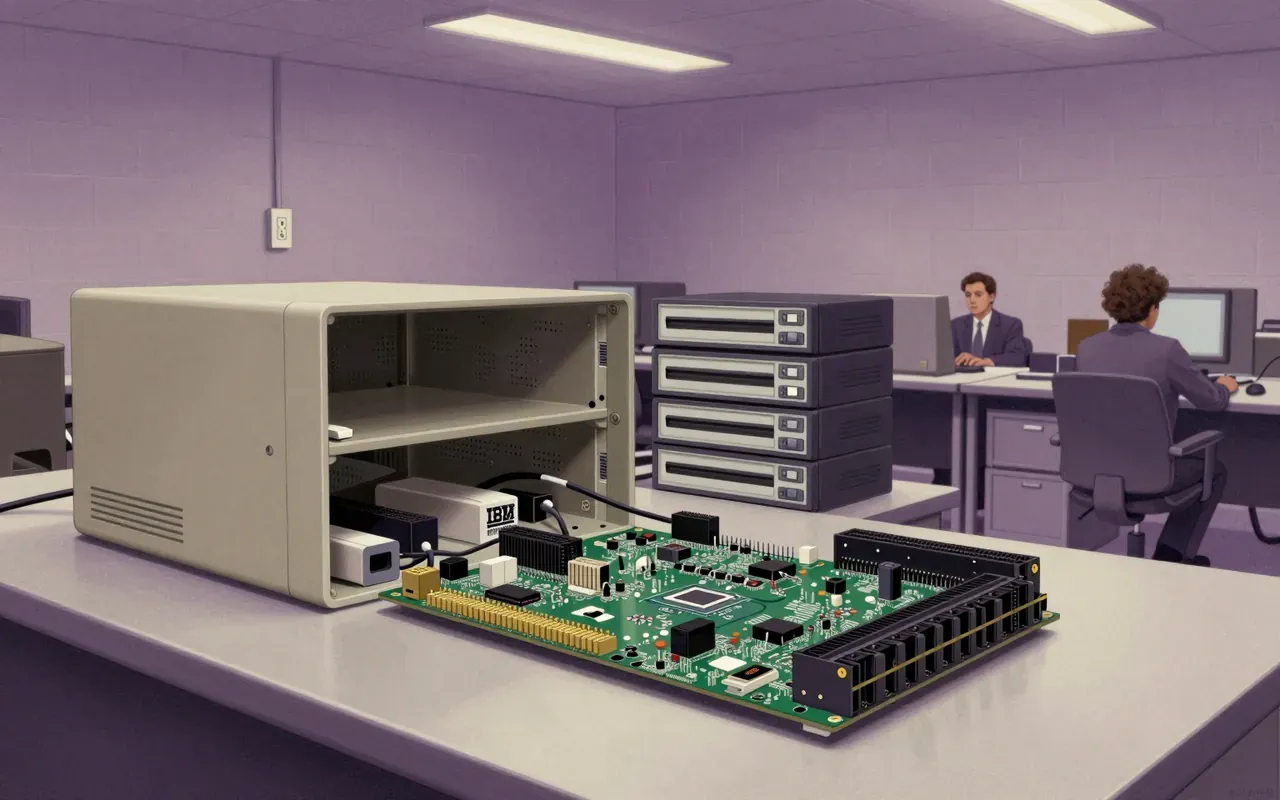
It shipped because IBM used no custom chips, no custom firmware, and no custom manufacturing — just off-the-shelf parts assembled fast.
3:28
No Vertical Integration
IBM abandoned its own BASIC and its own sales force — choosing retail and Microsoft instead.
4:34
The Spec as Contract
Publishing the bus and memory map wasn’t generosity — it was the contract that turned third parties into co-developers.
5:56
De Facto by Documentation
It became the de facto standard not by dominance, but by being the first fully documented, widely copied target.
7:19
The 8088 Compromise
The Intel 8088 wasn’t the fastest chip — but it was the one with existing toolchains, datasheets, and developer familiarity.
Worth your time?
Yes. Study the whole thing.
4.5/ 5
What works
establishes a replicable hardware reference
enables third-party development via documentation
replaces vertical integration with licensing and retail
What does not
invent personal computing
control the standard it created
use custom silicon
sell directly to corporations
Study it if
hardware architects
standards engineers
platform strategists
Skip it if
end users evaluating usability
software developers assessing runtime performance
historians seeking cultural impact
The written brief1 min read
What it is and the problem it solves
The IBM Personal Computer (model 5150) solved IBM’s need to enter the microcomputer market quickly and cheaply. It addressed fragmentation by establishing a single, open hardware reference point.
How it works
It used an Intel 8088 processor and entirely off-the-shelf third-party components. It avoided vertical integration by licensing Microsoft BASIC instead of using IBM’s in-house version. It published full system bus and memory map specifications at launch. It was sold through retail channels for the first time by IBM.
What works
Its open architecture and published specifications enabled rapid third-party hardware and software development. Its use of off-the-shelf parts cut design time and cost. Its retail distribution reached new users beyond corporate IT buyers.
What does not
It did not invent personal computing. It did not use custom silicon or proprietary architecture. It did not control the ecosystem it seeded — IBM lost influence over the standard it created.
What it changes
It changed how computers were built: from vertically integrated systems to modular, specification-driven platforms. It changed distribution: from corporate sales teams to retail shelves. It changed software development: from closed environments to a public, documented interface.
Is it worth your time
Yes — if you work with hardware standards, compatibility layers, or open specification strategies. Its design choices remain legible in every PC-compatible machine today.