technologybriefs
9:12in productionCh. 1 · Flowerpots First/ 9:12 · ceiling 15 min
Tech history · Hardware

Reinforced concrete

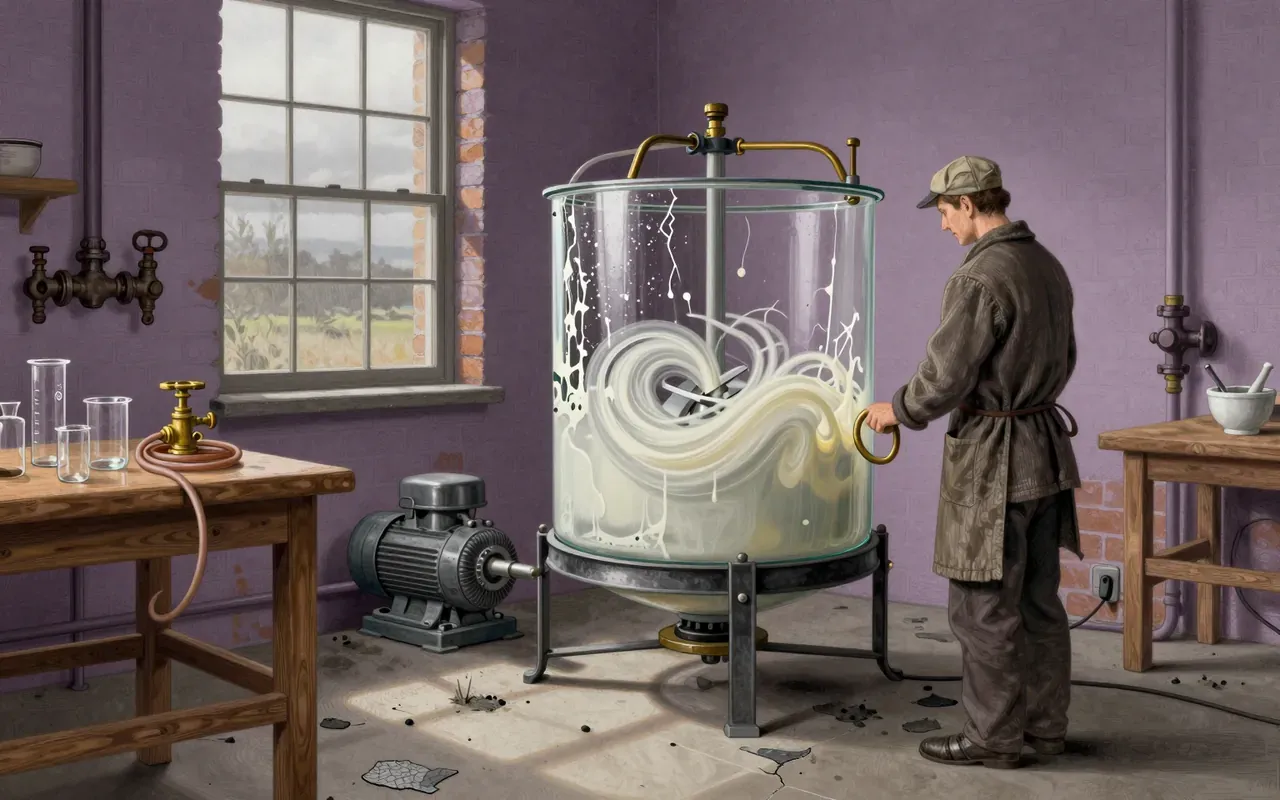
Monier didn’t invent reinforced concrete to build bridges—he built bridges because he needed stronger flowerpots.

Reinforced concrete is not a theoretical breakthrough—it is a gardener’s empirical fix scaled into infrastructure. Monier solved flowerpot instability by embedding iron, then patented successive forms (wire mesh in 1867, iron rods in 1877) without quantifying mechanical gains. He proved thermal compatibility and rust protection through experiment—not calculation. His method enabled T-beams and pipes by 1878, but left tensile improvement unmeasured and corrosion science unexplored. It matters today because it reveals how material innovation begins in constraint, not abstraction.

Chapters & takeaways5
  1. 0:58
    Flowerpots First

    It began as a gardener’s fix for crumbling pots—not an engineer’s solution for infrastructure.

  2. 2:14
    Patents, Not Principles

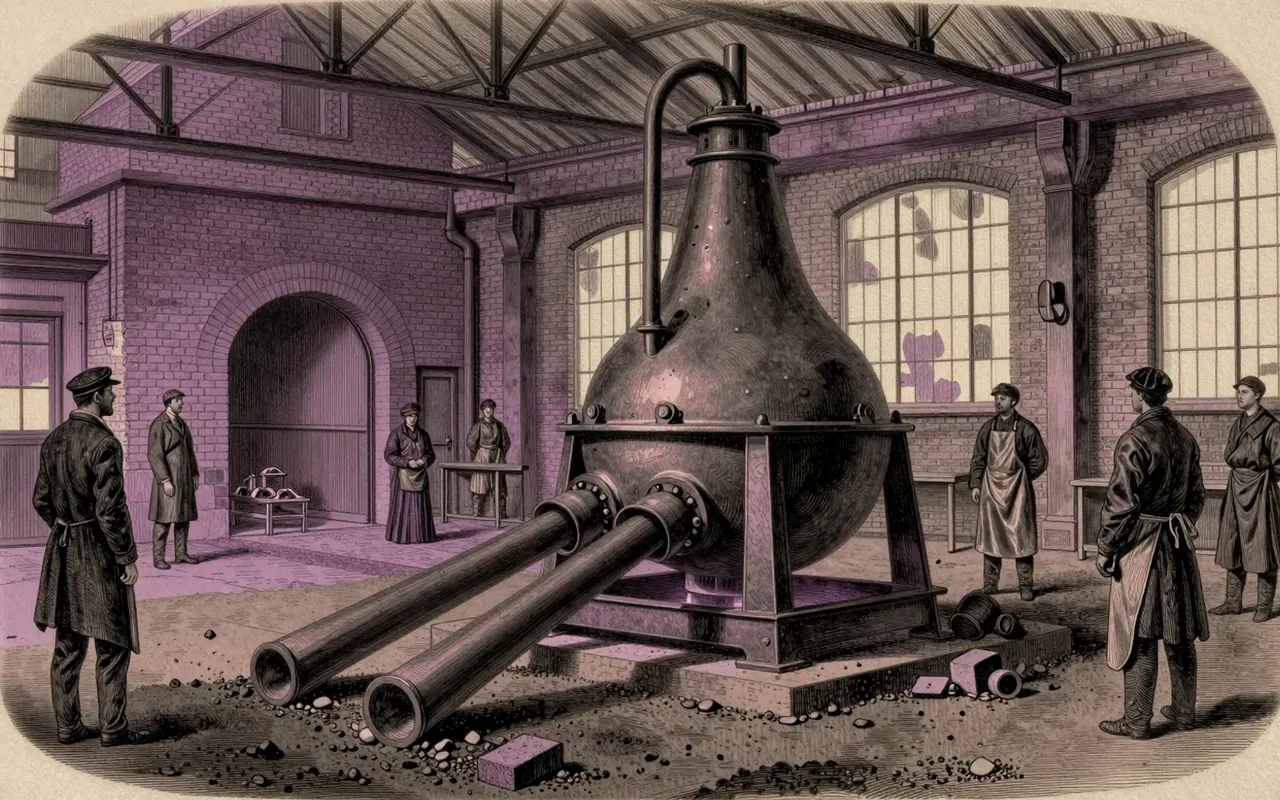
    Two patents, eight years apart: wire mesh for pots in 1867, iron rods in grids for girders in 1877.

  3. 3:22
    Strength by Assignment

    It works by assigning compression to concrete and tension to iron—no theory required, just functional pairing.

  4. 4:39
    Empirical Certainties

    Monier proved thermal expansion doesn’t crack the matrix—and that cement passivates iron—through repeated physical testing.

  5. 5:41
    Scale Without Numbers

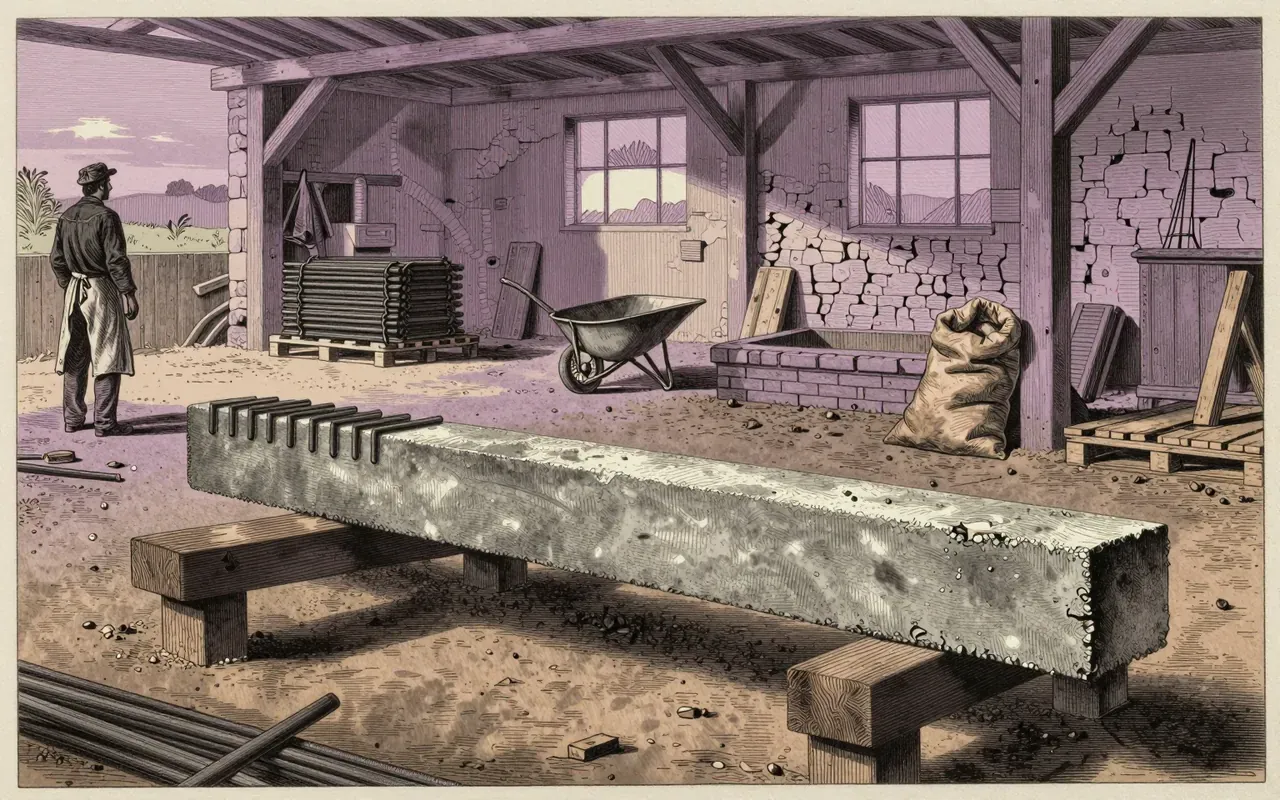
    He extended the method to T-beams in 1878 but never measured how much tensile strength improved.

Worth your time?

Yes. Study the whole thing.

4/ 5
What works
  • enables composite action between concrete and iron
  • prevents thermal rupture in practice
  • delivers usable tensile capacity in beams and slabs
  • protects embedded iron from surface rust
What does not
  • quantify tensile strength improvement
  • model stress distribution
  • anticipate long-term corrosion mechanisms
Study it if
  • structural engineers
  • historians of technology
  • patent researchers
Skip it if
  • modern code compliance specialists
  • corrosion scientists
  • computational modellers
The written brief1 min read

What it is and the problem it solves

Reinforced concrete is a composite material invented to solve flowerpot instability. It replaces brittle, unreinforced concrete containers with wire-mesh- or rod-reinforced versions that resist cracking and failure.

How it works

Monier embedded iron mesh or rods in concrete to combine concrete’s compressive strength with iron’s tensile strength.

What works

Thermal cycling does not rupture the concrete-iron bond. Cement protects embedded iron from rusting. The combination delivers usable tensile capacity in slabs, beams, and T-beams.

What does not

Monier did not quantify tensile strength improvement. He did not model stress distribution. He did not anticipate corrosion mechanisms beyond surface-level rust protection.

What it changes

It changes how load-bearing elements are conceived: from monolithic masonry to composite action, where two materials share strain based on their complementary properties.

Is it worth your time

Yes—if you work with structural materials, prefabrication, or early industrial patents—because it demonstrates how empirical experimentation, not theoretical calculation, drove the first viable composite building system.

Same field · Tech history4 of 139
Up next in Technology

RSA cryptosystem

Ron Rivest, Adi Shamir and Leonard Adleman · 1977 · 12:36

RSA didn’t invent public-key crypto—but it made it usable, public, and real.

12:36