technologybriefs
10:03in productionCh. 1 · Purpose before impact/ 10:03 · ceiling 15 min
Tech history

Bessemer process

Steel was not made faster — it was made possible at scale, by burning away carbon with air, then putting it back.

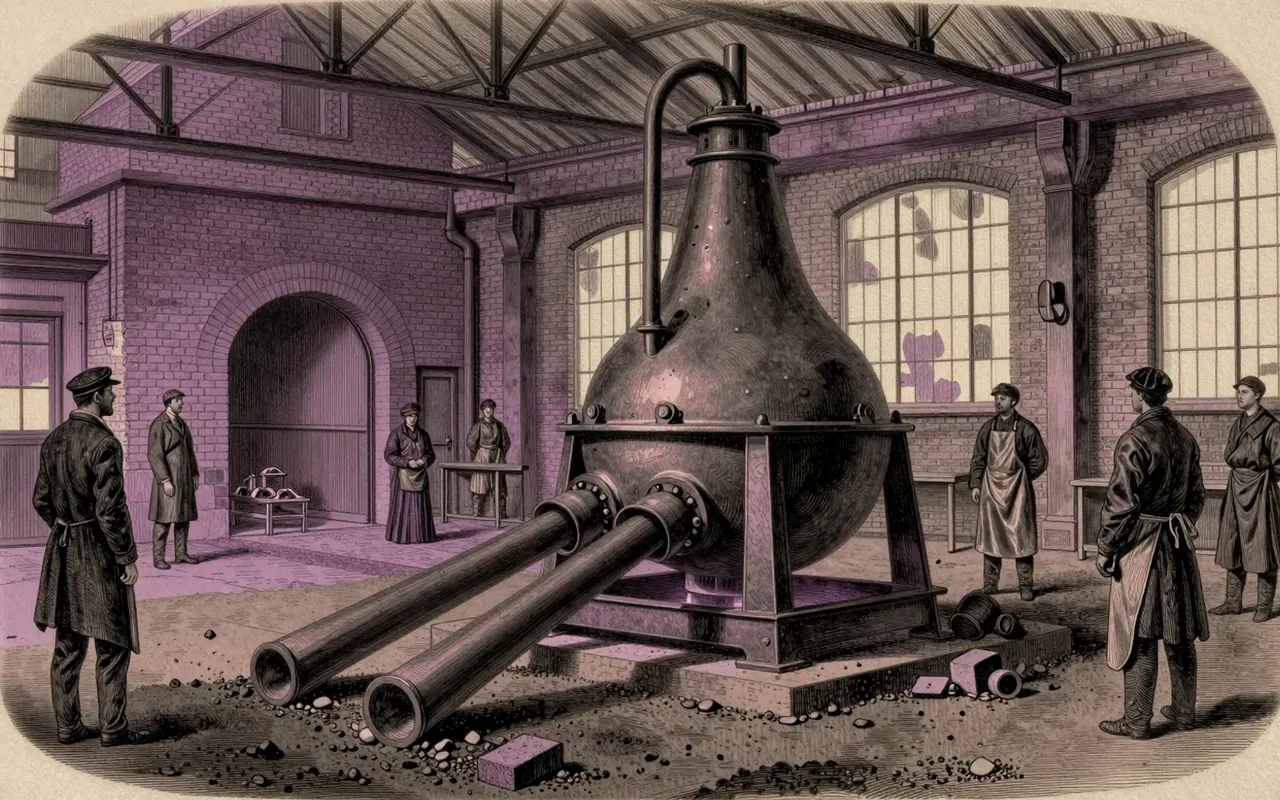
The Bessemer process is the first industrial method to mass-produce steel cheaply — by blowing air through molten pig iron to oxidise impurities, especially carbon. It works by self-heating oxidation, cuts batch time from a day to under 20 minutes, and forces deliberate carbon readdition. It fails to deliver finished steel in one step and cannot treat phosphorus-rich iron without later refinement. It changed structural engineering by enabling steel’s substitution for cast and wrought iron. It remains foundational — not because it endures, but because it proved scalable metallurgical control was possible.

Chapters & takeaways4
  1. 0:57
    Purpose before impact

    It was invented for ordnance, not infrastructure — and only became transformative after commercial adoption.

  2. 2:33
    Oxygen as fuel

    Air is the reagent: oxygen from blown air oxidises impurities, not added chemicals or external heat.

  3. 4:11
    Self-heating conversion

    Speed comes from self-sustaining heat — no external fuel needed once oxidation begins.

  4. 5:56
    Two-step steel

    It makes steel only by first making near-pure iron — then rebuilding carbon content deliberately.

Worth your time?

Yes. Study the whole thing.

4.5/ 5
What works
  • It delivers rapid, fuel-free batch conversion.
  • It enables consistent slag-steel separation by density.
  • It proves oxidation can be harnessed as both reagent and heat source.
What does not
  • It does not eliminate manual skill.
  • It does not remove the need for empirical calibration.
  • It does not work with all iron ores.
Study it if
  • Metallurgists studying decarburisation mechanisms.
  • Historians of industrial systems.
  • Engineers evaluating legacy process logic.
Skip it if
  • Anyone expecting plug-and-play automation.
  • Those seeking modern material specifications.
  • Readers looking for AI or software parallels.
The written brief1 min read

What it is and the problem it solves

It is the first inexpensive industrial method for mass-producing steel from molten pig iron. It solves the problem of slow, fuel-intensive, small-batch steelmaking that blocked structural scale-up.

How it works

It blows air through molten pig iron to oxidise silicon, manganese, and carbon — turning them into gases or slag — while the exothermic reaction keeps the melt fluid.

What works

Oxidation-driven decarburisation works. Air-blown oxidation raises temperature, maintains fluidity, separates steel from lighter slag by density, and completes three- to five-ton batches in minutes.

What does not

It does not produce steel directly: it removes virtually all carbon, requiring precise readdition post-conversion. It cannot handle phosphorus-rich ores without later modification.

What it changes

It replaces cast and wrought iron in structural engineering by cutting batch time from a day to 10–20 minutes and slashing production cost — enabling steel’s industrial ubiquity.

Is it worth your time

Yes, if you work in materials history, industrial systems, or metallurgy education: it is the first scalable decarburisation system, but its mechanism demands close attention to oxygen control, readdition timing, and slag separation — not just speed.
Same field · Tech history4 of 139
Up next in Technology

Bicycle

1885 · 9:24

The 1885 safety bicycle didn’t invent mobility—it invented the industrial and cultural template for everything that followed.

9:24