Rotary printing did not invent speed—it re-engineered motion to make newspapers disposable.
The rotary printing press solved the bottleneck of flatbed impression speed by rotating type cylinders against a fixed platform. It worked because rotation enabled stable, repeatable contact at scale. Its 1846 form was deployable; its 1870 web perfecting variant automated cutting and folding at 18,000 papers/hour. It did not eliminate manual feeding until the 1870 version. It changed publishing by making daily mass print economically viable. It matters for anyone studying how mechanical standardisation enables information scale.
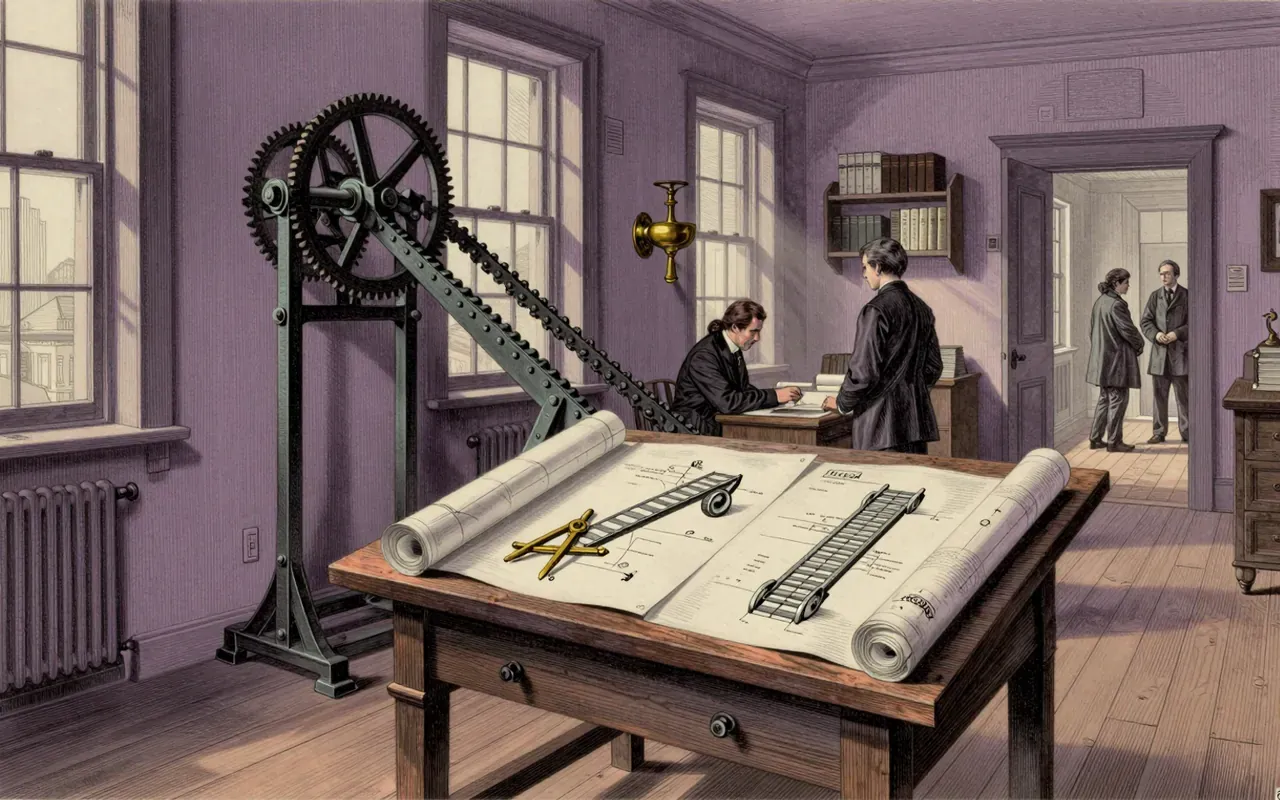
Hoe’s press was not original—it adapted Josiah Warren’s 1832 revolving-cylinder concept to commercial scale.
2:34
Fixed platform, rotating drums
The 1846 press replaced back-and-forth motion with rotation, enabling stable, repeatable high-speed impression.
4:00
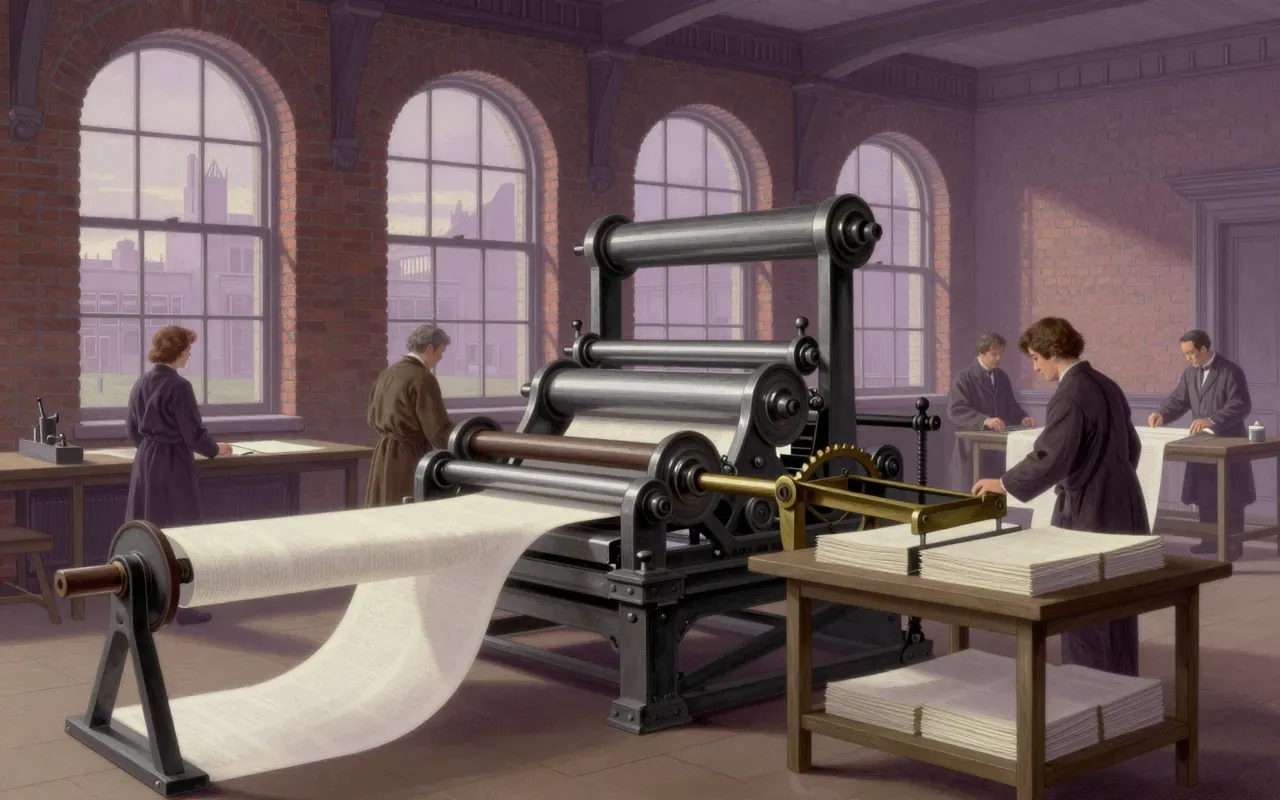
One machine, full workflow
The 1870 web perfecting press delivered fully printed, cut, and folded newspapers at 18,000 per hour using a five-mile paper roll.
5:40
Patent victory, market entry
A patent dispute confirmed Hoe’s priority—and his 1847 U.S. patent enabled immediate commercial deployment.
Worth your time?
Yes. Study the whole thing.
4.5/ 5
What works
Enabled reliable high-speed impression via rotation.
Achieved 18,000 papers/hour with automatic cutting and folding.
Secured patent priority and commercial adoption in 1847.
What does not
It did not eliminate manual feeding before 1870.
It did not originate the revolving-cylinder principle.
Study it if
Publishing engineers
Historians of industrial standardisation
Patent strategists
Skip it if
AI researchers
Software developers
Cybersecurity analysts
The written brief1 min read
What it is and the problem it solves
A rotary printing press is a mechanised system that prints text faster than flatbed presses by rotating type cylinders against a fixed platform.
How it works
It mounted type on a revolving cylinder, replacing flatbed presses’ reciprocating platforms with a fixed platform served by rotating drums.
What works
The 1846 perfected version worked reliably enough to be patented and commercially deployed in 1847; the 1870 web perfecting press cut, folded, and printed both sides at 18,000 papers per hour.
What does not
It did not eliminate manual intervention: early versions required hand-feeding sheets; only the 1870 web perfecting press used continuous paper rolls.
What it changes
It changed newspaper production from batched, labour-intensive output to high-volume, mechanised throughput—enabling daily mass circulation.
Is it worth your time
Yes—if you work in publishing infrastructure, industrial history, or patent strategy—because it established the mechanical logic of continuous-feed mass printing.