What it is and the problem it solves
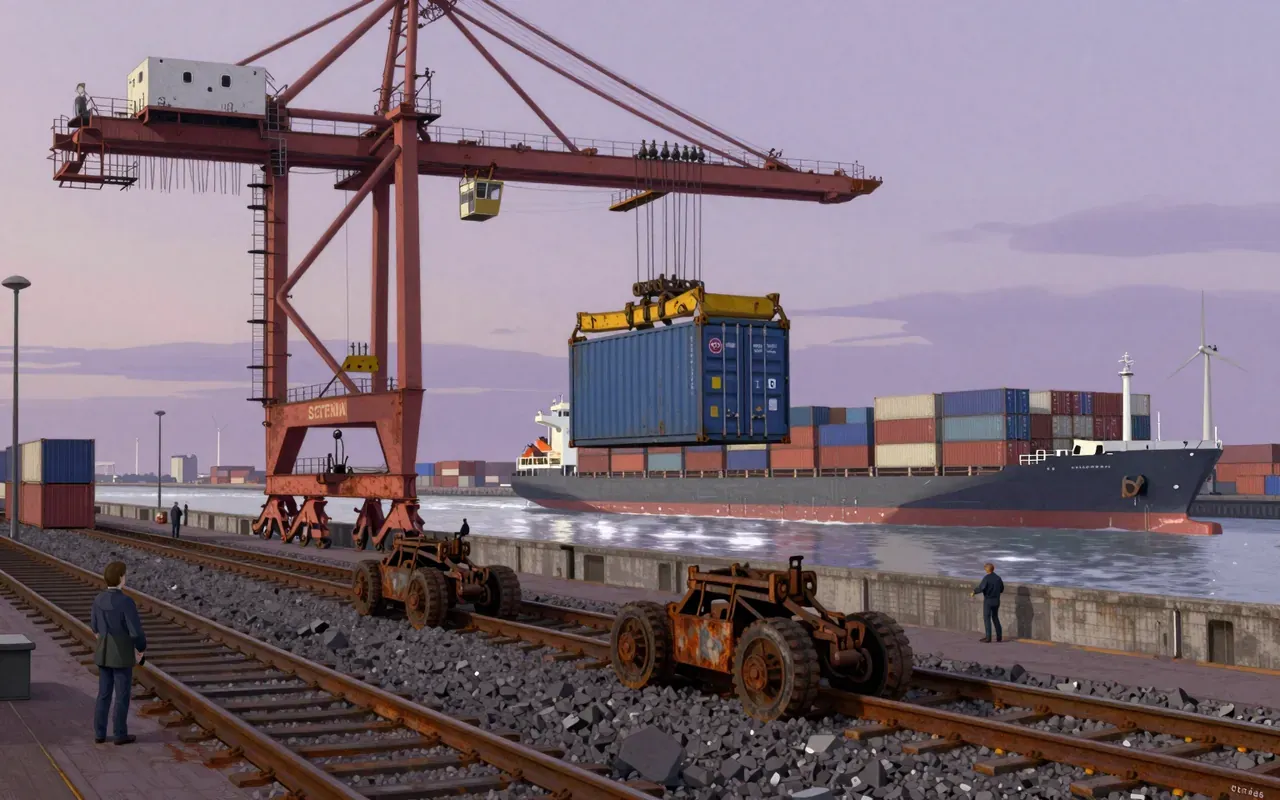
A dockside gantry crane for loading and unloading intermodal containers from ships. It solves the problem of rapid, repeatable, secure transfer of standardised steel boxes between vessel and land.
How it works
Container cranes traverse quays or yards on rail tracks. They use a spreader—not a hook—to engage intermodal containers via twistlock mechanisms in the corner castings.
What works
The spreader-twistlock system reliably engages container corner castings. Rail-mounted traversal allows coverage along the quay. Newer variants lift two to four 20-foot containers simultaneously—increasing density, not speed.
What does not
Full automation fails under real-world conditions. Load swaying and ship movement—driven by wind, tides, currents, hull flex, and shifting cargo—prevent reliable autonomous operation. Operations halt above 22 m/s wind speed.
What it changes
It enabled scale in containerized shipping. Its deployment paralleled intermodal containerization, which emerged mid-1950s from wartime transport strategies. Without it, standardised container handling at dockside would not exist.
Is it worth your time
Yes—if you work in port operations, logistics planning, or maritime infrastructure. It remains central to container throughput, but its physical and environmental constraints are hard limits, not engineering challenges awaiting a software fix.