technologybriefs
Saved
Hardware

IPad Pro

Apple sold a laptop-shaped tablet with a phone OS — and called it pro.

Worth your time?2.5/5No.The brief is enough.What works, what does not, who it is for ↓
9:29in productionCh. 1 · Origin/ 9:29 · ceiling 15 min
4 chapters · 9:29Ceiling 15:00

The brief is written and checked. The video joins this page when it is cut.4 chapters · 1 min read · 9:29 planned

Read the brief

The 2016 iPad Pro is a hardware upgrade without a software foundation for professional work. It extends iOS 9’s constraints rather than replacing them.

Chapters & takeaways4
  1. 1:14
    Origin

    Launched in September 2015, the iPad Pro was Apple’s first tablet pitched to professionals.

  2. 3:02
    OS Constraint

    It shipped with iOS 9 — an OS built for touch-first, single-app focus, not desktop workflows.

  3. 4:28
    Dual Launches

    Two 9.7-inch models were released: one in November 2015, another in March 2016 — indicating rapid iteration without architectural change.

  4. 5:54
    Pace of Iteration

    The second generation arrived just nine months later — confirming Apple treated the Pro line as a spec treadmill, not a platform shift.

Worth your time?

No. The brief is enough.

2.5/ 5
What works
  • drawing with Apple Pencil
  • reading and marking up documents
  • light photo editing
What does not
  • run modern iPadOS
  • support external storage
  • enable true windowed multitasking
  • integrate with desktop-grade peripherals
Study it if
  • designers needing portable sketching
  • presenters using Keynote on large displays
  • students annotating PDFs
Skip it if
  • developers
  • data analysts
  • video editors requiring timeline precision
The written brief1 min read

What it is and the problem it solves

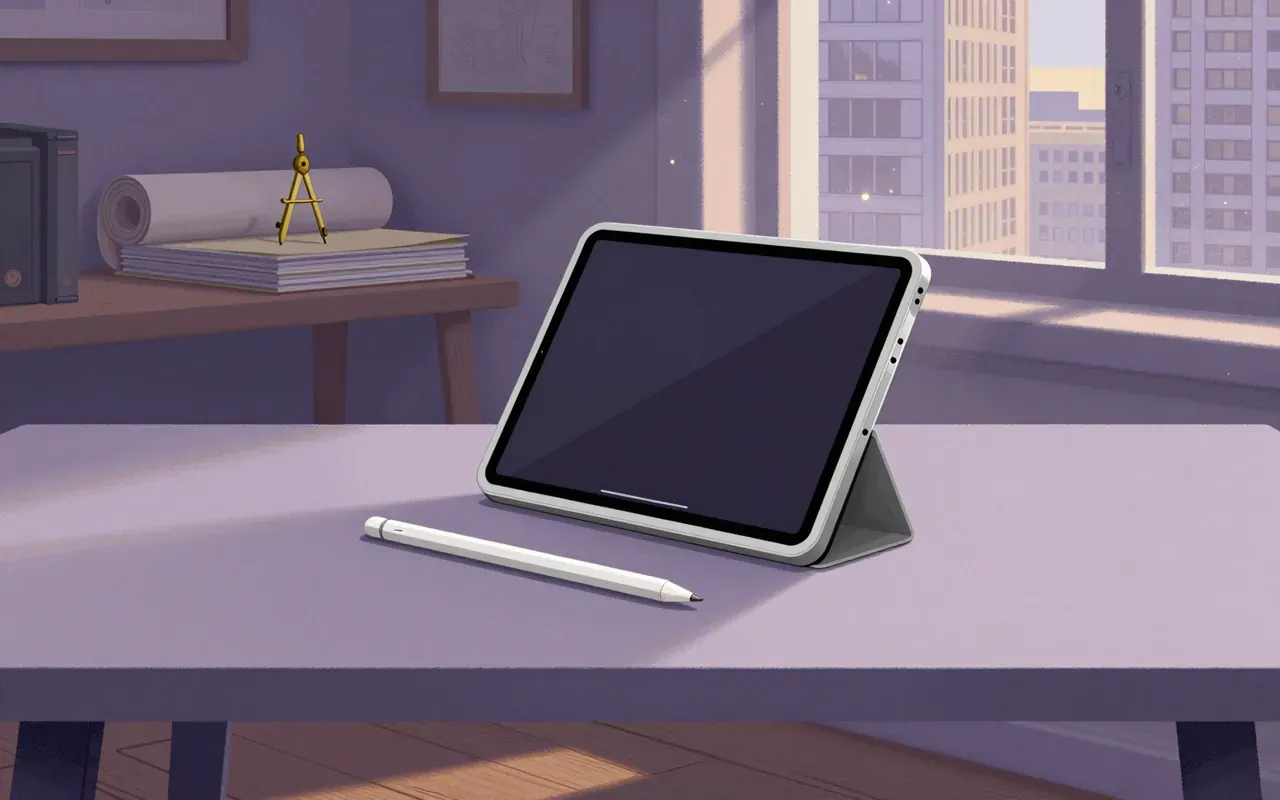
The iPad Pro is Apple’s first tablet marketed for professional work. It solves no new technical problem. It attempts to expand tablet use beyond media and light tasks.

How it works

The iPad Pro runs iOS 9. It uses a custom Apple processor (A9X in the first generation). It supports the Apple Pencil and Smart Keyboard as accessories.

What works

The A9X chip delivers fast rendering for drawing and video playback. The 9.7-inch display has high pixel density and colour accuracy. The Apple Pencil offers low-latency input for sketching.

What does not

It does not function as a laptop replacement. It lacks file system access, multitasking depth, peripheral support, and desktop-class app compatibility — all limitations enforced by iOS 9.

What it changes

It repositions the tablet from consumption to creation — but only within Apple’s tightly controlled interface boundaries. It introduces new input methods without changing the OS architecture that constrains them.

Is it worth your time

No. The 2016 iPad Pro is obsolete hardware running deprecated software. It cannot run current iPadOS versions or modern productivity apps reliably.

Same field · Hardware4 of 251
10:12
Apple Watch2015The Apple Watch (2015) is a wrist-worn extension of the iPhone, built for health tracking, notifications, and voice communication. It requires an iPhone for setup and sync but supports independent Wi-Fi and cellular connectivity on higher-tier models. Apple’s API restrictions prevent competing smartwatches from achieving equivalent iPhone integration—making the Apple Watch the only fully supported option. It sold 4.2 million units in its first fiscal quarter and became the world’s best-selling wearable device immediately upon release. As of September 2025, new units ship with watchOS 26 and require an iPhone 11 or later running iOS 26.
12:07
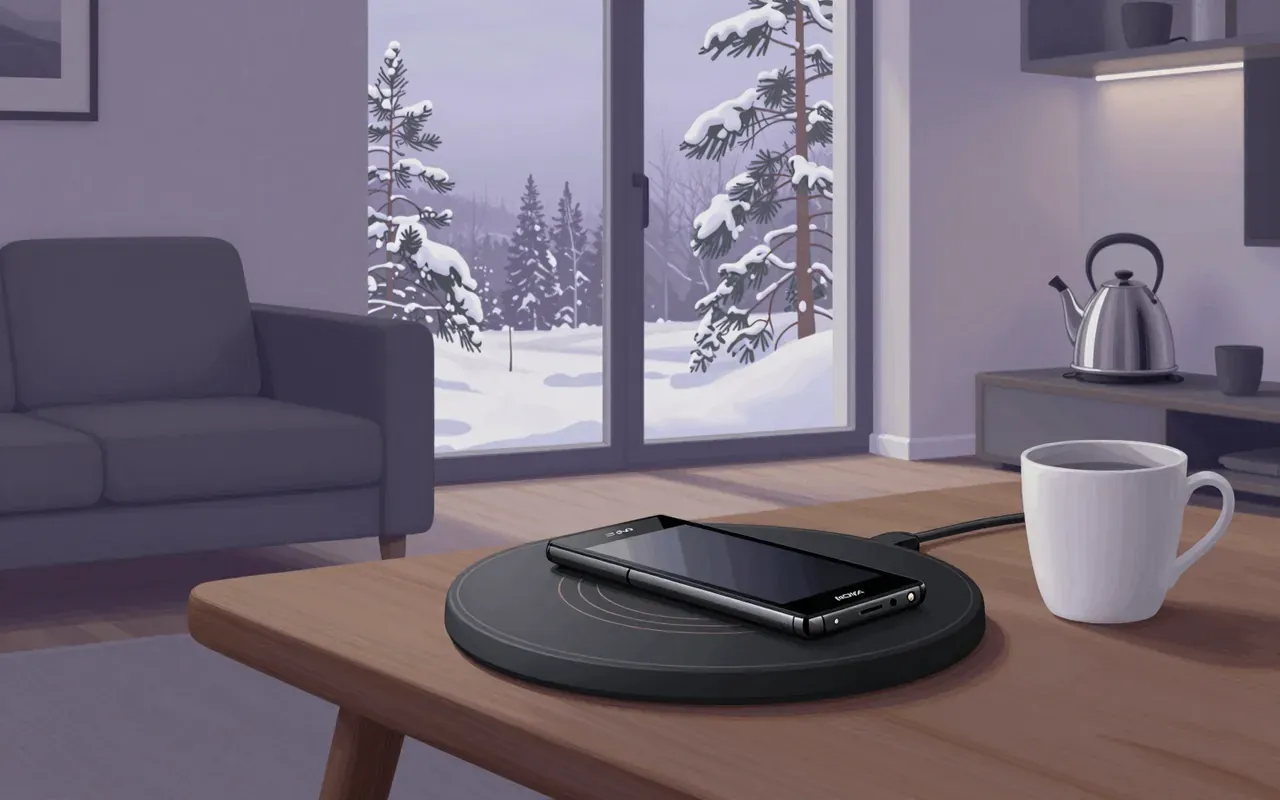
Nokia Lumia 920Nokia · 2012The Nokia Lumia 920 is a hardware statement—not a platform victory. It shipped in November 2012 with three industry-first features: optical image stabilization, Qi inductive charging, and a sub-9 ms display response time. Its 8.7-megapixel BSI sensor and f/2.0 Carl Zeiss Tessar lens delivered tangible low-light gains. But its sealed 2000 mAh battery limited serviceability. Its Windows Phone 8 OS remained constrained by app scarcity and developer neglect. The device generated press optimism and internal hope at Nokia—but did not reverse the platform’s trajectory. It matters today as a case study in where hardware differentiation can—and cannot—compensate for ecosystem weakness.
8:55
Nexus One2010The Nexus One is Google’s first Nexus smartphone — a SIM-unlocked Android device built by HTC. It launched on 5 January 2010 with voice-to-text, dynamic noise suppression via a second microphone, and voice-guided turn-by-turn navigation for drivers. Its 3.7-inch AMOLED screen uses a PenTile matrix with 480×800 raster resolution. It established Google’s hardware channel but revealed trade-offs in display fidelity and voice dependency.
9:27
Helicopter rotorJuan de la CiervaThe articulated rotor solved dissymmetry of lift in autogyros using mechanical hinges—not powered rotation. It enabled stable forward flight and jump take-off, but did not enable hovering or VTOL. Its influence on helicopters is real but indirect: it provided the hinge architecture, not the propulsion model.
Up next in Technology

ISBN

Gordon Foster and others · 1966 · 9:50

A barcode for books that works only because it refuses to mean anything beyond inventory.

9:50