What it is and the problem it solves
It is a steam-powered beam engine built in 1712 to pump water from deep mines. It solves the problem of mine flooding where vacuum pumps failed beyond 30 feet.
How it works
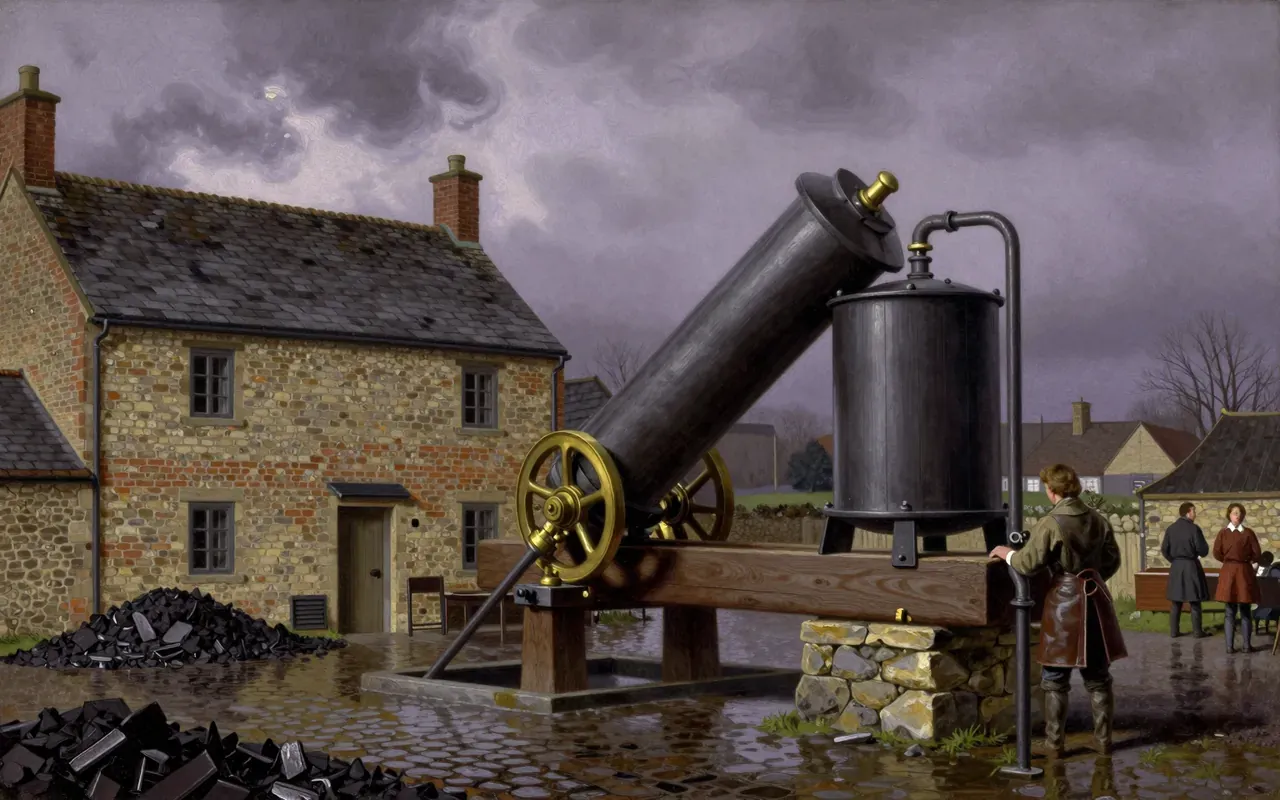
It admitted steam into a cylinder, then condensed it with cold water to create a partial vacuum. Atmospheric pressure pushed the piston down. A rocking beam transmitted this motion to lift a weighted rod, which drove a force pump. Water entered and exited the pump cylinder via gravity and machinery weight during refill.
What works
It reliably lifts water from depths unreachable by suction alone. It integrates Savery’s condensation method and Papin’s piston-in-cylinder design into a working mechanical system. It delivers continuous, repeatable strokes using ambient atmospheric pressure as the working force.
What does not
It does not use steam pressure to drive the piston. It is inefficient due to repeated heating and cooling of the cylinder. It cannot scale beyond mine drainage without fundamental redesign.
What it changes
It changes mine drainage from a depth-limited suction process to a mechanically amplified lift system. It enables dewatering below 30 feet. It establishes the beam-and-piston as the dominant architecture for steam power for over 60 years.
Is it worth your time
Yes—if you work on energy systems, historical engineering limits, or the material constraints of early industrial power. It shows how mechanical work emerged from atmospheric pressure, not steam expansion. Its inefficiency was structural, not incidental.