What it is and the problem it solves
It is the first experimental moving-coil loudspeaker. It solves the problem of converting electrical signals into audible mechanical vibration using electromagnetic force.
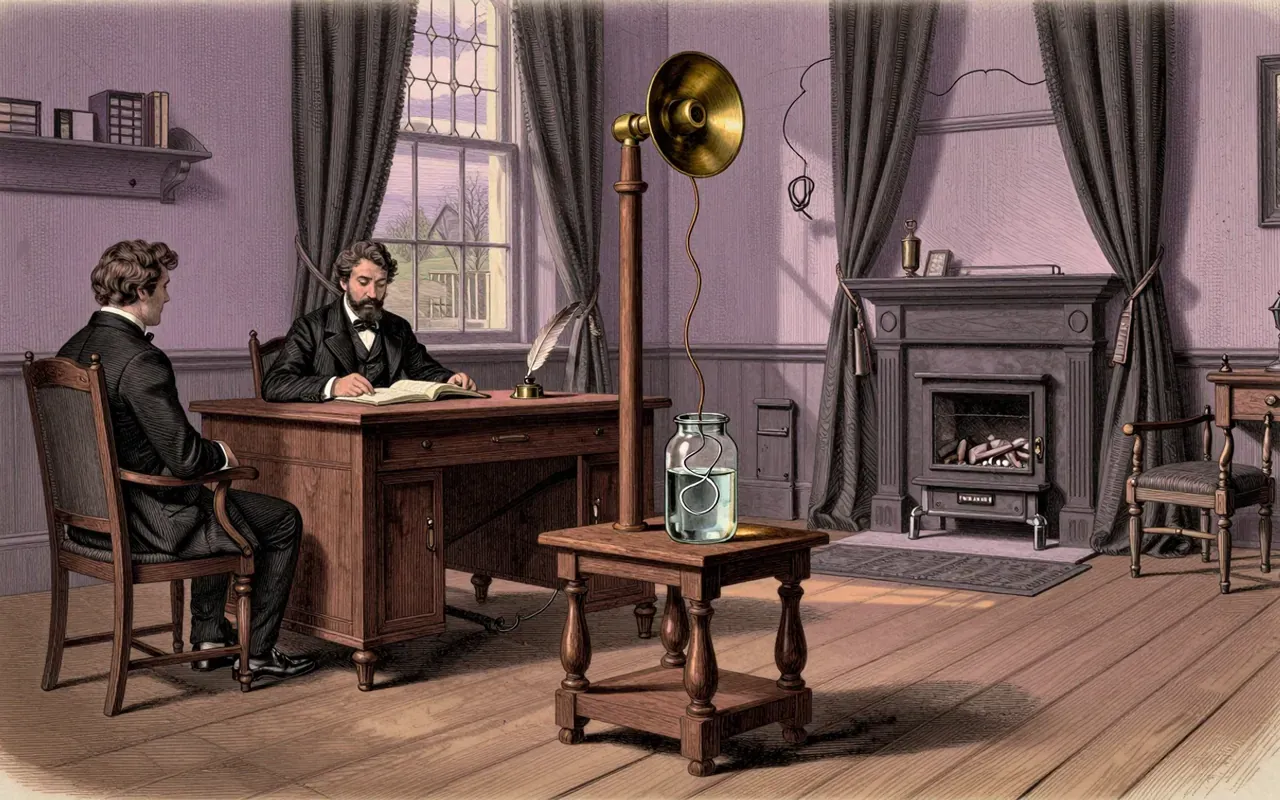
Oliver Lodge (1851–1940) was an English physicist and electrical engineer, known mainly for investigations of electromagnetic radiation that contributed to the development of radio. The loudspeaker article credits him with the first experimental moving-coil loudspeaker in 1898, the same year he received a patent for “syntonic” tuning, which let a transmitter and receiver in a wireless system use specific frequencies.
How it works
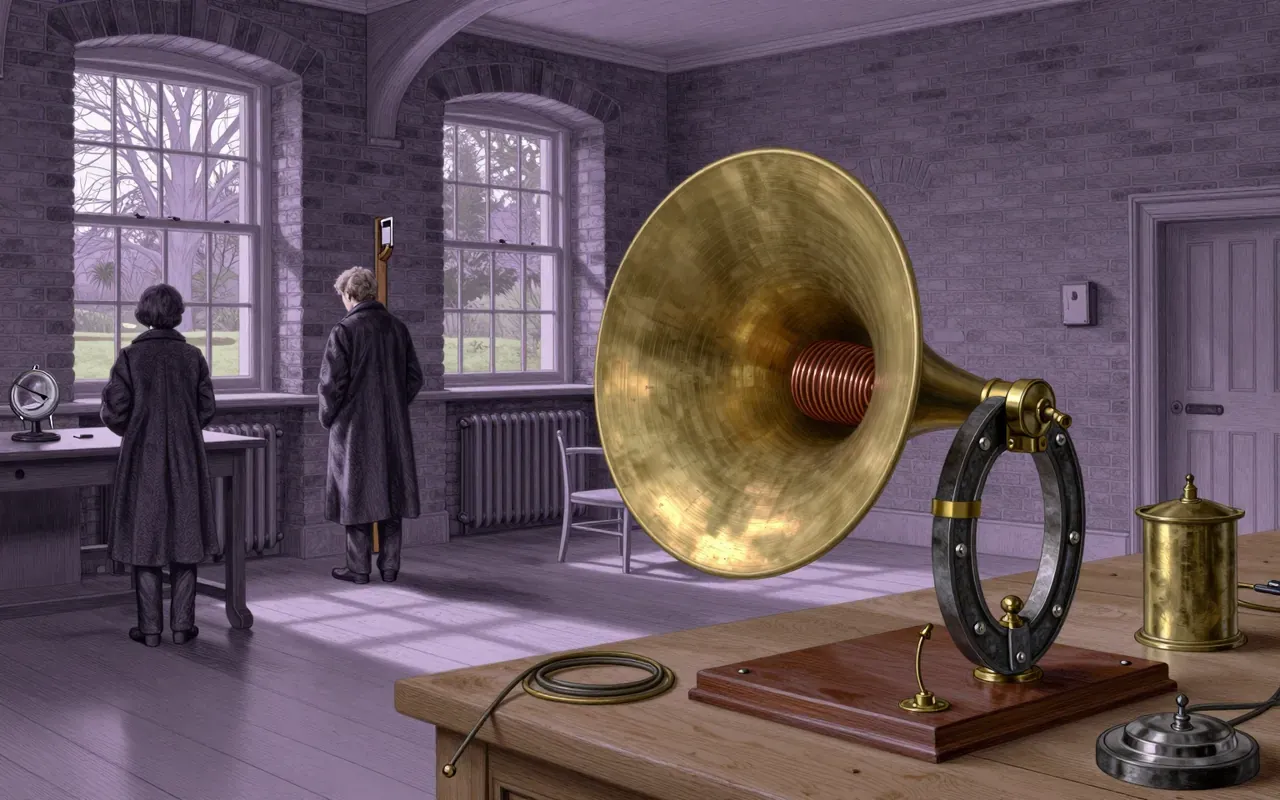
It uses a coil attached to a diaphragm, suspended in a strong magnetic field. An electric current through the coil causes it to move, vibrating the diaphragm and producing sound.
The loudspeaker article describes the modern form of the same arrangement. A coil of wire can move back and forth in a gap holding a concentrated magnetic field, and attached to a diaphragm it moves the air in front of it. The same article notes that the dynamic driver shares its basic configuration with a dynamic microphone, which operates in reverse as a generator.
What works
The core mechanism works: current-induced motion of a coil in a magnetic field moves a diaphragm. The patent and experimental record confirm physical operability.
The loudspeaker article gives Lodge’s speaker a single line. Another 1898 patent, by Horace Short, took a different route: a loudspeaker driven by compressed air, later sold to Charles Parsons. Compressed-air designs are recorded as limited by poor sound quality and by an inability to reproduce sound at low volume, a few were fitted to record players by Victor and Pathé, and variants were used for public address.
What does not
It does not deliver usable audio output for communication or entertainment. No evidence confirms it produced intelligible speech or music at scale.
The first practical moving-coil loudspeakers came from Peter L. Jensen and Edwin Pridham in 1915, in Napa, California. Like earlier speakers they used horns to amplify the sound from a small diaphragm. They failed to sell the product to telephone companies and turned to radios and public address systems, under the name Magnavox. Even then, the moving-coil principle used today was patented later, in 1925, by Edward W. Kellogg and Chester W. Rice. The loudspeaker article says the key difference from earlier attempts was the adjustment of mechanical parameters to give a reasonably flat frequency response.
What it changes
It establishes the moving-coil principle as viable—shifting loudspeaker design from electromagnetic and piezoelectric alternatives to dynamic transduction.
Electric loudspeakers already existed by then. Johann Philipp Reis installed one in his telephone in 1861, and Alexander Graham Bell patented a moving-iron loudspeaker in 1876 that could reproduce intelligible speech. The early moving-coil speakers had a further limit: they used electromagnets, because large, powerful permanent magnets were not generally available at a reasonable price. The electromagnet’s field coil was fed a current of its own, and AC line frequencies tended to modulate the audio signal and add audible hum. Jensen introduced the first commercial fixed-magnet loudspeaker in 1930, but field-coil speakers stayed predominant until lightweight alnico magnets became widely available after World War II.
Is it worth your time
Yes—if you work on acoustics, transducer history, or patent mechanics. It is foundational but not functional by modern standards.