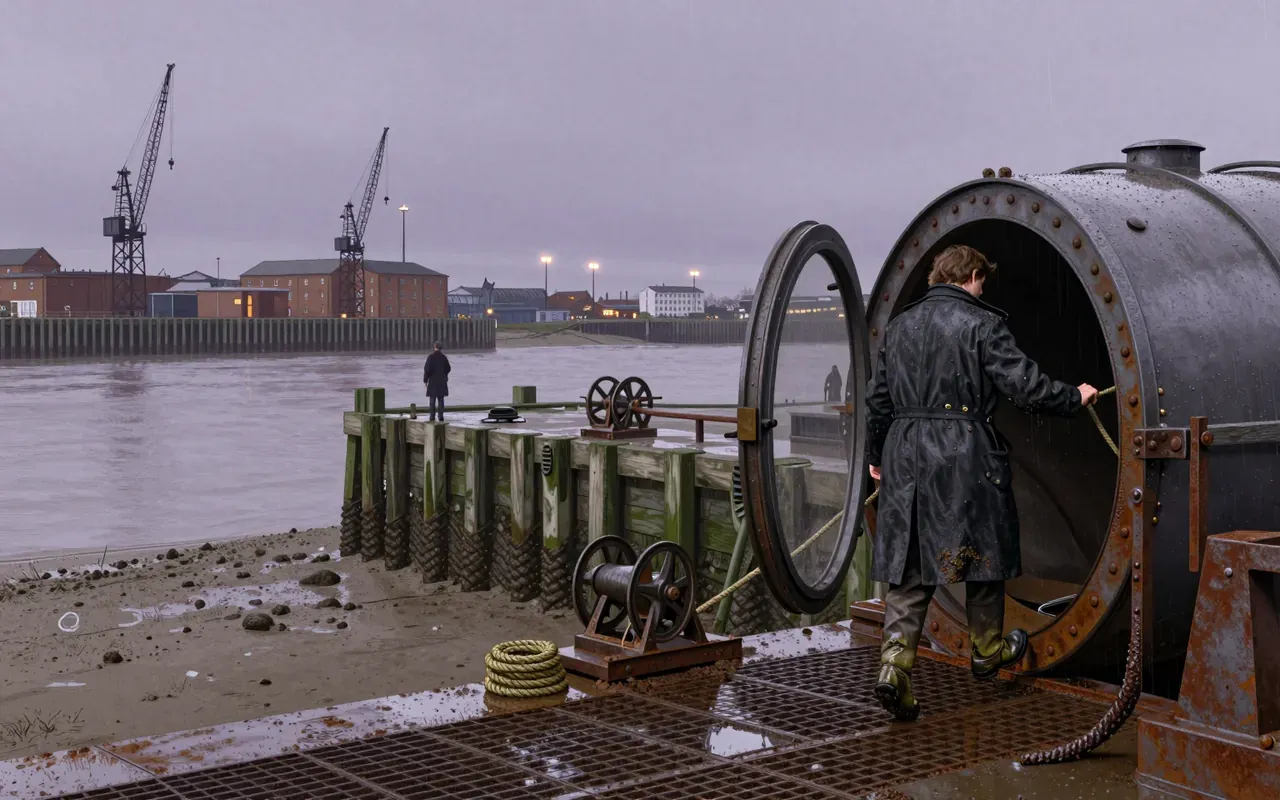
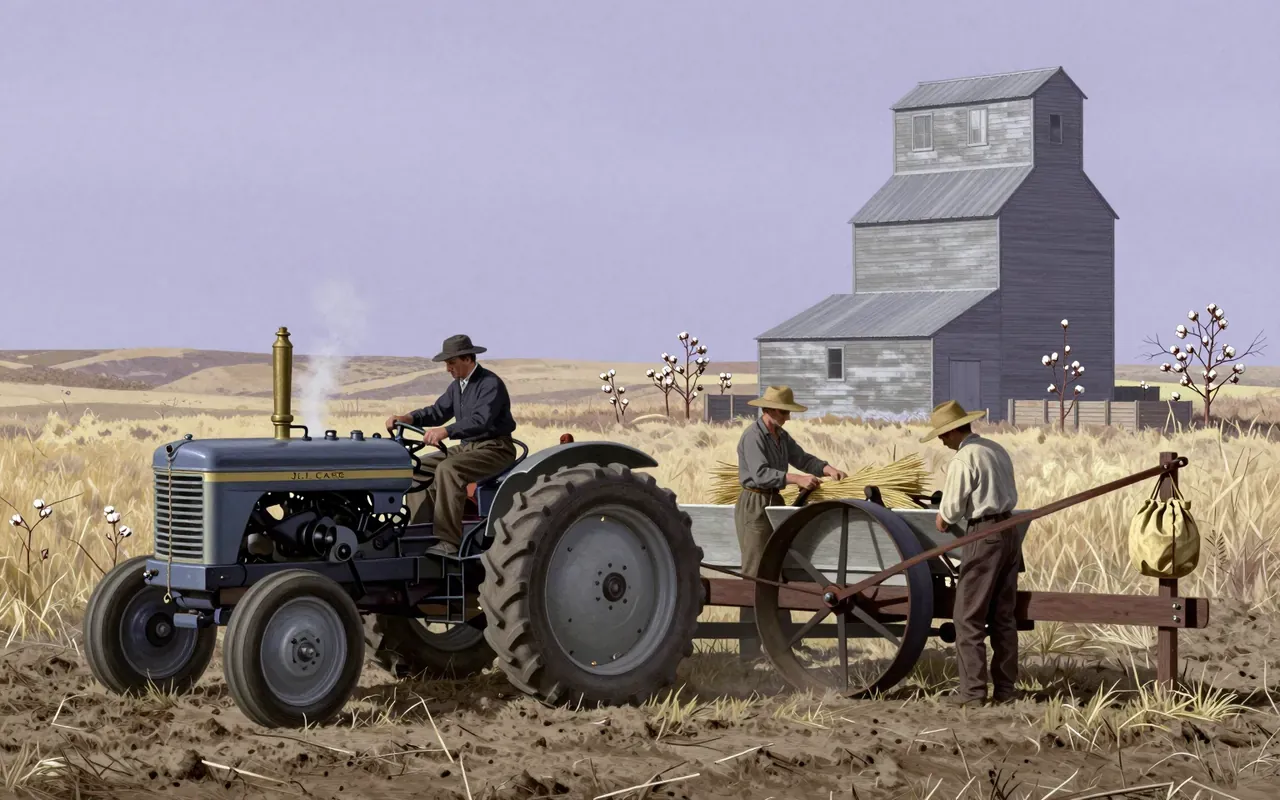
Meikle’s threshing machine didn’t replace flails—it exposed how little ‘mechanisation’ meant without integrated cleaning.
The threshing machine was the first agricultural device to mechanise grain separation—but its initial form solved only one step of a three-step process. Meikle’s 1786 invention used velocity-driven fixed beaters to dislodge grain. Early output remained mixed: straw, chaff, and grain formed a single heap. Only with added rakes, shakers, and fanners did it deliver clean, market-ready grain. It reduced labour by ~25%, lifted yield by up to 5%, and cut total processing cost below prior cleaning-only expense. It did not eliminate human oversight. It did not scale without infrastructure. It did not win immediate adoption. It established that mechanisation required integration—not just substitution.
Meikle invented the first threshing machine circa 1786—not as a refinement, but as the first working example of mechanical grain separation.
2:47
How It Beats
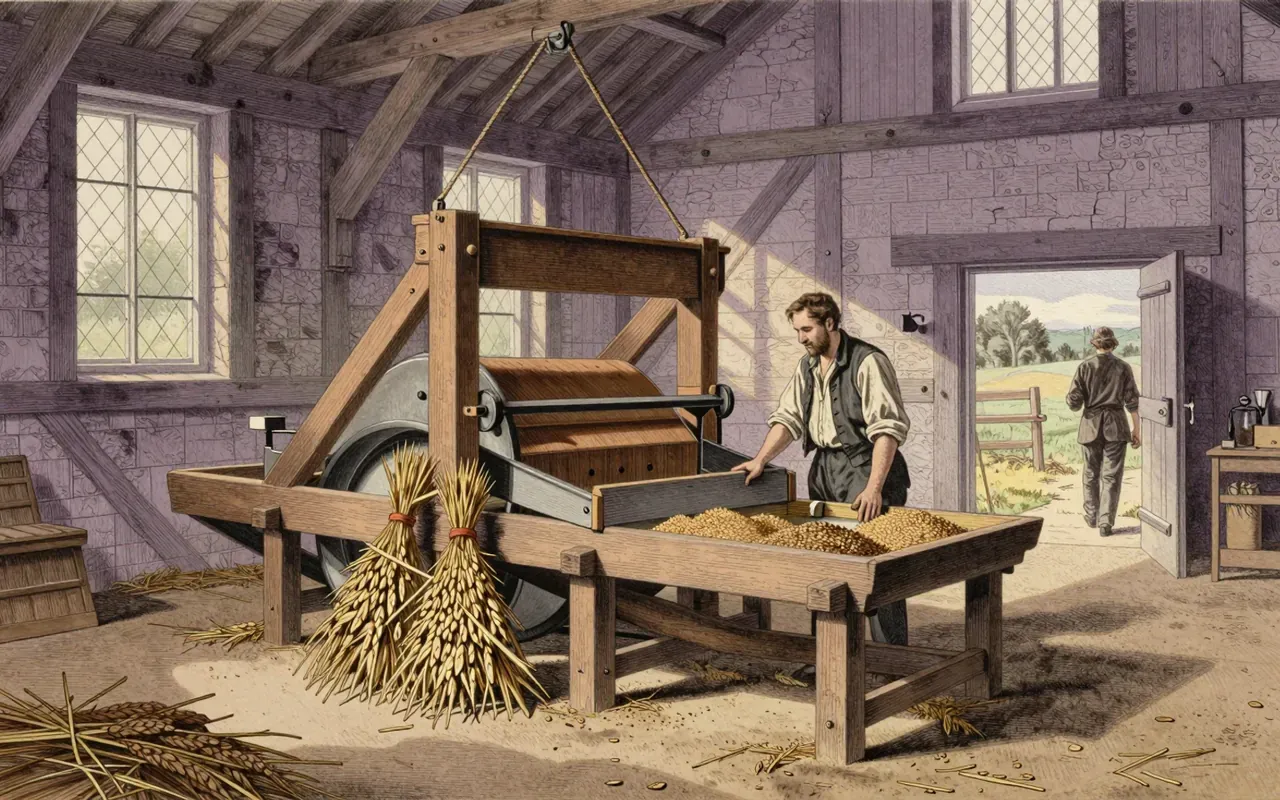
It works by velocity-driven fixed beaters—skutchers—that strike stalks to shake loose grain, not by rotation, friction, or airflow alone.
4:31
Half Done, Then Whole
Early versions separated grain but delivered no sorting—only later integration with rakes and fanners made it a complete system.
5:39
What It Saved
It cut labour demand by ~25%, increased yield by up to 5%, and lowered total processing cost below prior cleaning-only expense.
Worth your time?
Yes. Study the whole thing.
3.5/ 5
What works
increases yield by up to 1/20
cuts thrashing-and-cleaning cost below former cleaning-only cost
removes ~25% of agricultural drudgery
What does not
eliminate human oversight
scale without infrastructure
win immediate adoption
Study it if
farm managers in late-18th-century Britain
engineers integrating multi-stage farm processes
Skip it if
smallholders without capital for full-system upgrades
anyone expecting plug-and-play automation
The written brief1 min read
What it is and the problem it solves
A mechanical device that separates grain seed from stalks and husks by beating—solving the labour bottleneck of hand threshing in 18th-century British agriculture.
How it works
It uses fixed beaters or skutchers, driven by machinery operating on the principle of velocity, to beat corn stalks and dislodge grain from straw and husks.
What works
It yields up to 1/20 more grain than hand methods. When upgraded with rakes, shakers, and two pairs of fanners—all driven by the same machinery—it performs thrashing, shaking, and winnowing simultaneously, delivering market-ready grain.
What does not
Early versions left grain, straw, and chaff in a confused heap. They separated grain from straw but did no winnowing or cleaning—so the work was only half done.
What it changes
It removes a substantial amount of drudgery from farm labour, previously consuming ~25% of agricultural effort. It shifts threshing from hand-flail labour to machine-driven process integration.
Is it worth your time
Yes—if you manage labour-intensive grain processing in the late 18th century. It cuts thrashing-and-cleaning costs below former cleaning-only costs, but only after integration with rakes, shakers, and fanners.