technologybriefs
12:01in productionCh. 1 · Hydraulic Jetting/ 12:01 · ceiling 15 min
Hardware · Tech history

Tunnel boring machine

Greathead didn’t invent the tunnel boring machine — he invented the first system that made underwater soft-ground tunnelling reliably safe and repeatable.

Greathead’s shield was not a tunnel boring machine in the modern sense — it did not rotate cutters or automate excavation. It was a pressurised, jacked, lined, and grouted soft-ground tunnelling system. It succeeded where earlier shields failed because it managed water, pressure, and ground movement as an integrated mechanism — not a collection of parts.

Chapters & takeaways4
  1. 1:03
    Hydraulic Jetting

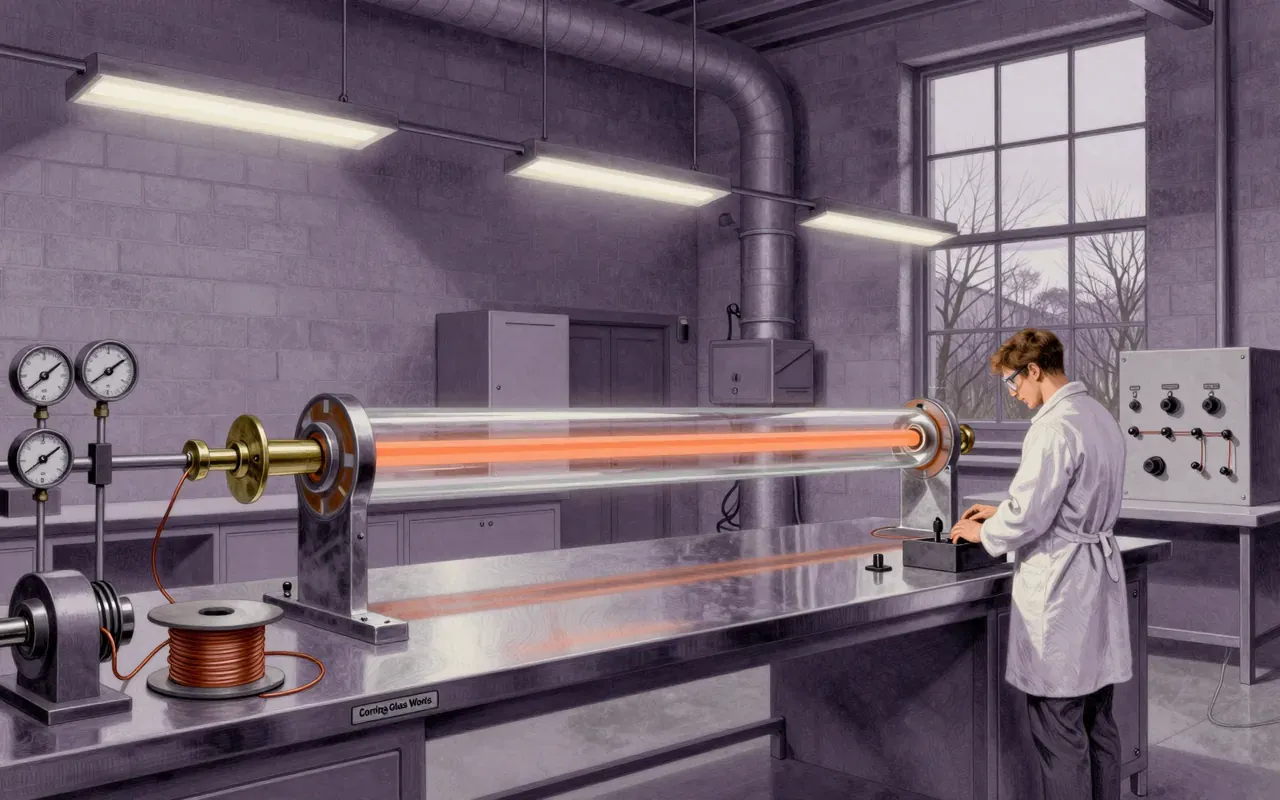
    Water jets at the face turned soft earth into controllable slurry — not cutting, but fluidising.

  2. 2:49
    Pneumatic Safety

    Compressed air equalised external water pressure — enabling human work below riverbeds.

  3. 5:31
    Incremental Advance

    Screw and hydraulic jacks moved a rigid cylinder forward while cast iron segments locked behind it.

  4. 6:53
    Behind-the-Shield Stabilisation

    Grouting pans injected cement behind the lining — sealing the gap before the ground could settle.

Worth your time?

Yes. Study the whole thing.

4.5/ 5
What works
  • pneumatic pressure control
  • hydraulic jetting and slurry management
  • incremental jacking with cast iron lining
  • hydraulic grouting behind lining
What does not
  • automate excavation
  • cut rock
  • eliminate caisson disease
  • scale to large diameters without redesign
Study it if
  • civil engineers building subaqueous soft-ground tunnels
  • historians of Victorian engineering
  • tunnelling contractors evaluating legacy systems
Skip it if
  • rock-tunnelling specialists
  • AI or robotics developers
  • software architects
The written brief1 min read

What it is and the problem it solves

Greathead’s tunnelling shield was a pressurised, jacked, cylindrical enclosure for safe excavation in waterlogged soft ground. It solved the problem of collapse and flooding during subaqueous tunnelling where Brunel’s rectangular shield had failed to stabilise the face or seal against hydrostatic pressure.

How it works

Greathead’s shield was a cylindrical iron structure, 7 ft 3 in in diameter, advanced incrementally by screw jacks or hydraulic jacks. It used compressed air to equalise pressure at the tunnel face. Water jets blasted soft earth. Cutting teeth mixed excavated material with water to create slurry. Cast iron segments were installed behind the shield as it advanced. A grouting pan applied cement grout hydraulically behind the lining.

What works

The combination of pneumatic pressure, hydraulic jetting, incremental jacking, cast iron segmental lining, and grouting worked reliably in clay, silt, and chalk. It bored the Mersey Railway ventilation tunnel (2.06 km) and formed the basis for London’s underground lines. Its methods became standard for soft-ground tunnelling.

What does not

It did not automate excavation. Workers still dug manually inside the shield. It did not cut rock — only soft earth and chalk. It did not eliminate risk: compressed air caused ‘caisson disease’. It did not scale to large diameters without major redesign.

What it changes

It changed how soft-ground tunnels were built beneath rivers and cities. It enabled continuous, pressurised advance with immediate structural support. It made deep urban tunnelling viable — not just possible, but repeatable and insurable.

Is it worth your time

Yes — if you are building tunnels in soft ground under water. Greathead’s system established the core mechanical and pressurisation principles still used today. But it did not bore rock, nor replace manual excavation in hard strata. Its value is situational, not universal.

Same field · Hardware4 of 111
Up next in Technology

Turbocharger

Alfred Büchi · 11:04

A 1905 patent that worked on paper—but only delivered real power nineteen years later, and only in ships and locomotives, never in the planes it was built for.

11:04