technologybriefs
11:42in productionCh. 1 · The All-in-One Standard/ 11:42 · ceiling 15 min
Hardware · Tech history

Macintosh 128K

It wasn’t about power — it was about making the interface disappear so the user could finally see what they were doing.

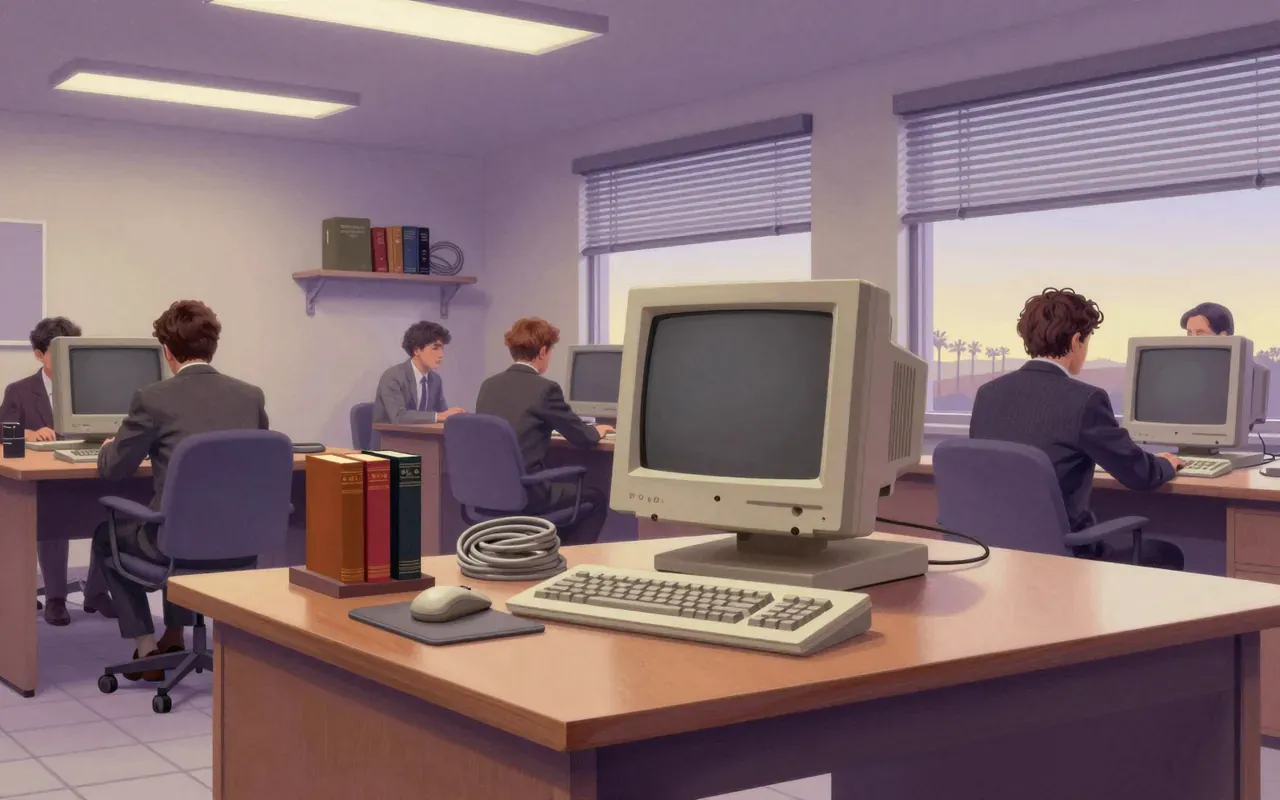
The Macintosh 128K delivers a complete graphical interface in a sealed, unexpandable box. It works by tightly integrating hardware and firmware — not by scaling up, but by locking down. Its success comes from constraint, not capability.

Chapters & takeaways4
  1. 1:15
    The All-in-One Standard

    It is the first successful mass-market all-in-one desktop PC with GUI, built-in screen, and mouse.

  2. 2:50
    Shared Memory, Fixed Code

    Its architecture embeds QuickDraw in ROM and shares RAM between CPU and display — a trade-off that defines its speed and limits.

  3. 4:59
    The Pixel That Printed

    Its 9-inch monochrome display enabled precise WYSIWYG editing — the foundation of desktop publishing.

  4. 6:59
    No Slots, No Upgrades

    Soldered RAM and no expansion slots made it a sealed system — elegant, inflexible, and definitive.

Worth your time?

Yes. Study the whole thing.

4.5/ 5
What works
  • integrated GUI delivery
  • WYSIWYG document creation
  • quiet, office-friendly operation
What does not
  • expandability
  • upgradability
  • sustained CPU throughput
Study it if
  • historians of human-computer interaction
  • developers studying memory-constrained GUI design
  • designers of embedded systems
Skip it if
  • modern end-users
  • enterprise IT planners
  • anyone needing peripheral flexibility
The written brief1 min read

What it is and the problem it solves

The Macintosh 128K is Apple’s original Macintosh personal computer. It solves the problem of inaccessible computing by delivering an integrated, mouse-driven graphical interface to non-technical users.

How it works

It runs a Motorola 68000 CPU at 7.8336 MHz. It shares 128 KB of soldered RAM between the CPU and display controller. A 64 KB ROM holds QuickDraw, boot code, and OS routines. Its 9-inch monochrome CRT displays 512×342 pixels.

What works

The integration of QuickDraw in ROM enables fast, consistent screen rendering. The built-in screen, mouse, and bundled MacPaint and MacWrite deliver immediate GUI utility. The quiet, fanless design meets office noise requirements.

What does not

It has no expansion slots. RAM is soldered and non-upgradable. Shared memory cuts CPU performance by up to 35%. It lacks a fan, limiting sustained workload capacity.

What it changes

It establishes the all-in-one GUI desktop as a mass-market standard. It makes desktop publishing viable in general offices. It forces software developers to work within tight memory and fixed hardware boundaries.

Is it worth your time

Yes — if you work with early GUI systems, desktop publishing origins, or hardware-software co-design constraints. No — if you need expandability, upgradability, or modern I/O.

Same field · Hardware4 of 251
9:56
Commodore PET1977The PET is a rigid, all-in-one implementation of personal computing — functional, self-contained, and deliberately inflexible. It sets the template for integrated design but sacrifices adaptability, expressiveness, and user agency to achieve it.
11:18
BBC MicroAcorn Computers · 1981The BBC Micro was a procurement win first, an educational tool second. It succeeded because it met rigid broadcast and policy constraints—not because it was inherently superior to alternatives. Its architecture prioritised demonstrable compliance over user flexibility. Its dominance was guaranteed by subsidy rules, not market preference.
10:10
CD-ROMPhilips and Sony · 1982CD-ROM is a read-only optical data format co-developed by Philips and Sony, formalised in the 1983 Yellow Book. It reuses the CD-DA’s physical design and laser-read mechanism but repurposes pits and lands for arbitrary digital data—delivering 553 MB via destructive interference physics. It launched publicly in 1985 with Philips’ CM 100 drive. It solved mass-distribution problems for static software and reference material but failed as an archival or interactive medium—prompting Sony to launch write-once and magneto-optical variants by 1986 and 1988.
11:16
IBM Personal Computer1981The IBM PC is not a triumph of engineering — it is a triumph of delegation. It solved speed and cost by refusing to build anything new. Its power came from publishing, not protecting. Its legacy is not what IBM shipped, but what everyone else copied — and extended — using the specs IBM handed out on day one.
Up next in Technology

Unmanned aerial vehicle

· 10:52

UAVs don’t fly free—they inherit military logic, evade civilian oversight, and deliver capability before consent.

10:52