technologybriefs
12:03in productionCh. 1 · Origin/ 12:03 · ceiling 15 min
Hardware · Systems

Boeing

1916

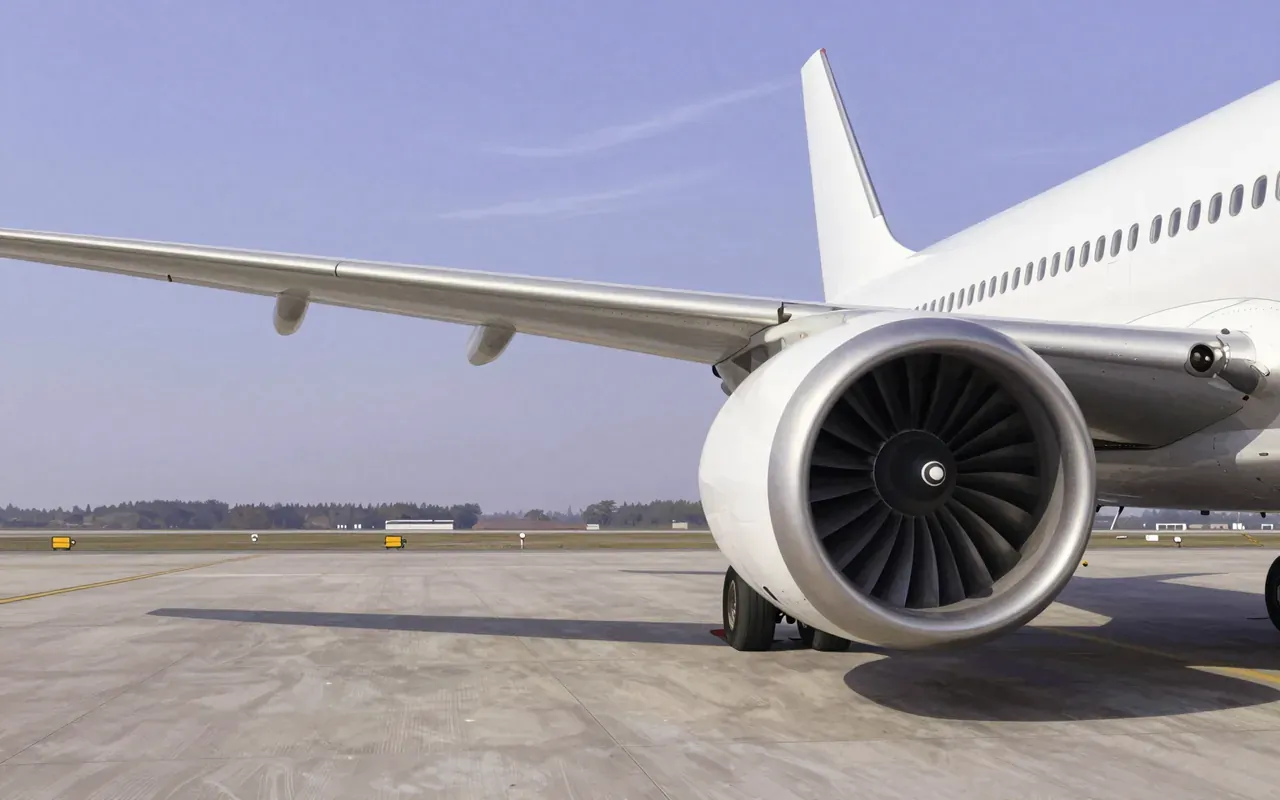
Boeing isn’t an aircraft maker—it’s a vertically integrated export engine shaped by merger, not mission.

Boeing is a hardware and systems enterprise built on consolidation, not invention. Its value lies in integration—not innovation.

Chapters & takeaways6
  1. 1:03
    Origin

    Boeing began in 1916 as a Seattle-based aircraft builder—not as a systems integrator or defence conglomerate.

  2. 2:45
    Merger

    The present Boeing emerged from its 1997 acquisition of McDonnell Douglas—not organic growth.

  3. 4:06
    Structure

    Its three divisions—Commercial Airplanes, Defense Space & Security, and Global Services—define its operational boundaries.

  4. 5:35
    Scale

    It ranks fourth among global defence contractors by 2022 revenue—and is the largest US exporter by dollar value.

  5. 6:51
    Location

    Its headquarters moved to Crystal City, Arlington County, Virginia—placing it within walking distance of the Pentagon and FAA.

  6. 8:11
    Revenue

    In 2021, Boeing recorded $62.3 billion in sales—a figure that reflects scope, not profitability or delivery rate.

Worth your time?

Yes. Study the whole thing.

3.5/ 5
What works
  • scale
  • integration
  • geopolitical-positioning
What does not
  • invention
  • software
  • ai
  • robotics
Study it if
  • procurement-officers
  • defence-analysts
  • export-regulators
Skip it if
  • developers
  • data-scientists
  • ai-researchers
The written brief1 min read

What it is and the problem it solves

Boeing is an American aerospace manufacturer founded in 1916 to build aircraft. It solves the problem of integrated design-to-support capability across civil and military air and space systems.

How it works

Boeing operates through three divisions: Commercial Airplanes, Defense Space & Security, and Global Services. It designs and manufactures aircraft, rotorcraft, rockets, satellites, and missiles. It also provides leasing and product support services.

What works

Its three-division structure separates commercial, defence/space, and services—enabling targeted investment and regulatory compliance. Its 1997 merger with McDonnell Douglas consolidated US defence aerospace capacity. Its headquarters location near Washington, DC supports engagement with federal defence and aviation authorities.

What does not

The material states no principle, standard, or operational doctrine. It gives no detail on engineering processes, safety systems, software architecture, labour practices, environmental impact, or delivery timelines. What it promises versus what it delivers is not addressed.

What it changes

It changes the geography of industrial capacity by concentrating aerospace design, manufacturing, and support under one corporate umbrella—especially after absorbing McDonnell Douglas in 1997. It shifts export volume: Boeing is the largest US exporter by dollar value.

Is it worth your time

Yes—if your work involves aerospace procurement, defence contracting, commercial aviation operations, or global export logistics. Its scale, structure, and vertical integration directly affect supply chains, regulatory priorities, and service availability.

Same field · Hardware4 of 251
10:19
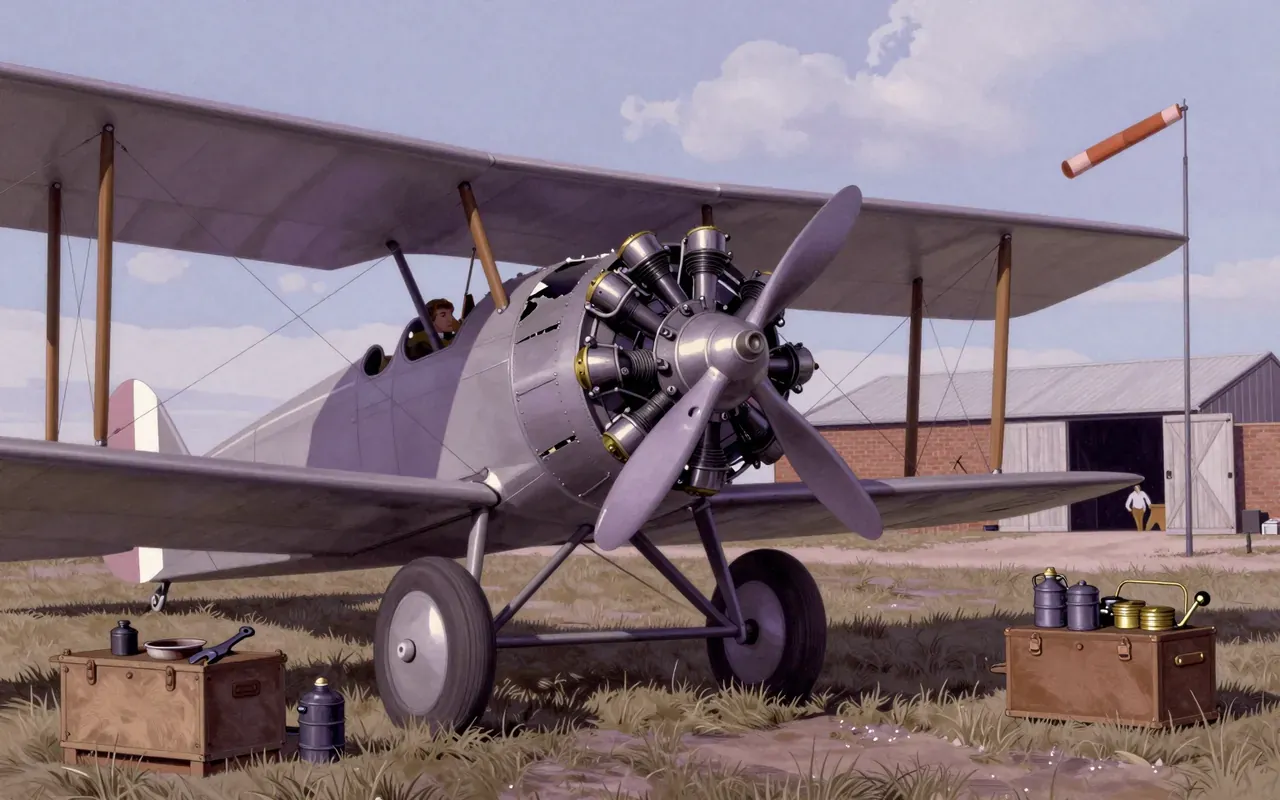
TurbopropThe turboprop is a gas-turbine engine built to drive a propeller—not produce jet thrust. It solves inefficiency in piston-powered regional aircraft by delivering higher power-to-weight, better reliability, and lower fuel burn below 725 km/h. Its core mechanism extracts surplus turbine energy beyond compressor drive, routes it through a reduction gearbox, and delivers high-torque, low-RPM rotation to a constant-speed propeller. Exhaust contributes only ~10% of total thrust. It works well in its niche: subsonic, short- to medium-range flight. It fails outside it—losing efficiency above 725 km/h, generating more noise than turbofans, and adding mechanical complexity with free-turbine or fixed-shaft variants. It changes aviation economics for regional operators but does not replace jets for speed or altitude. Worth your time if you design, maintain, or operate subsonic aircraft under 725 km/h.
10:57
Pratt & Whitney1925Pratt & Whitney delivers certified, field-serviced propulsion hardware—not AI-driven autonomy, not software-defined flight, not carbon-neutral combustion. Its value lies in repeatable engineering, global logistics, and decades of installed base leverage.
10:05
TurbofanThe turbofan replaces raw jet velocity with bulk airflow. It delivers real fuel savings for subsonic flight. It requires no new physics—just careful coupling of fan and core. Its success is measured in bypass ratios, not promises.
11:42
Macintosh 128KApple · 1984The Macintosh 128K delivers a complete graphical interface in a sealed, unexpandable box. It works by tightly integrating hardware and firmware — not by scaling up, but by locking down. Its success comes from constraint, not capability.
Up next in Technology

Botnet

· 8:50

A botnet is not infrastructure—it's theft with a network stack.

8:50